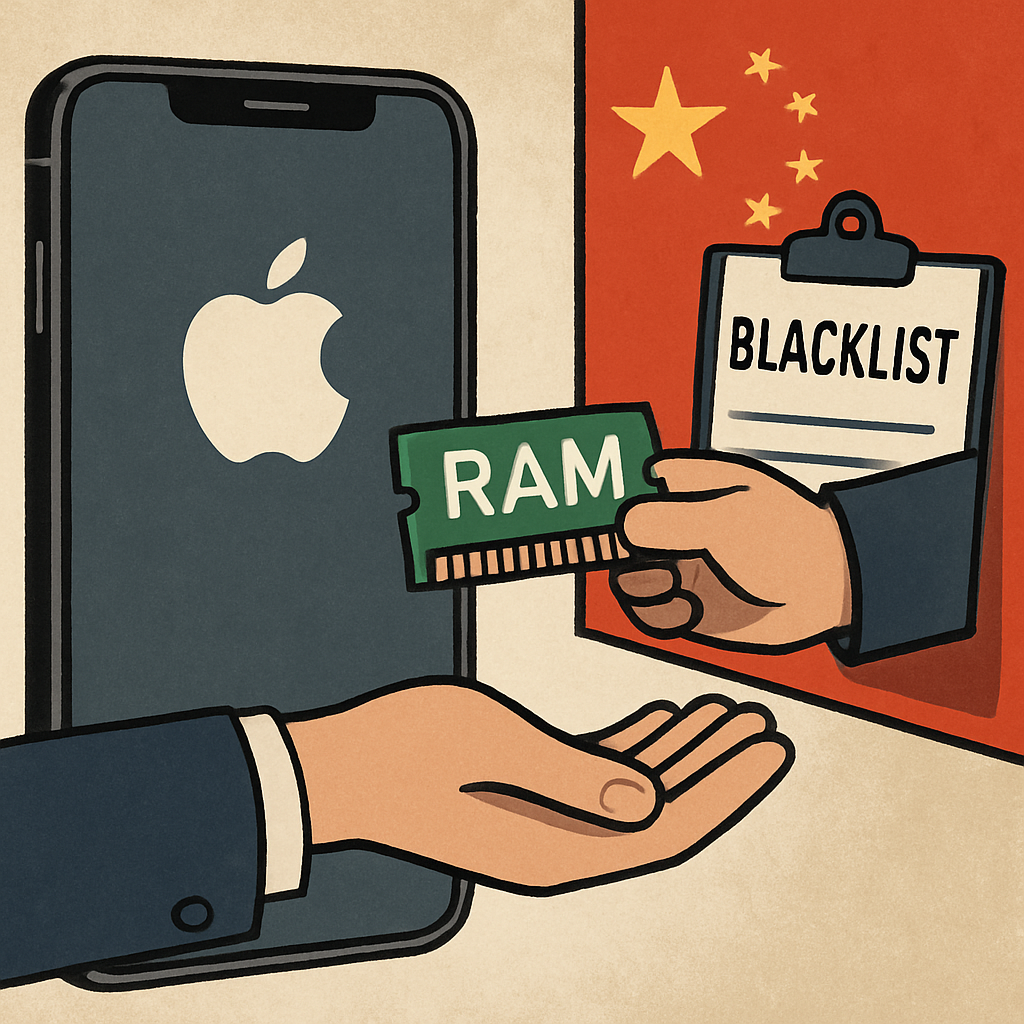
Apple has formally requested the Trump administration’s permission to procure RAM chips from a Chinese supplier currently on the U.S. blacklist. This move aims to mitigate the escalating costs stemming from the global memory shortage.
The tech industry is grappling with rising manufacturing expenses due to the ongoing memory crisis. By sourcing RAM from the blacklisted Chinese company, Apple hopes to alleviate some of these financial pressures. However, this request places Apple in a delicate position, balancing its supply chain needs against U.S. trade policies and national security concerns.
Historically, Apple has sought exemptions from tariffs and restrictions to maintain its supply chain efficiency. For instance, in 2019, the company requested the White House to exclude Mac Pro parts from import tariffs. Similarly, in 2021, Apple filed for temporary waivers on tariffs affecting the Apple Watch and specific Mac Pro components. These instances underscore Apple’s proactive approach in navigating trade regulations to sustain its product manufacturing and pricing strategies.
Apple’s current request to source RAM from a blacklisted supplier highlights the complexities of global supply chains and the challenges companies face amid geopolitical tensions. If approved, this move could set a precedent for other tech firms seeking flexibility in their sourcing strategies. However, it also raises questions about the balance between economic interests and national security policies. Observers will be keenly watching the administration’s response, as it could signal future directions in trade policy and its impact on the tech industry.