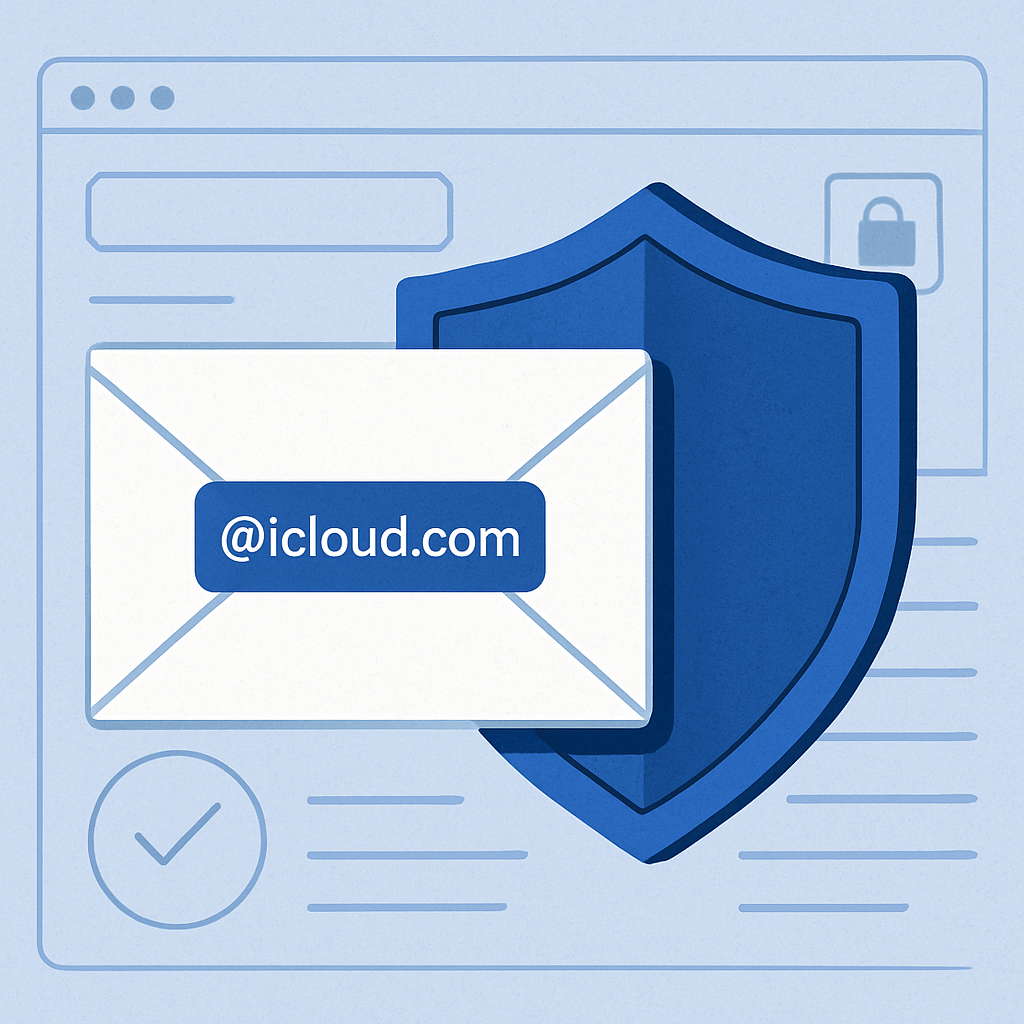
Apple has backed off plans to alter the email domain used by its Hide My Email feature, following strong community feedback. Rather than switching users’ generated email aliases from the familiar icloud.com to a new private.icloud.com domain, the company will retain the current setup for Hide My Email addresses. Apple initially proposed this change in June as part of a move to unify all email functions under private.icloud.com. However, concerns quickly arose that such a shift would harm the usefulness of Hide My Email aliases.([macrumors.com](https://www.macrumors.com/2026/08/24/apple-hide-my-email-domain/))
What’s Changing — and What’s Staying the Same
The company still plans to adjust domains for Sign in with Apple, so that login-generated addresses will begin using private.icloud.com instead of the existing privaterelay.appleid.com. This upcoming switch affects only Sign in with Apple and is expected to roll out later this year.([macrumors.com](https://www.macrumors.com/2026/08/24/apple-hide-my-email-domain/))
Existing Sign in with Apple addresses using the old domain will continue working uninterrupted and will be forwarded properly. Developers have been instructed to update their systems to accept both private.icloud.com and the current domain to ensure that sign-ins function smoothly.([macrumors.com](https://www.macrumors.com/2026/08/24/apple-hide-my-email-domain/))
Why Users Objected
Hide My Email is an iCloud+ perk that lets people create unique email aliases for each website, forwarding messages to their real inbox without exposing it.([macrumors.com](https://www.macrumors.com/2026/08/24/apple-hide-my-email-domain/)) Under Apple’s plan to change the domain, critics worried that using private.icloud.com would make it easier for services and platforms to block incoming email addresses. Many feared that such blocks could accidentally lock out legitimate users, since the same domain would now be shared across multiple alias-generating functions.([macrumors.com](https://www.macrumors.com/2026/08/24/apple-hide-my-email-domain/))
By sticking with icloud.com for Hide My Email, Apple preserves a key privacy strategy: preventing broad domain-based filtering that might diminish the feature’s effectiveness.([macrumors.com](https://www.macrumors.com/2026/08/24/apple-hide-my-email-domain/))
Where Things Stand
The domain change for Sign in with Apple is still moving forward, while Hide My Email will remain untouched in this revision.([macrumors.com](https://www.macrumors.com/2026/08/24/apple-hide-my-email-domain/)) That distinction protects Hide My Email users from disruption, while allowing Apple to consolidate other email identity functions under the new private.icloud.com label.([macrumors.com](https://www.macrumors.com/2026/08/24/apple-hide-my-email-domain/))
Developers tied to Sign in with Apple should ensure their login systems list both domains as acceptable to avoid disruptions. Routine maintenance now includes this domain support ahead of the rollout.([macrumors.com](https://www.macrumors.com/2026/08/24/apple-hide-my-email-domain/))
Although the change has been rescinded for one service, Apple’s broader moves around private email, domain consolidation, and user control remain in motion. Hide My Email continues operating as users expect — private, domain-protected, and forward-focused.([macrumors.com](https://www.macrumors.com/2026/08/24/apple-hide-my-email-domain/))
Why This Matters: Apple’s reversal shows how much attention users and privacy advocates pay to email aliasing and domain usage. Unified domains can streamline backend systems — but also risk undermining protections against spam filters and blanket blocks. By retaining the icloud.com domain for Hide My Email, Apple preserves its utility and trust while still moving forward with other domain updates. Going forward, how Apple balances consolidation with protection will shape digital identity and privacy tools across its ecosystem.