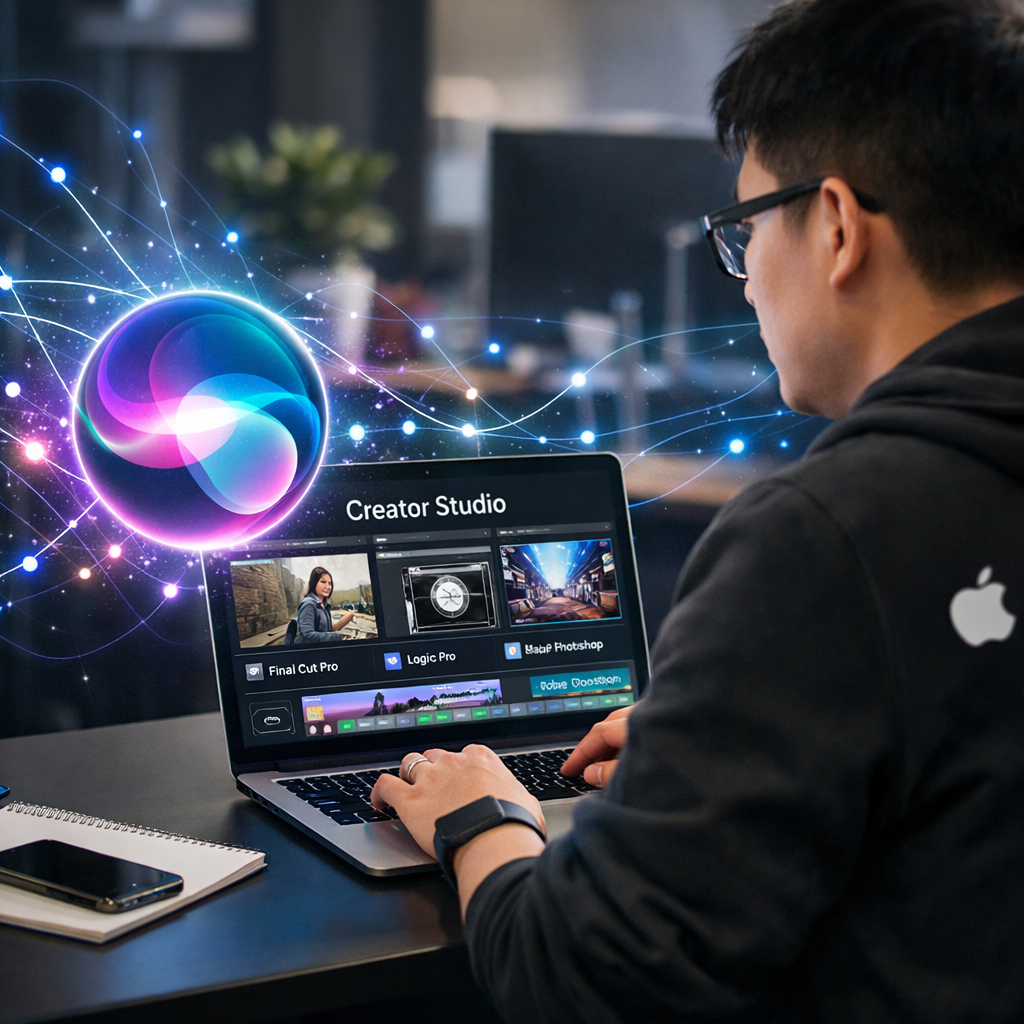
Apple is sharpening its focus on artificial intelligence with a series of recent updates and internal changes that signal a stronger push toward smarter assistants and creative tools. Key moves revealed this week include significant enhancements to Apple Creator Studio, a more aggressive timeline for Siri’s evolution, and rising pressure from CEO John Ternus for faster AI-driven software innovation.
Creator Studio’s New AI Boost
In late October, Apple unveiled a sweeping update to its Creator Studio suite, bringing new AI features and creative assets to a range of apps including Final Cut Pro, Logic Pro, Keynote, Pages, Numbers, and Pixelmator Pro. Users of Final Cut Pro on Mac gain built-in MotionVFX content, video assets in the Content Hub, and enhanced compatibility with Pixelmator Pro. Logic Pro sees a smarter assistant in beta, expanded Stem Splitter capabilities, and a redesigned Browser with deep music understanding plus integration with Splice’s sound library. Meanwhile, Pixelmator Pro adds “Generate Fill,” enabling image areas to be transformed via natural-language prompts. The office-app trio—Keynote, Pages, and Numbers—introduce context-aware assistants in beta and support for Model Context Protocol (MCP) to help automate workflows more efficiently. These updates roll out worldwide via the App Store in November as free updates for existing subscribers.
Siri Gets Proactive: Agentic Ambitions Ahead
After releasing a more personalized Siri in iOS 27, Apple now appears intent on pushing the assistant toward acting more like an agent—one that can anticipate user goals, chain together tasks, and operate more independently. Reports suggest that “as soon as next year,” Apple could launch this capability, aligning Siri more closely with rivals like OpenAI’s Dots and Meta’s Muse. Key foundations like App Intents provide tools for developers, but Apple’s ambition is to shift from reactive commands toward an assistant that can monitor and drive progress on users’ behalf.
Engineering Overhaul and Executive Pressure
These strategic ambitions are matched by internal process changes and elevated expectations from Apple’s leadership. New CEO John Ternus has reportedly urged Craig Federighi—the company’s long-time head of software engineering and now AI chief—to accelerate Apple’s AI roadmap beyond simple improvements to Siri. In recent weeks, Ternus convened off-site discussions pressing Federighi to embrace speed and boldness.
One tangible change: for the first development cycle of iOS 28, Apple has adjusted its engineering rhythm—allocating six weeks for coding, exploration, and feature development, followed by two weeks devoted to system integration and convergence. This represents a shift from the prior model, where coding and integration were split evenly into two four-week periods. Engineers reportedly welcome the change, as it allows more breathing room for experimentation before locking in key features.
Additionally, there are signs of possible shifts in personnel. Mike Rockwell, the vice president who led both Vision Pro and Siri AI engineering, is said to be considering stepping down or leaving Apple next year—an exit that could affect the trajectory of Apple’s new AI features.
What to Watch
Apple’s collective moves—AI features in Creator Studio, Siri’s agentic aspirations, and the alteration of its development timeline—suggest the company is acutely aware of competitive pressure in the AI realm. The coming year may see more proactive, context-aware behavior from Siri, and the success (or failure) of these internal tweaks will likely manifest in Apple’s big releases, possibly WWDC 2027 or iOS/macOS 28.
Why This Matters: Apple is transitioning from reactive features toward AI that behaves agentically—anticipating, adapting, and acting more autonomously. For users, that could mean less manual prompting; for Apple, it’s a needed shift to stay competitive with fringe players pushing boundaries. Key indicators include how well the new engineering schedule works, how reliable the agentic features are, and whether leadership changes alter momentum or dilute focus.