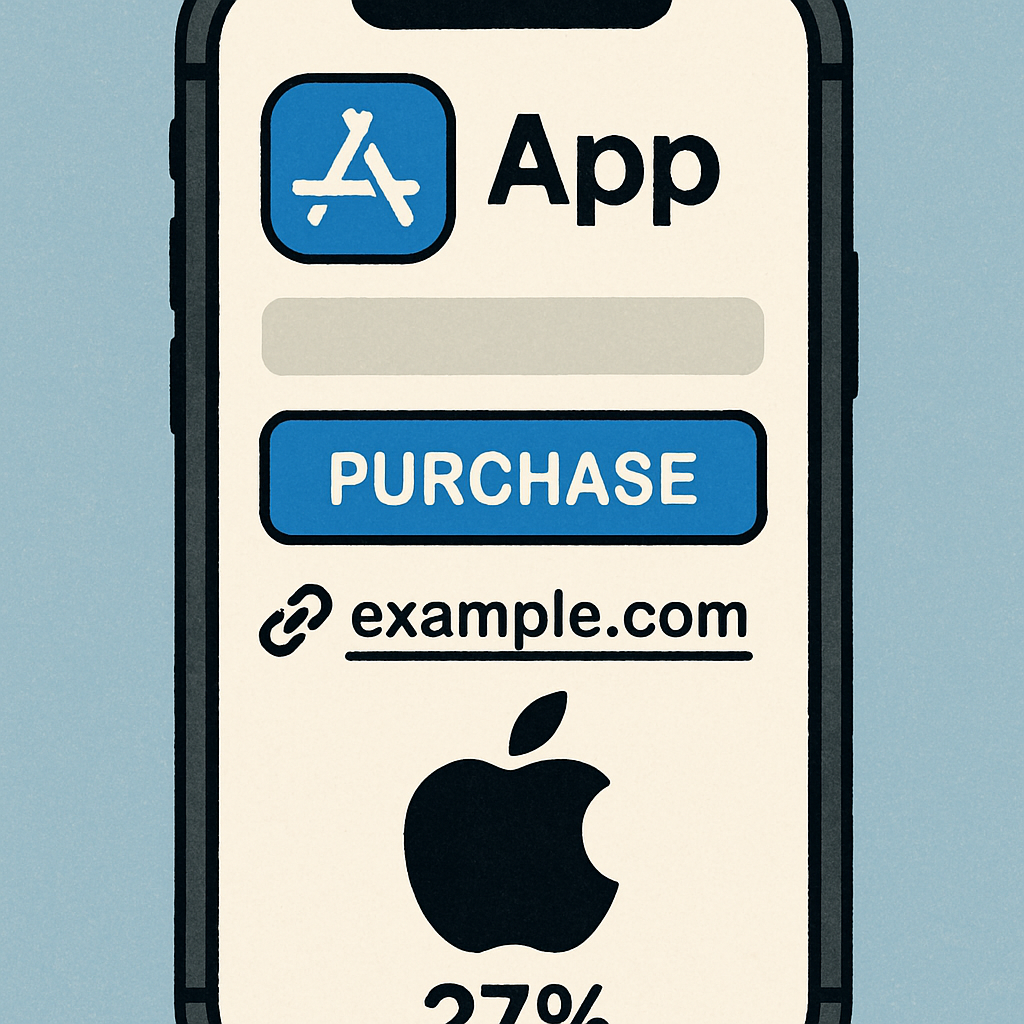
Apple has submitted a proposal to the U.S. District Court for the Northern District of California, suggesting a commission structure for developers who include links in their apps directing users to external purchase options. This move comes as part of the ongoing legal proceedings stemming from the company’s dispute with Epic Games.
Under the proposed structure, Apple would collect a 15% commission from standard apps when a user clicks an in-app link leading to an external website and completes a purchase. For developers participating in the Small Business Program—those earning under $1 million annually—the commission would be reduced to 5%. Additionally, apps involved in specific programs such as the News Partner Program, Video Partner Program, and Mini Apps Partner Program, as well as subscription renewals, would be subject to a 10% commission.
To illustrate, if a user were to click a link within the Spotify app that directs them to Spotify’s website to purchase a subscription, Spotify would owe Apple a 15% fee on that transaction. Apple asserts that these fees are based on expert analysis and are lower than the rates Google charges in similar scenarios, such as the Epic v. Google case.
This proposal follows a series of legal developments. In 2021, during its legal battle with Epic Games, Apple was ordered to modify its App Store policies to allow developers to include links to external purchase options. However, the implementation of this directive was delayed due to appeals. When Apple eventually introduced a fee structure ranging from 12% to 27% for these external purchases, Epic Games contested the rates, leading Judge Yvonne Gonzalez Rogers to find Apple in contempt of court. Consequently, in April 2025, Apple was barred from charging any fees on such links, a ruling that was upheld by the appeals court, though it acknowledged Apple’s right to some form of compensation.
Apple’s latest proposal aims to establish a commission that reflects the value it provides to developers through its App Store platform. The company argues that a zero-commission model would not adequately compensate for its intellectual property and the services it offers. The court is now tasked with determining whether Apple’s proposed fees are reasonable and align with the legal requirements set forth in the ongoing litigation.
This development underscores the complex and evolving nature of app marketplace economics and the balance between platform providers and developers. As the court deliberates on Apple’s proposal, the outcome could set a precedent for how digital storefronts manage external purchase links and associated commissions, potentially influencing industry standards and developer relations moving forward.