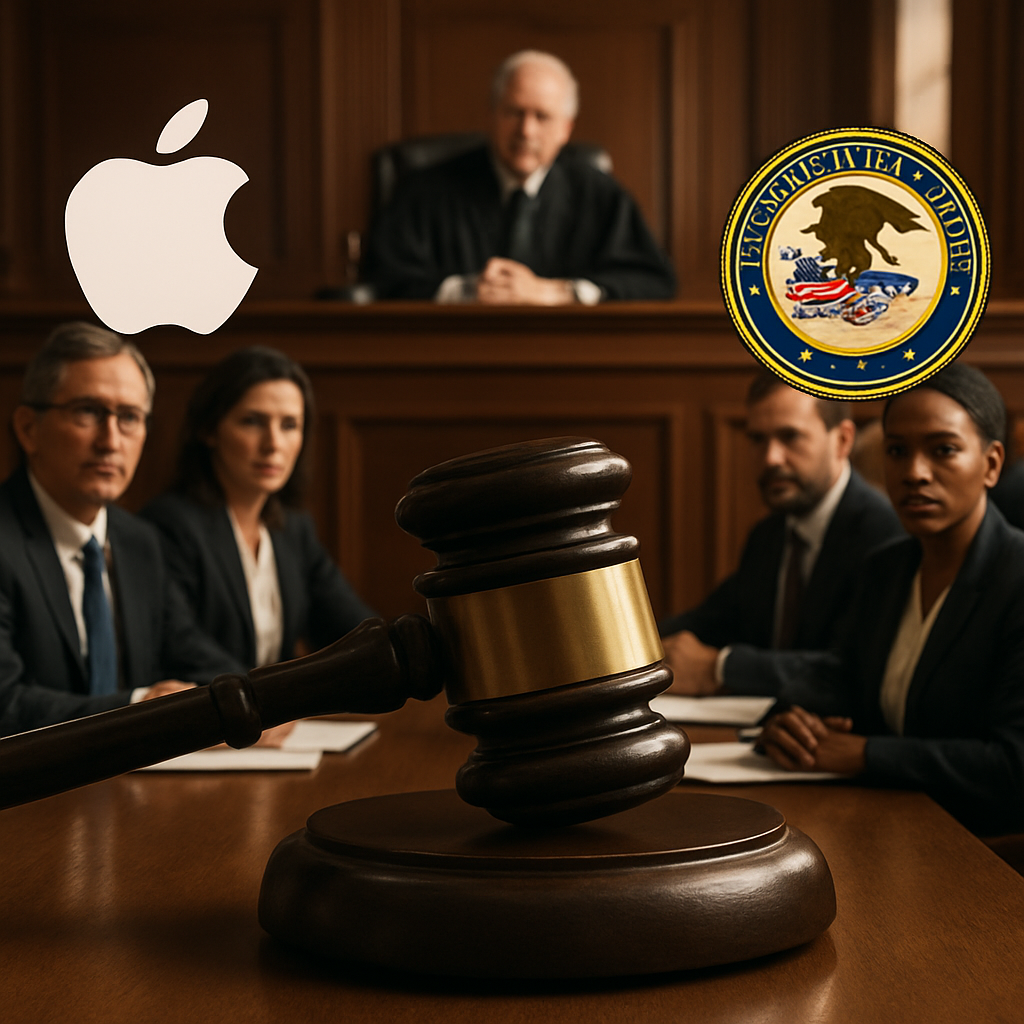
In a significant development within the ongoing antitrust litigation initiated by the U.S. Department of Justice (DOJ) against Apple, a specially appointed judge has ruled in favor of Apple, granting the company access to documents from 14 federal agencies. This decision marks a pivotal moment in Apple’s defense strategy against allegations of monopolistic practices in the smartphone market.
In May 2026, Apple petitioned the court to compel the following federal agencies to produce documents related to their evaluation, procurement, and utilization of smartphones and wearable devices:
- Central Intelligence Agency (CIA)
- Department of Commerce
- Department of Homeland Security
- Department of Defense
- Federal Bureau of Investigation (FBI)
- Federal Trade Commission (FTC)
- General Services Administration
- Department of Labor
- National Aeronautics and Space Administration (NASA)
- National Security Agency (NSA)
- Office of the Director of National Intelligence
- Office of Management and Budget
- Office of Personnel Management
- Department of State
Apple contended that these records could substantiate its defense by demonstrating that the company’s policies, particularly concerning the iPhone, are competitive differentiators rather than anticompetitive restrictions. The company argued that if federal agencies select Apple products for their security and privacy features, it would underscore the legitimacy of Apple’s practices.
The DOJ opposed this request, asserting that the agencies in question are not directly involved in the case, do not regulate smartphones, and do not procure or use them in the same manner as typical consumers. The government characterized Apple’s subpoenas as irrelevant and excessively burdensome, expressing concerns that compliance could involve privileged, classified, or sensitive national security information.
The judge’s decision to grant Apple’s request is a notable victory for the company, potentially providing access to evidence that could reinforce its defense against the DOJ’s allegations. This ruling may also set a precedent for the extent to which corporate defendants can seek discovery from government entities in antitrust proceedings.
As the case progresses, the forthcoming disclosures from these federal agencies could offer critical insights into the competitive dynamics of the smartphone market and the factors influencing procurement decisions within government institutions. Observers will be keenly watching how this information impacts the broader antitrust discourse surrounding Apple’s business practices.