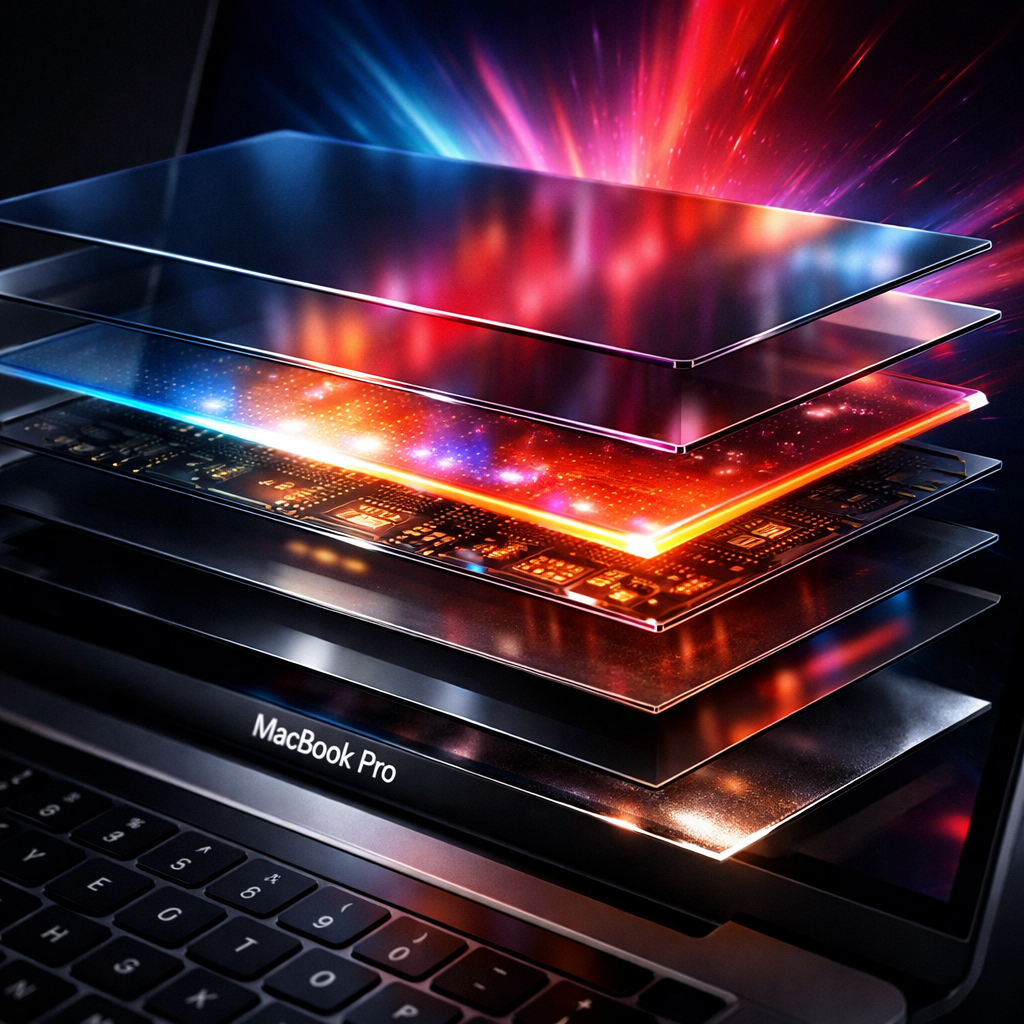
Apple’s first OLED touchscreen MacBook Pro will likely see shipments between 1.2 million and 1.5 million units in 2027, a latest analysis predicts. The new MacBook Pro—launched just yesterday—uses Apple’s tandem-layer OLED technology, which the company previously applied to the M4 iPad Pro in 2024, to deliver brighter visuals without compromising OLED’s signature contrast and power efficiency. The report points to both opportunity and limitations as Apple enters the notebook OLED arena at scale.
What’s shifting in OLED notebook supply
Multiple display makers are rivaling for OLED orders in notebooks, especially with Apple now entering the scene. LG Display, BOE, and TCL CSOT are reportedly competing to supply an OLED MacBook Air planned for a 2029 release. Apple’s OLED roadmap has already been revised: once targeting 2027, the OLED MacBook Air is now expected two years later, reflecting suppliers’ current manufacturing timelines and readiness.
Meanwhile, the emerging OLED notebook market is projected to experience strong growth. According to the report, global LCD-based notebook shipments will give way to OLED devices, with overall OLED notebook shipments expected to jump about 40% year-over-year in 2026, then increase by more than 40% in 2027. With Apple’s participation, demand is likely to accelerate, both by pushing competitors to upgrade existing models and by helping consumers accept OLED as a mainstream display standard in laptops.
Headwinds: Price and product overlap
Even with its impressive specs, Apple’s 14-inch OLED touchscreen MacBook Pro carries a premium price tag—US$2,899—and is launching alongside Mini-LED versions. That price point, combined with overlapping features across display types, may slow near-term upgrades or replacements for existing MacBook Pro users. The market could be cautious as people weigh whether the OLED benefits—or just the touch interface—justify switching.
Despite those potential dampers, the analyst sees Apple’s entry into notebook OLED displays as a watershed moment. Until now, OLED laptops have been driven by Windows PC makers, including Lenovo, HP, and ASUS, which have expanded offerings in higher tiers. Apple’s shift could force a broader rethinking of display roadmaps across brands.
Longer-term outlook
Aside from Apple’s expected 1.2–1.5 million machines in 2027, the broader market is projected to reach 46.6 million OLED notebook shipments by 2030. Growth will be steep at first—2026 and 2027 will see ~40–45% annual demand increases—before slowing down after 2028. Meanwhile, OLED MacBook Air is now penciled in for 2029, giving suppliers time to scale production and perfect quality for thinner, lighter models.
Bringing together these currents—new hardware, teched-up supply chains, shifting consumer expectations—this latest report suggests Apple is entering OLED laptops not just with a product, but aiming to reshape the notebook display landscape.
Why this matters: Apple’s move into OLED with touch and the projected shipment scale could be a turning point. OLED panels offer power savings, richer visuals, and thinner builds. As Apple sets a benchmark in quality and price, rivals will need to respond. Watch for developments in OLED supply capacity, pricing shifts, and how quickly other notebook makers can near match Apple’s forthcoming standards. In short, this could be the moment OLED becomes essential—not just premium—in the laptop world.