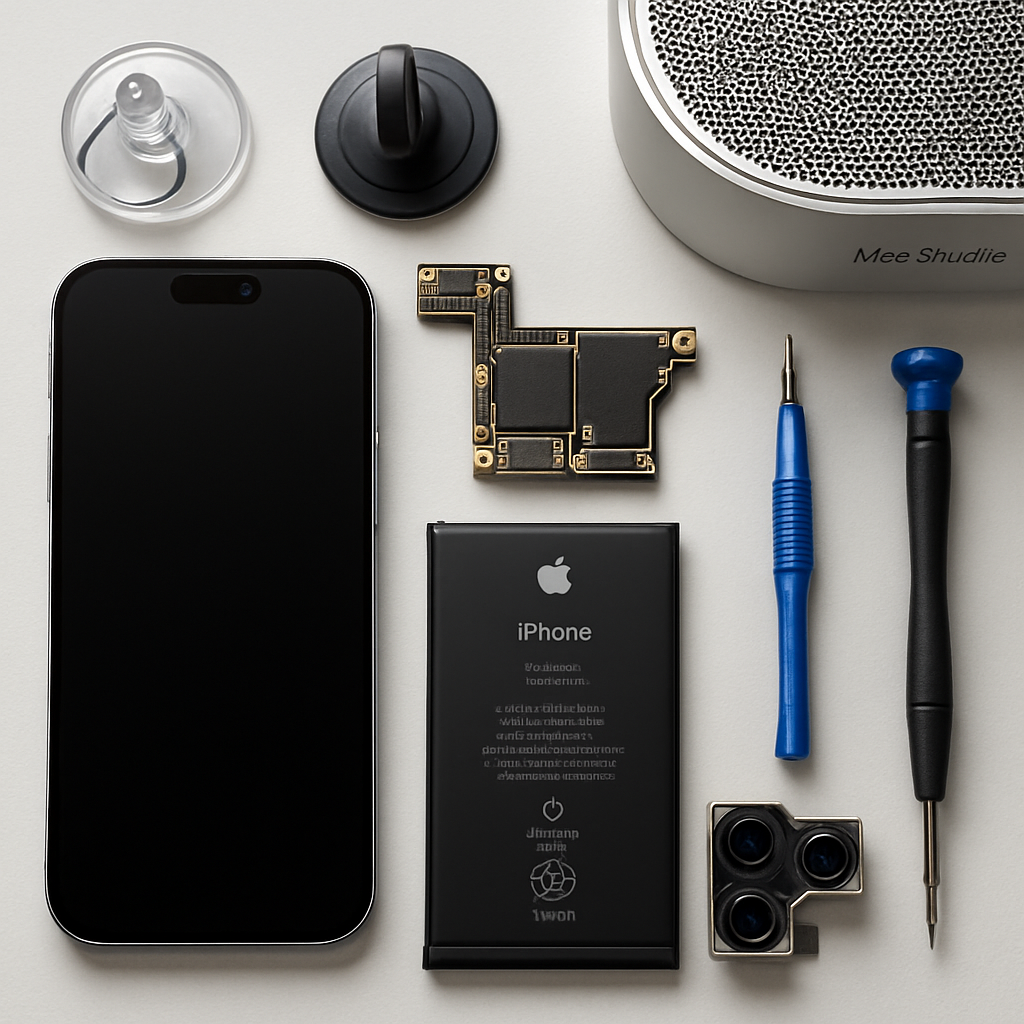
Apple has expanded its Self Service Repair Store with new parts and tools for its latest flagship hardware, including the iPhone 18 Pro and Pro Max, the Mac Studio (M5 Max and M5 Ultra), and recent Mac mini models (M6 and M5 Pro). This move lets users buy official components and supplies needed to perform their own fixes on some of Apple’s newest devices.
New Repair Parts for iPhone 18 Pro Line
Owners of the iPhone 18 Pro or Pro Max can now purchase a wide range of replacement parts, including the back glass, battery, bottom speaker, front and rear cameras, logic board, display, enclosure, SIM tray, microphones, Taptic Engine, top speaker, and other components. Tools and accessories—like adhesive cutters, suction cups, nylon probes, adhesive removal tools, torque drivers, and screws—are also available. One standout price: the rear camera is listed at $249. If you send back the original part, you’ll receive a credit of $59.76, bringing the net cost down to $189.24.
Mac Studio and Mac mini Joins the List
For the Mac Studio models (M5 Max and M5 Ultra), Apple is now offering parts such as Thunderbolt and USB-C ports, fans, speakers, SSD modules, logic boards, and power supplies. Meanwhile, Mac mini users with M6 or M5 Pro versions get access to a shorter but still substantial list: fans, speakers, logic boards, batteries, power supplies, among other components.
Context: What’s Apple’s Self Service Repair?
Launched in 2022, Apple’s Self Service Repair program allows users in eligible regions to purchase genuine parts and tools to fix supported devices themselves. The program also features official repair manuals with detailed instructions for repairing each component. With today’s update, support stretches to newer hardware that earlier wasn’t included.
This expansion coincides with Apple announcing other moves to broaden its supply partnerships in the U.S. for components related to the iPhone 18 Pro and Pro Max.
Why this matters: having access to genuine parts helps users make safer, more reliable repairs, instead of relying solely on third-party or knock-off components. It also aligns with efforts around the Right to Repair and sustainability by making devices easier to maintain over time.
What to watch next: how availability rolls out globally, whether repair pricing remains stable, and how Apple continues to balance doing repairs in-house, via self service, and through third-party repair shops. Users will want to see whether the new parts are as durable and performant as original units—especially in demanding components like cameras and logic boards.