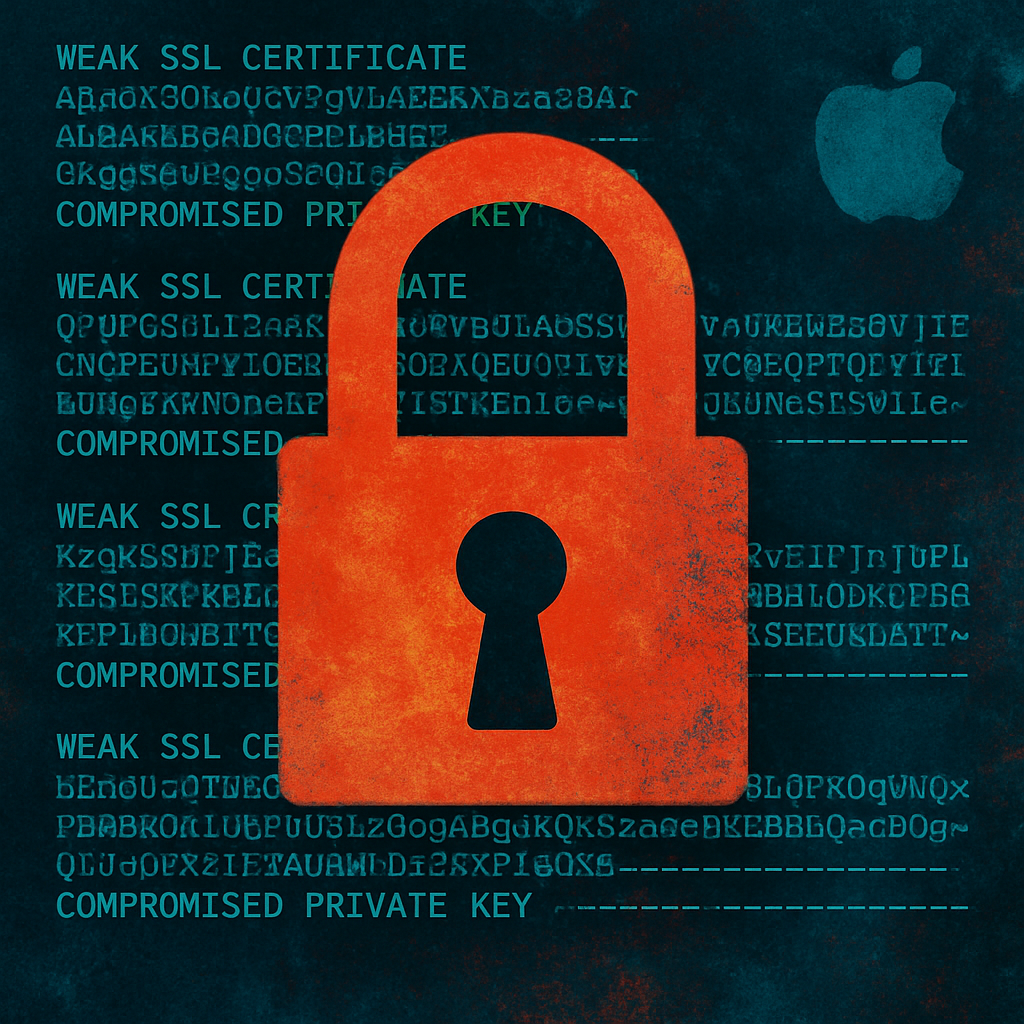
Apple has disabled a set of security certificates issued by Indian certificate authority eMudhra after discovering that their private keys were dangerously weak and easily exploitable. The compromised keys could allow attackers to generate counterfeit certificates and impersonate legitimate websites. This fix took effect on Apple devices beginning October 19, 2026.
How the weakness came to light
An investigation by Mozilla revealed that eight intermediate certificates issued by eMudhra, a certificate authority trusted by major browsers and operating systems, used private keys with values less than 256. Under proper elliptic-curve cryptography with P-384 curve, private keys should be highly unpredictable. But in this case, the keys were essentially single-byte numbers (for example, one key was revealed to be “4”), making them trivial to guess. The flaw stems from a faulty key generation process conducted during a key ceremony in April 2025.
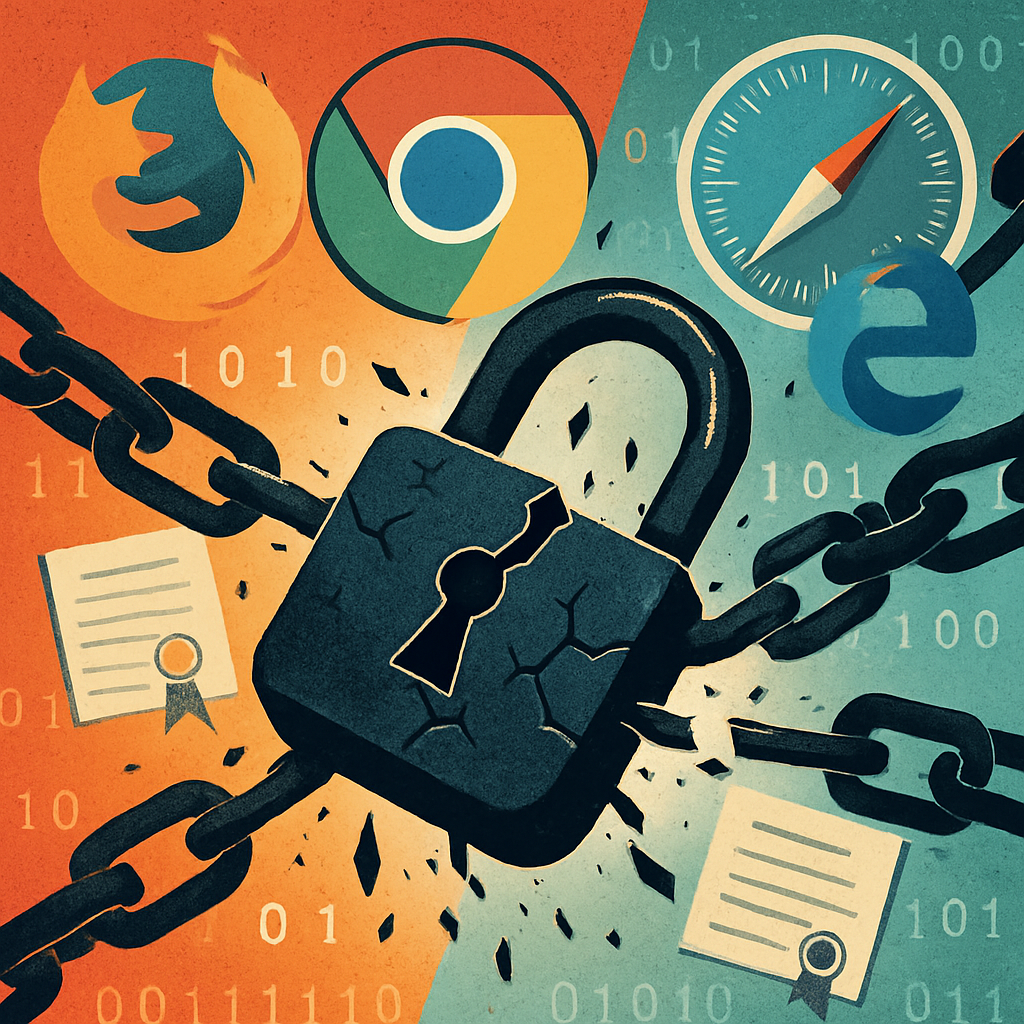
Although six of the certificates could issue TLS certificates—trusted by Apple, Chrome, Firefox, and Microsoft—two were restricted to code signing and trusted only by Microsoft. Most of the flawed intermediates were never used in production, and none issued end-user certificates, according to eMudhra’s review and public certificate transparency logs.
Wide industry response
Mozilla revoked the affected certificates immediately, implementing blocks via its OneCRL mechanism on October 17 so that Firefox users no longer trust them—even without updating the browser. Google followed with its own blocking of those intermediates in Chrome and in cross-signed certificates. Apple enacted protections for iOS, iPadOS, and likely macOS on October 19. Microsoft blocked them a day later.
eMudhra issued a statement confirming that the incident was limited to those specific intermediates, with its root CA keys, others intermediate CAs, and its domestic digital signature and eSign services unaffected. The company is working closely with browser makers and trust-store operators to ensure the ecosystem is protected and to review internal controls and cryptographic practices.
Risks, mitigations, and what users should do
Any system that doesn’t properly check certificate revocation—whether due to outdated trust stores or non-browser tools—may still trust the compromised certificates. A notable example is certain command-line tools like curl on macOS, which might not consult revocation data and may continue accepting these weak certificates.
To stay safe, users and administrators are urged to update their software, operating systems, and trust stores. Administrators should check if their environment uses the affected certificates directly or through cross-signing, and apply remediation guidance provided by security advisories.
The discovery underscores the critical importance of randomness in cryptographic key generation. Even cryptographic systems using well-known algorithms like P-384 can be rendered worthless by human or tooling errors. We’ll be watching how eMudhra fixes its key generation process and how major platforms strengthen detection of similarly weak keys, to prevent a repeat of this kind of breakdown in web PKI trust.