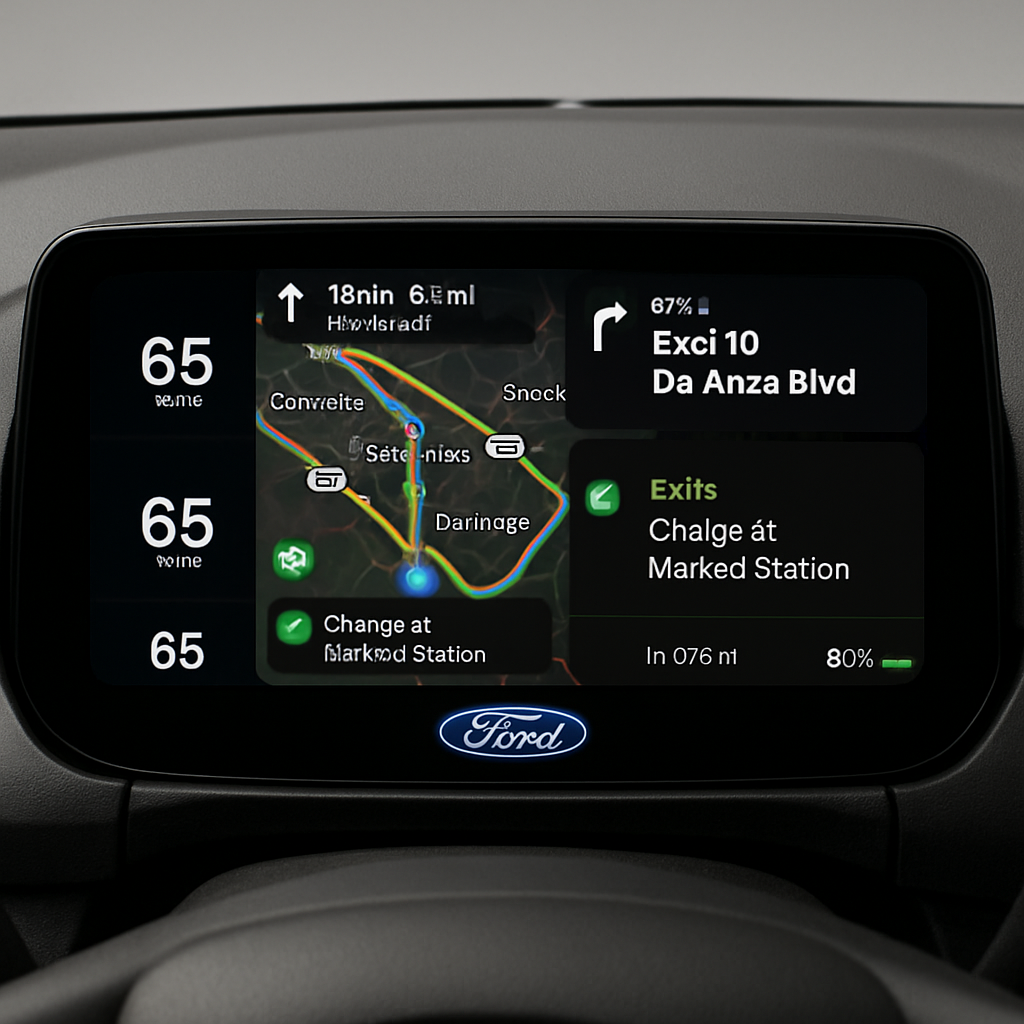
Apple and Ford have announced a collaboration to integrate Apple Maps directly into Ford’s upcoming Universal Electric Vehicle (UEV) Platform, set to debut in 2027. This partnership leverages Apple’s new MapKit for Automotive SDK, enabling Ford to embed Apple Maps seamlessly into the vehicle’s displays while allowing customization to align with Ford’s design aesthetics.
Drivers of Ford’s UEVs will benefit from turn-by-turn directions delivered through natural language search, real-time traffic updates, and intelligent electric vehicle (EV) routing that includes battery preconditioning. Additionally, the mapping data will support the development of an enhanced version of BlueCruise, Ford’s hands-free highway driving feature.
The MapKit for Automotive SDK marks a significant expansion of Apple’s automotive initiatives beyond CarPlay. This software development kit provides automakers with access to Apple’s comprehensive mapping data, allowing for the integration of navigation as a native vehicle feature rather than merely mirroring an iPhone app. Apple emphasizes its commitment to privacy, ensuring that users’ location data and activity are not collected or tied to individual identities through the vehicle’s mapping system.
Ford’s forthcoming midsize electric vehicle, priced around $30,000, aims to redefine advanced technology by making it simple, useful, and accessible to a broader customer base. By embedding Apple Maps’ navigation and mapping technology directly into the UEV Platform, Ford seeks to offer customers an intuitive and capable driving experience, complemented by the Ford app, a comprehensive suite of software, and the next-generation BlueCruise, all supported by a new zonal architecture.
This collaboration between Apple and Ford signifies a notable shift in the automotive industry, where traditional automakers are increasingly integrating advanced technology from tech giants to enhance the driving experience. By embedding Apple’s navigation engine directly into their vehicles, Ford is among the first to move beyond reliance on CarPlay, indicating a trend towards deeper integration of technology and automotive design. This development underscores the growing importance of seamless, user-friendly technology in the evolution of electric and autonomous vehicles.