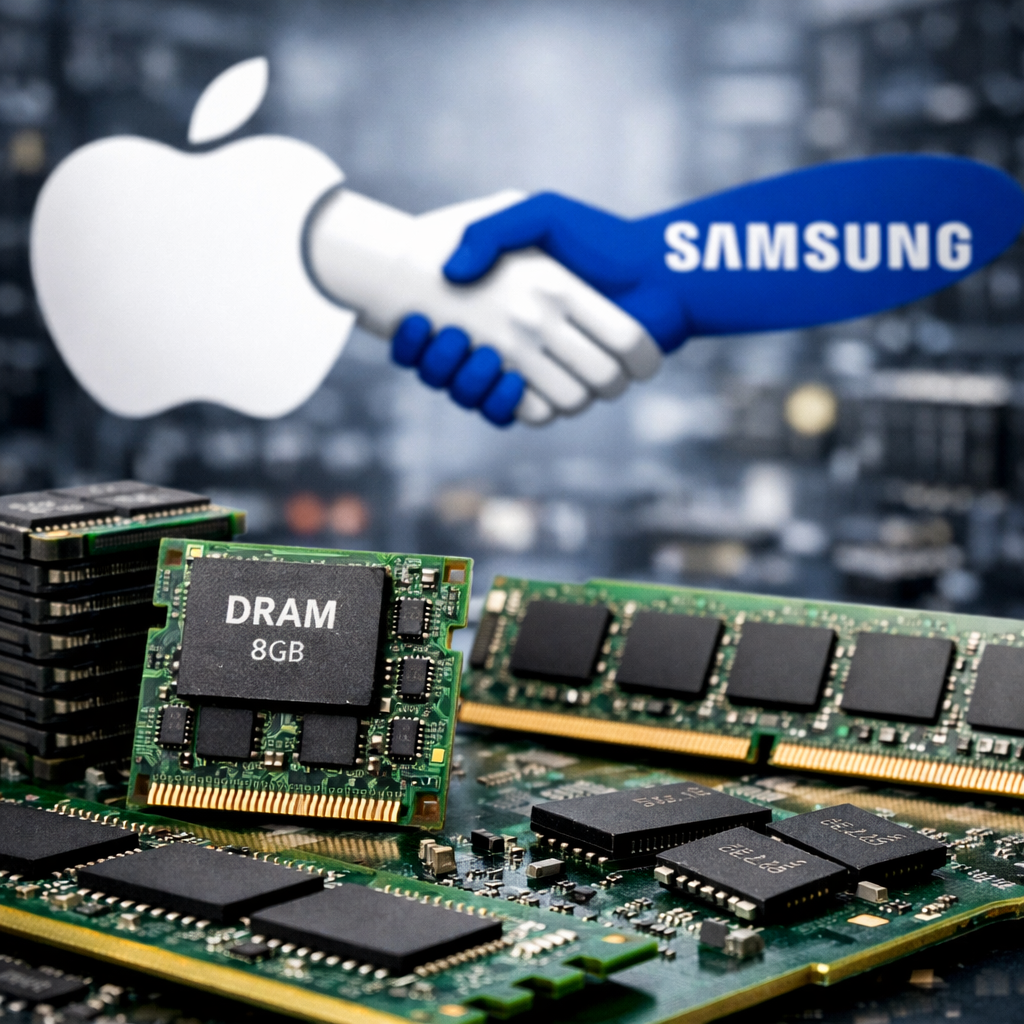
Apple is reportedly finalizing a long-term contract with Samsung for supplying DRAM chips that could stretch through 2031 or 2032. Under this agreement, Samsung would provide memory to Apple on a four- to five-year term, with base purchase volumes guaranteed and prices that can vary depending on market shifts. This marks a notable change for Apple in how it handles memory supply deals.
What’s changed?
Previously, Apple relied primarily on shorter term or year-to-year contracts or leveraged existing stockpiles to weather global DRAM shortages. But since early 2026, the company has been paying roughly double its earlier rates for DRAM due to intensified demand and tighter supply, particularly driven by AI data center growth worldwide.
The new long-term agreement with Samsung isn’t exclusive—Apple is said to have entered into a similar deal with SK Hynix. But the Samsung deal stands out for its length. It’s reportedly rare for Apple to sign contracts of this duration for consumer DRAM, especially with minimum ordering clauses, flexible pricing, and spanning several years.
Why this matters
For Samsung, this deal locks in stable revenue and order visibility months—even years—ahead. It also serves as insurance if DRAM demand from AI infrastructure cools off. For Apple, getting long-term supply certainty could help stabilize costs and avoid disruption during tight DRAM cycles.
Rising DRAM and processor component costs have already triggered consumer device price hikes—Apple raised many product prices in July 2026, followed by increased costs for updated models released in September and October. The company may be setting itself up for further price pressure in 2027 unless supply tightness eases.
This shift fits a larger trend: many Big Tech firms have already entered long-term deals with memory suppliers. Apple had long held back on this practice, but now appears to be aligning with industry behavior amid volatile memory markets and intense supply side competition.
Analytically, Apple’s move to lock in multiyear DRAM supply with Samsung signals both the increasing urgency of chip supply stability and rising material costs that threaten margins. With AI momentum pushing up demand, tech firms are being forced to take supply chain risks they once avoided. For consumers, this could mean more stable product pricing long-term—but also the possibility of regular mid-cycle raises if memory prices surge. Watch for Apple’s device pricing in 2027 and any signals from suppliers around DRAM inventory and shipping lead times as tell-tales of whether this strategy will pay off.