Apple’s upcoming Home Hub is shaping up to be far more personalized than previous smart home controllers, with macOS code leaks revealing it will offer a dedicated Personal Content feature powered by ambient sensing and built-in cameras. The device is expected to recognize individual users through facial detection and adjust content based on profiles.([appleinsider.com](https://appleinsider.com/articles/26/08/24/ambient-sensing-and-cameras-to-power-apple-home-hub-personalization/))
Profile-Driven Personal Content via Cameras and Sensing
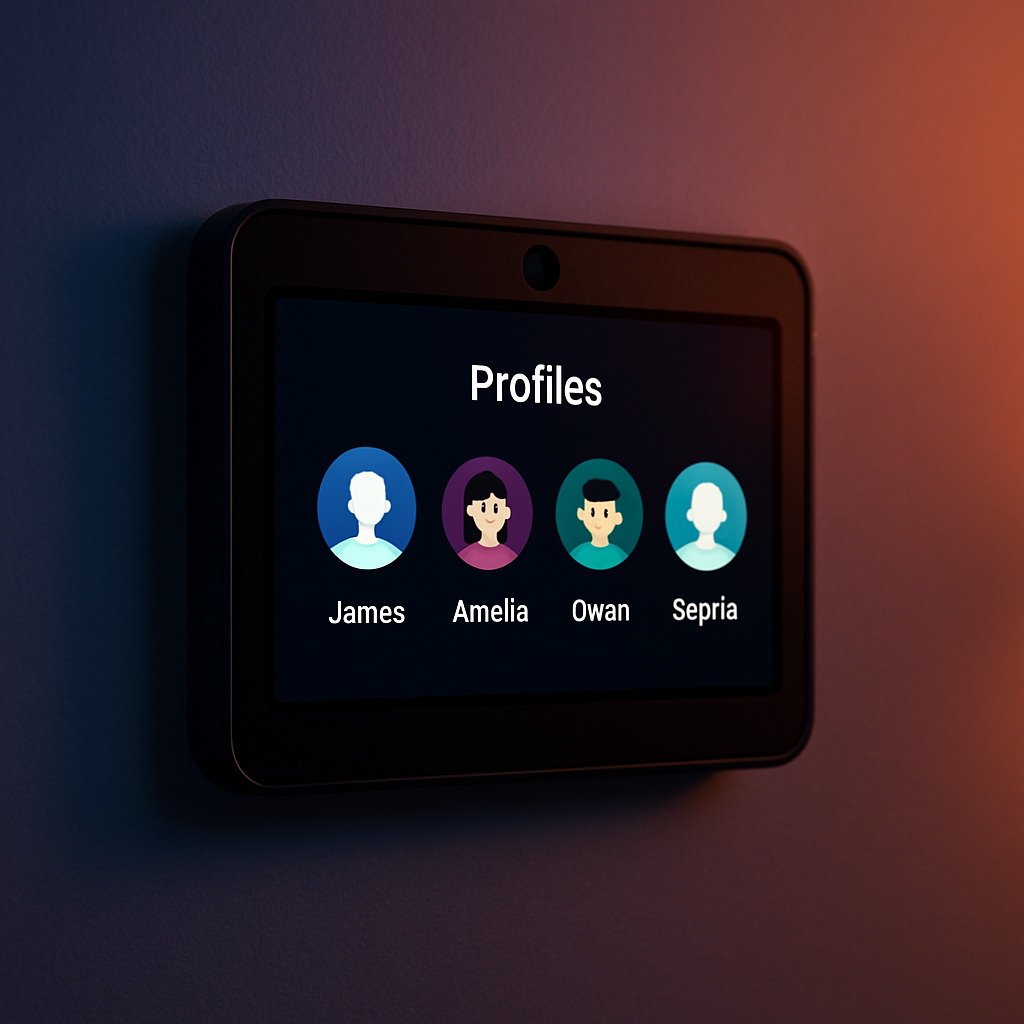
Strings uncovered in the macOS Tahoe 26.7 release candidate show the Home Hub will prompt users to “ask again in front of the camera” or “come in front of this device and ask again,” indicating that it can detect when it’s dealing with a known user or not.([appleinsider.com](https://appleinsider.com/articles/26/08/24/ambient-sensing-and-cameras-to-power-apple-home-hub-personalization/)) Once the resident activators of the Personal Content feature authenticate via their profile in the Control Center, the Home Hub should surface personalized content tied to that account.([appleinsider.com](https://appleinsider.com/articles/26/08/24/ambient-sensing-and-cameras-to-power-apple-home-hub-personalization/))
Two Variants & a Familiar OS Foundation
Leaked identifiers in the macOS code reference two models: one with a speaker-style base and one designed for wall mounting. These are thought to be internally known as J490 (speaker base) and J491 (wall mounted), designated “HomeAccessory” and “HomeAccessory_wall.”([appleinsider.com](https://appleinsider.com/articles/26/08/24/ambient-sensing-and-cameras-to-power-apple-home-hub-personalization/)) The software that powers the Home Hub appears to resemble Apple’s tvOS, with similarities to watchOS in its “Faces” and “Face Gallery” features.([appleinsider.com](https://appleinsider.com/articles/26/08/24/ambient-sensing-and-cameras-to-power-apple-home-hub-personalization/))
The Home Hub seems to slot into Apple’s home ecosystem as an AI-focused central controller. It retains core capabilities associated with tvOS and watchOS, while adding more advanced ambient sensing and identity verification.([appleinsider.com](https://appleinsider.com/articles/26/08/24/ambient-sensing-and-cameras-to-power-apple-home-hub-personalization/))
With Personal Content enabled via the Settings app, users will select or switch between profiles from Control Center. Through face recognition or other ambient signals, the device will know who is interacting with it and deliver tailored content accordingly.([appleinsider.com](https://appleinsider.com/articles/26/08/24/ambient-sensing-and-cameras-to-power-apple-home-hub-personalization/))
Wall-mount and speaker base models suggest flexible installation options depending on home setup. The inclusion of “Faces” and “Face Gallery” likely aims to support recognition of multiple users, similar to features found in Apple Watch and other devices.([appleinsider.com](https://appleinsider.com/articles/26/08/24/ambient-sensing-and-cameras-to-power-apple-home-hub-personalization/))
Crucially, although personalization seems to be major upgrade, the leaked code suggests that under the hood Home Hub’s software won’t be a radical departure from Apple’s more established systems—just a smart blend of existing technologies with a new identity layer.([appleinsider.com](https://appleinsider.com/articles/26/08/24/ambient-sensing-and-cameras-to-power-apple-home-hub-personalization/))
What this all points to is Apple stepping up home device intelligence. Rather than one-size-fits-all content, Home Hub will tailor responses, settings, and perhaps even UI per user. While it’s unclear exactly what data gets used for personalization or how privacy safeguards will work, the presence of ambient sensing and camera-based recognition indicates Apple is betting heavily on context-aware interactions. Trends toward smarter homes, where devices adapt to who you are and what you’re doing, seem to be the direction. Keep an eye out for further details on how identity, privacy, and personalization are balanced when Apple officially reveals the Home Hub.
Analysis: This leaked functionality suggests Apple wants the Home Hub to bridge the gap between assistant-style devices and home control hubs—making it both reactive and anticipatory. As more homes fill up with screens and smart devices, the ability to know who’s engaging and adjust content accordingly is a logical next step. Where Apple (and other companies) succeed or fail will likely hinge on how transparent and secure identity verification proves to be—and how much users trust their homes to recognize them without compromising privacy. It’ll be fascinating to see which features survive to final release, and whether Apple opens such capabilities to third-party ecosystems.