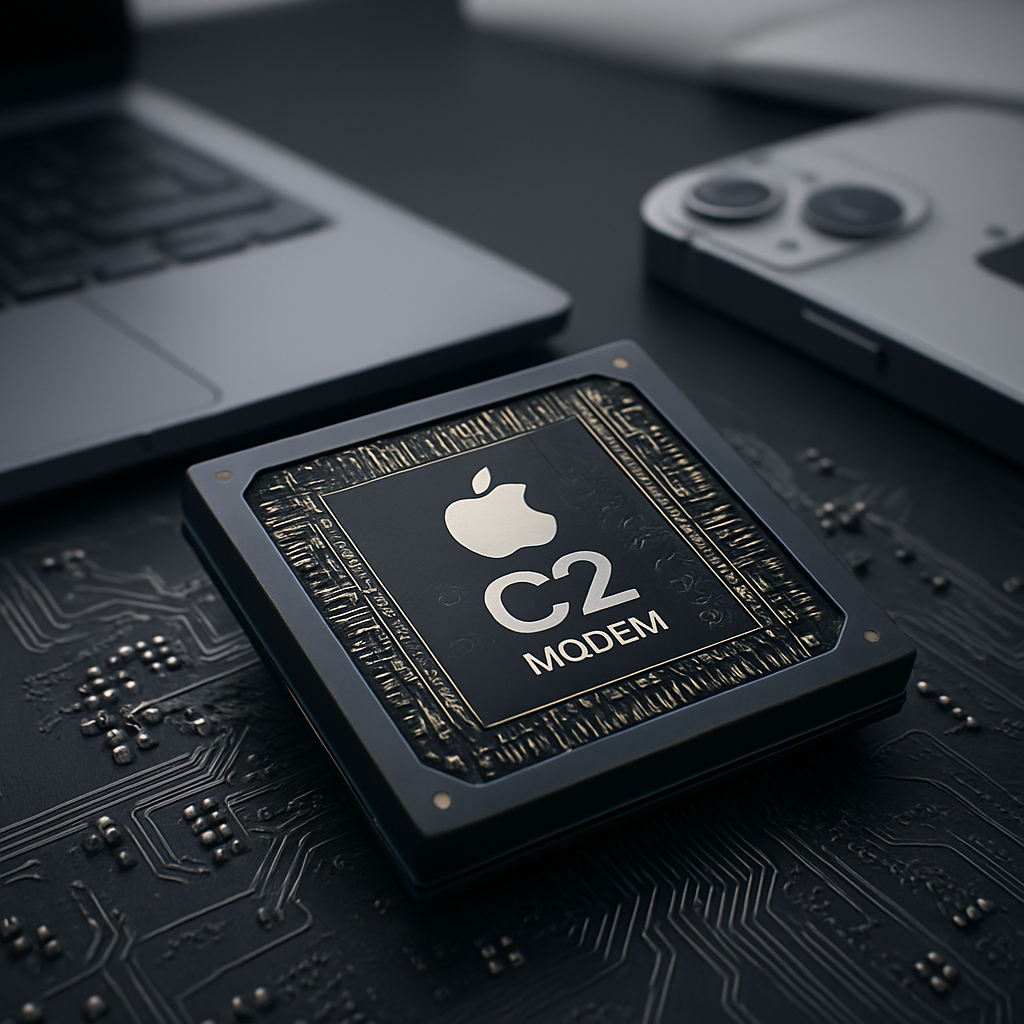
Apple has announced an extension of its partnership with Broadcom, committing to collaborate through 2031. This development suggests that Apple’s transition to fully in-house radio chips may take longer than previously anticipated.
In recent years, Apple has been working to reduce its reliance on third-party suppliers by developing its own components. The introduction of the C1 modem chip in the iPhone 16E marked a significant step in this direction. The C1 chip, designed by Apple and manufactured by TSMC, offered improved power efficiency but lacked support for mmWave 5G—a high-speed, short-range form of 5G typically available in high-traffic areas like airports and stadiums.
Subsequently, Apple released the C1X chip, which is utilized in devices such as the iPhone Air, iPhone 17E, and certain iPad models. Despite these advancements, the absence of mmWave 5G support in these chips has been a notable limitation.
The upcoming iPhone 18 Pro, Pro Max, and Ultra models are expected to feature the new C2 chip, which will include mmWave 5G support. This enhancement aims to provide users with faster data speeds in areas where mmWave 5G is available.
Despite these strides in developing proprietary radio chips, Apple’s renewed agreement with Broadcom indicates that the company will continue to rely on third-party components for certain products. Broadcom has been a longstanding supplier for Apple, providing essential components such as custom radio frequency chips, Wi-Fi and Bluetooth connectivity chips, and other networking semiconductors.
While Apple continues to invest in developing its own radio chips, the extended partnership with Broadcom suggests that a complete transition to in-house solutions may not occur until after 2031. This approach allows Apple to maintain a balance between innovation and reliability, ensuring that its devices continue to meet high performance standards while gradually reducing dependence on external suppliers.
In the broader context, this strategy reflects Apple’s cautious approach to supply chain management. By extending its partnership with Broadcom, Apple can ensure a steady supply of critical components while it continues to refine and expand its in-house chip development capabilities. This measured transition underscores the complexities involved in developing and manufacturing advanced radio technologies and highlights the importance of strategic partnerships in maintaining product quality and performance.