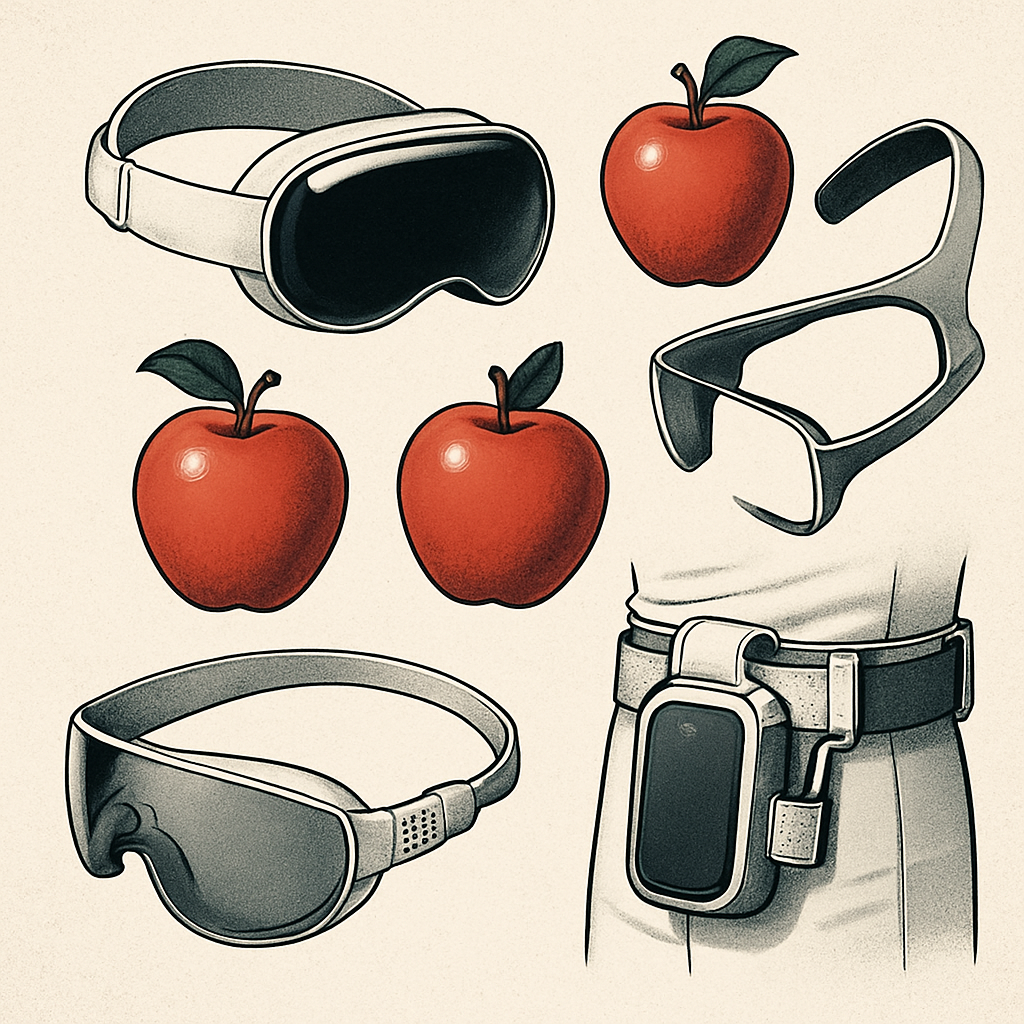
Apple is reportedly developing a fully revamped Vision Pro headset. Sources suggest the project, under the codename N224, encompasses four distinct design approaches—yet the company is still uncertain which direction it will take. Any finalized model is not expected before late 2028 or early 2029.
What’s Under Consideration
One of the concepts being explored mirrors designs like Meta’s upcoming VR glasses, which relocate heavy components—battery and processor—to an external module that clips onto the user, typically at the waist. That module is about the same size and mass as the current Vision Pro’s internal battery pack, albeit with a more textured exterior for grip. Apple leadership is reportedly skeptical of this option, viewing it as a potentially poor user experience.
Despite the external-module approach being on the table, senior decision-makers seem to favor a design closer to the current Vision Pro all-in-one format. Core concerns include cost, weight, and complexity. Earlier reports, including from June of this year, indicated Apple was working on a lighter, more affordable Vision Pro successor—distinct from the previously canceled “Vision Air” project.
Strategic Context and Uncertainties
Apple is under growing pressure to simplify its headset design and reduce its price. The Vision Pro has received praise for its capabilities but criticism for its bulk and steep entry cost. The goal: reach a broader audience by making the headset more accessible.
Meanwhile, Apple is reportedly shifting more of its XR investment toward smart glasses, with an anticipated launch in late 2027. Some within Vision Pro leadership have pushed to keep the headset program alive and well-funded. But even that doesn’t eliminate doubts—there’s no guarantee a new Vision Pro model will come to market.
To sum up: Apple’s XR efforts are exploring four possible Vision Pro designs. These include external modules similar to those expected on Meta’s devices, though all-in-one versions remain preferred by many. Any product is still 2–3 years away, and the company appears to be hedging its bets by also betting big on smart glasses.
What this means: Apple could be on the verge of a turning point. If they can nail a lightweight, lower-cost Vision Pro without sacrificing performance—while smart glasses offer simpler, everyday XR—that synchs with broader trends in augmented reality. We’ll need to watch whether Apple abandons the all-in-one Vision Pro or finds a middle ground. The design it ultimately chooses may define Apple’s XR positioning for years to come.