Apple has quietly removed the waitlist requirement for Siri AI access in iOS 27, making the feature available immediately to most users—unless demand spikes. The company updated its support documentation this week to reflect the change.
What’s changing?
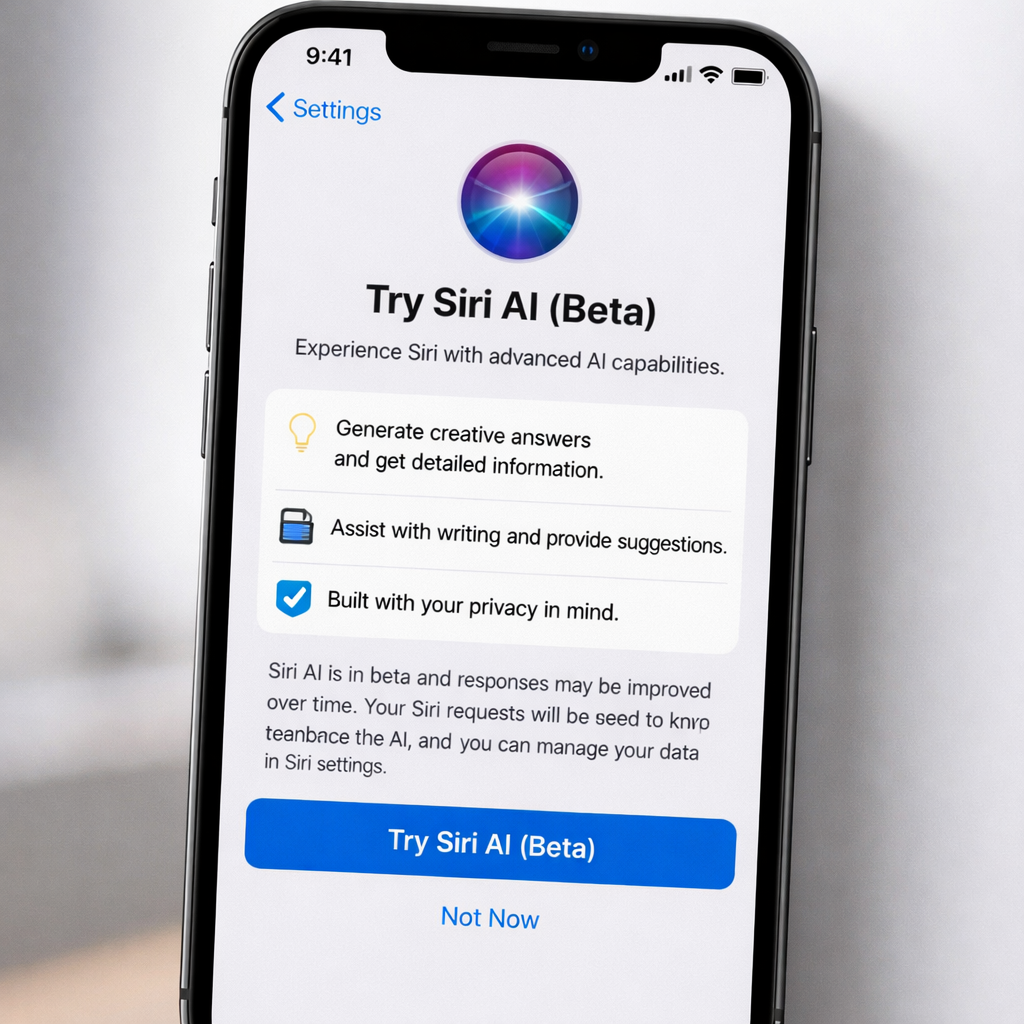
When iOS 27 rolled out earlier this fall, getting access to Siri AI meant signing up on a waitlist. Users tapping “Try Siri AI (Beta)” in Settings were told they’d be placed on hold until the feature could be enabled. That protocol has now been revised.
According to the newly updated support document, Siri AI will now download and activate automatically for eligible iPhones. The waitlist is still mentioned—though now only used during “high demand” periods. In those situations, users may still see delays when trying to enable the feature.
Why the switch?
The waitlist was likely a capacity-control measure. Managing server load and infrastructure during the initial rollout—while maintaining a high standard of performance—would have required throttling access. But nearly two months into the iOS 27 launch, Apple appears confident enough to drop the broad waitlist policy.
This shift suggests that the backend architecture is stabilizing, and user uptake is being scaled smoothly. Instead of holding back access by default, Apple is now only leaning on the waitlist as a fallback when system resources are strained.
What users should know
If you haven’t set up Siri AI yet, go to Settings and tap “Try Siri AI (Beta).” From there, the AI should begin downloading on its own. If you face a message about a waitlist, it’s likely because Apple has flagged the servers as busy.
This new availability applies broadly to all users running iOS 27 on supported hardware. The only exception remains periods of high demand, during which Apple can revert to the waitlist approach temporarily.
For many, this change translates to faster, simpler access to Siri AI. Whether you’re new to the feature or held off during the wait, the barrier to entry is now significantly lower—and activation should be nearly instantaneous under normal conditions.
Looking ahead, it will be worth watching how often “high-demand” waitlist conditions show up, whether certain regions see delays more than others, and how this model influences user satisfaction. Apple’s move represents a maturation of its rollout strategy—one that balances eagerness to deliver against the risks of overextending server capacity.