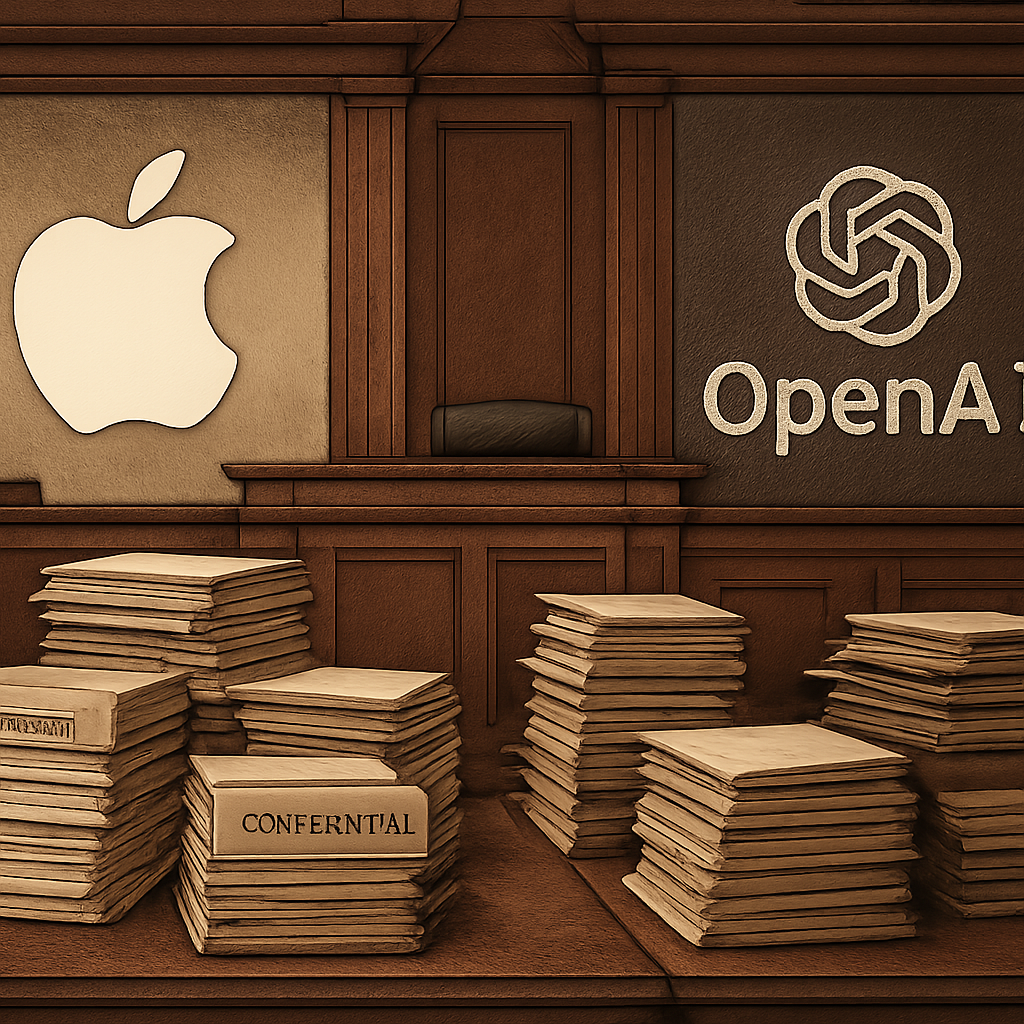
This week brought a sharp rebuttal from Apple to allegations raised by OpenAI regarding alleged trade secret theft. OpenAI claimed a former employee who left for Apple transferred over a hundred confidential files relating to an unreleased device, but Apple says its investigations found no proof of wrongdoing.
What’s at issue
Back in early 2026, Apple initiated a lawsuit accusing two ex-employees—Chang Liu and Tang Tan—along with OpenAI and io Products of misappropriating trade secrets. The case expanded this month when OpenAI alleged that one of Apple’s former engineers, now back at Apple after a stint at OpenAI, had transferred sensitive documents tied to an unreleased product to personal accounts. The timing and contents of these claims have sharpened tensions between the two companies.
Apple’s response
Apple provided a detailed court response after OpenAI’s claims became public. The company stated that it received no prior warning about the new allegations, emphasizing that they fall outside the scope of the ongoing lawsuit—where Apple claims OpenAI misused Apple’s own confidential information. Apple also revealed the engineer in question once held an iPhone-focused manufacturing design role at Apple, left for OpenAI, then later returned.
Following OpenAI’s filing, Apple says it launched an internal probe on October 9, and by October 12 had notified OpenAI that it found no evidence that any files from OpenAI were present within Apple’s systems. Apple also requested additional specifics from OpenAI to guide further searches, but claims OpenAI never provided them before escalating the matter to court. The company insists it is fulfilling all legal obligations by preserving evidence and cooperating where needed.
Context and implications
Though the two companies are already locked in a trade secrets lawsuit, Apple maintains the new allegations are separate from the original case. That earlier suit centers on Apple’s accusations that OpenAI improperly obtained and used confidential Apple materials—not vice versa. Apple signals desire to resolve the new claims through inspection rather than courtroom theatrics, but for now it sees no discovery that supports OpenAI’s latest allegations.
The dispute illustrates the growing legal and ethical battles surrounding confidential information in AI and hardware development. With former employees moving between industry rivals, the line between legitimate knowledge transfer and unlawful disclosure becomes increasingly sharp.
What to watch: will OpenAI provide the detailed evidence Apple requested? If not, its side of the story could suffer credibility losses. Conversely, Apple’s transparency in sharing its internal findings may bolster its case. Either way, this episode amplifies a vital tension in AI competition—how to protect trade secrets while still fostering innovation across teams where mobility is high.