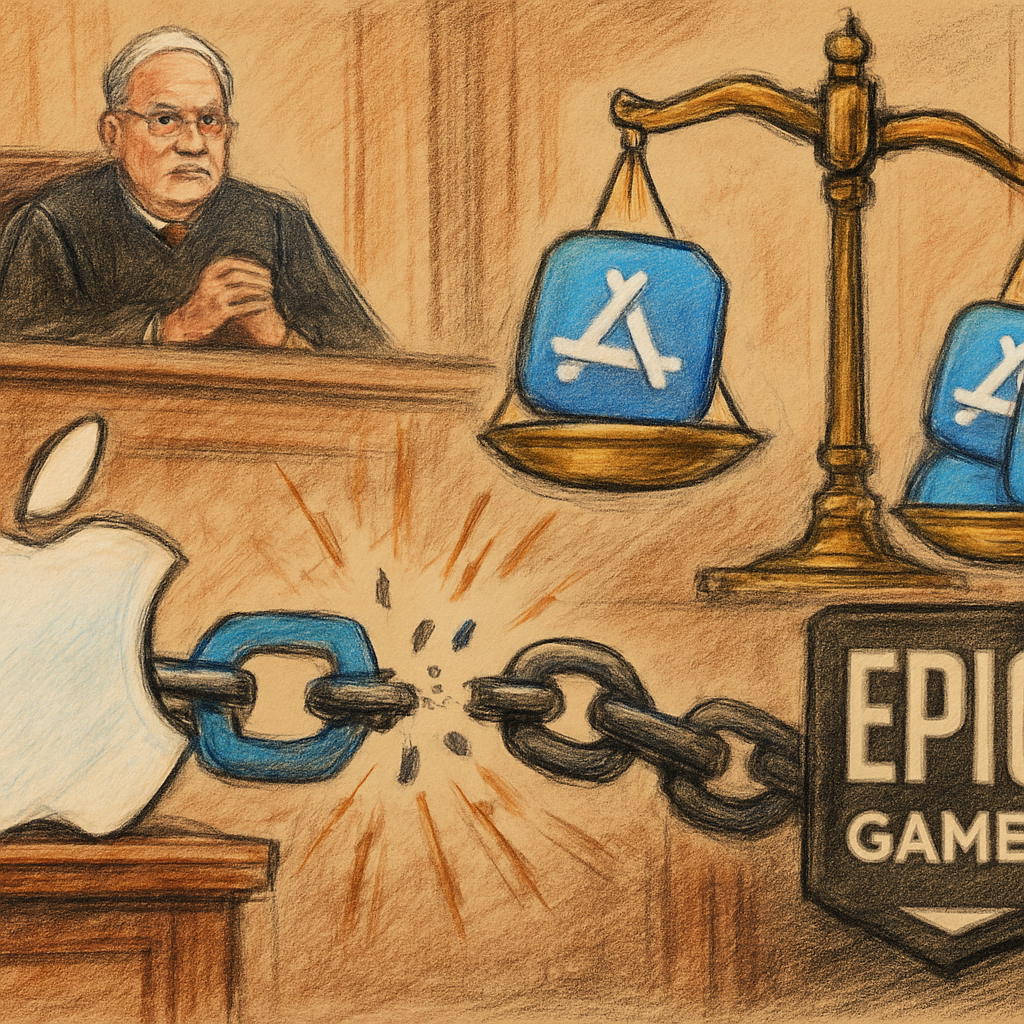
Apple is bracing for a big moment in its long-running legal clash with Epic Games. The tech giant has asked the Supreme Court to overturn a ruling that accused it of violating an injunction aimed at letting developers steer users toward external purchase options. This decision could ripple across the App Store ecosystem if upheld.
How We Got Here
The showdown started in August 2020, when Epic bypassed Apple’s in-app purchase system by allowing users to pay directly in Fortnite. Apple removed the game from the App Store for violating its payment rules, leading to a lawsuit claiming Apple abuses its dominance and blocks competition. By September 2021, most of Epic’s claims were rejected, though the court ruled in favor of requiring Apple to allow outbound links to external payment systems—an anti-steering provision.
Apple challenged that mandate through appeals, but courts repeatedly upheld Epic’s right to external links, even as Apple fought to limit how and when those links could be used. In April 2025, a court found Apple failed to fully comply with the anti-steering injunction. In May 2025, Apple updated its App Store Guidelines in response, but questions over whether it can collect commission fees on those external purchases remain unresolved. The Supreme Court agreed to consider Apple’s objections to certain rulings on June 30, 2026.
Apple’s Arguments Before the High Court
Apple’s Supreme Court filing zeroes in on two main arguments. First, it claims that the District Court misinterpreted the original ruling by reading more into the “spirit of the law” rather than sticking strictly to its wording. Commission charges weren’t mentioned explicitly in the anti-steering mandate, Apple insists, so any fees related to external purchase links were never part of that injunction.
Second, Apple argues that the District Court exceeded its authority by issuing a broad injunction rather than tailoring it specifically to Epic. Drawing on precedent in related cases, Apple contends any injunctive relief should have been limited, not universal, and that only Epic should be bound by certain obligations.
What the App Store Fees Look Like Today
Apple continues to defend its standard fee for in-app transactions—30%—though with carve-outs. Subscription fees drop to 15% after the first year. Small developers earning $1 million or less annually qualify for the Small Business Program, which also limits fees to 15%. Other fee reductions apply through a range of partner programs for video, news, and mini apps. App Store fees don’t apply to all transactions—purchases of physical goods or services, such as food delivery or books via Amazon, are exempt.
In relation to external purchase options, Apple introduced a revised proposal in August 2026. Under this scheme, it suggested charging standard apps 15%, partner programs 10%, and small businesses 5% on transactions occurring outside Apple’s system. Apple pays that Epic rejected those rates immediately, pushing for 0% fee on external purchases.
As the Supreme Court prepares to hear arguments in October, the stakes remain high. Epic wants a ruling that fully frees developers from Apple’s fee-tied model, especially for purchases made outside the App Store. Apple, meanwhile, is fighting to retain financial leverage and maintain its longstanding structure of commissions and control.
Analysis: This case isn’t just about the fees—it’s about who gets to control how software commerce works on iOS. If the Court rules for Epic, Apple’s ability to enforce its fees through platform control could be severely eroded. A decision for Apple could preserve its control over App Store economics, making commission schedules and payment structures more resilient to legal challenge. Whatever the outcome, it will redefine the rules across app stores and could influence regulation globally—watch closely this October.