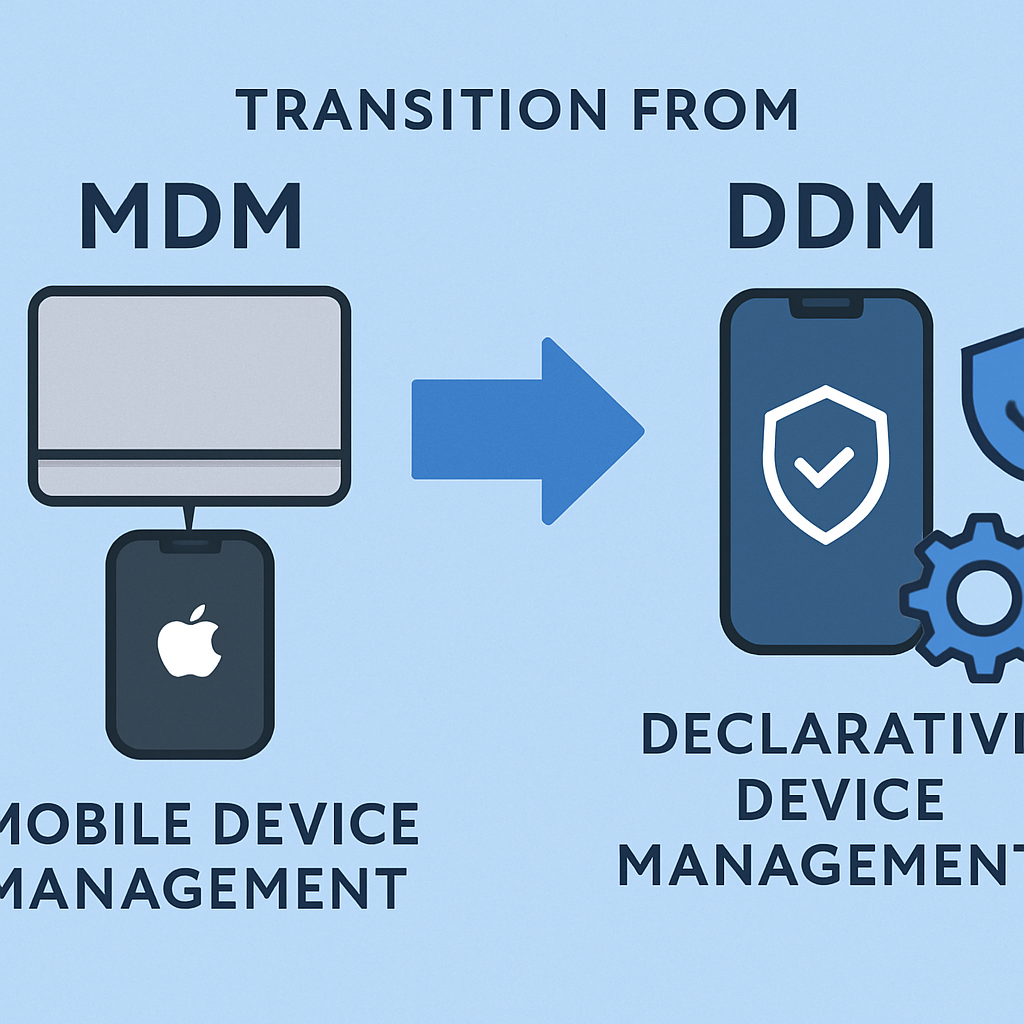
At the recent Worldwide Developers Conference (WWDC), Apple announced a significant shift in device management with the upcoming releases of macOS 27 and iOS 27. The company is transitioning from traditional Mobile Device Management (MDM) to Declarative Device Management (DDM), marking a new standard for managing Apple devices in enterprise environments.
Transition to Declarative Device Management
Apple’s move to DDM involves integrating legacy configurations into the declarative model. This integration is facilitated by the new ProfileAssetReference key, allowing IT administrators to encapsulate existing configuration profiles within the declarative framework. A crucial aspect of this transition is the enforcement of TLS 1.2 or higher for device management services. Vendors failing to meet these updated security standards will experience disruptions in essential management functions, including device enrollment, profile installation, and software updates. IT departments are advised to audit their systems promptly to ensure compliance with these new requirements.
Furthermore, devices running the latest operating systems will no longer restore device management information from backups. Instead, they will automatically initiate Automated Device Enrollment post-restore, ensuring devices receive current management configurations rather than outdated ones. This change is expected to streamline processes and reduce troubleshooting efforts for IT support teams.
Software Update Management Overhaul
Apple is deprecating legacy software update management methods. Commands and queries associated with the old system will no longer function in the new OS releases. IT teams must now adopt declarative software update management to configure and enforce updates effectively. This shift aims to provide more reliable and efficient update processes across managed devices.
Additionally, the management of on-device intelligent systems, collectively referred to as Apple Intelligence, is transitioning entirely to declarative configurations. IT administrators will gain granular control over device-wide Apple Intelligence features, enabling them to permit or restrict functionalities as needed to align with organizational policies.
Apple’s decisive move to standardize Declarative Device Management underscores its commitment to enhancing device management capabilities. By adopting DDM, organizations can expect improved efficiency, security, and control over their Apple device fleets. IT departments should prioritize updating their management practices and systems to align with these new standards, ensuring a seamless transition and continued optimal performance of their Apple devices.