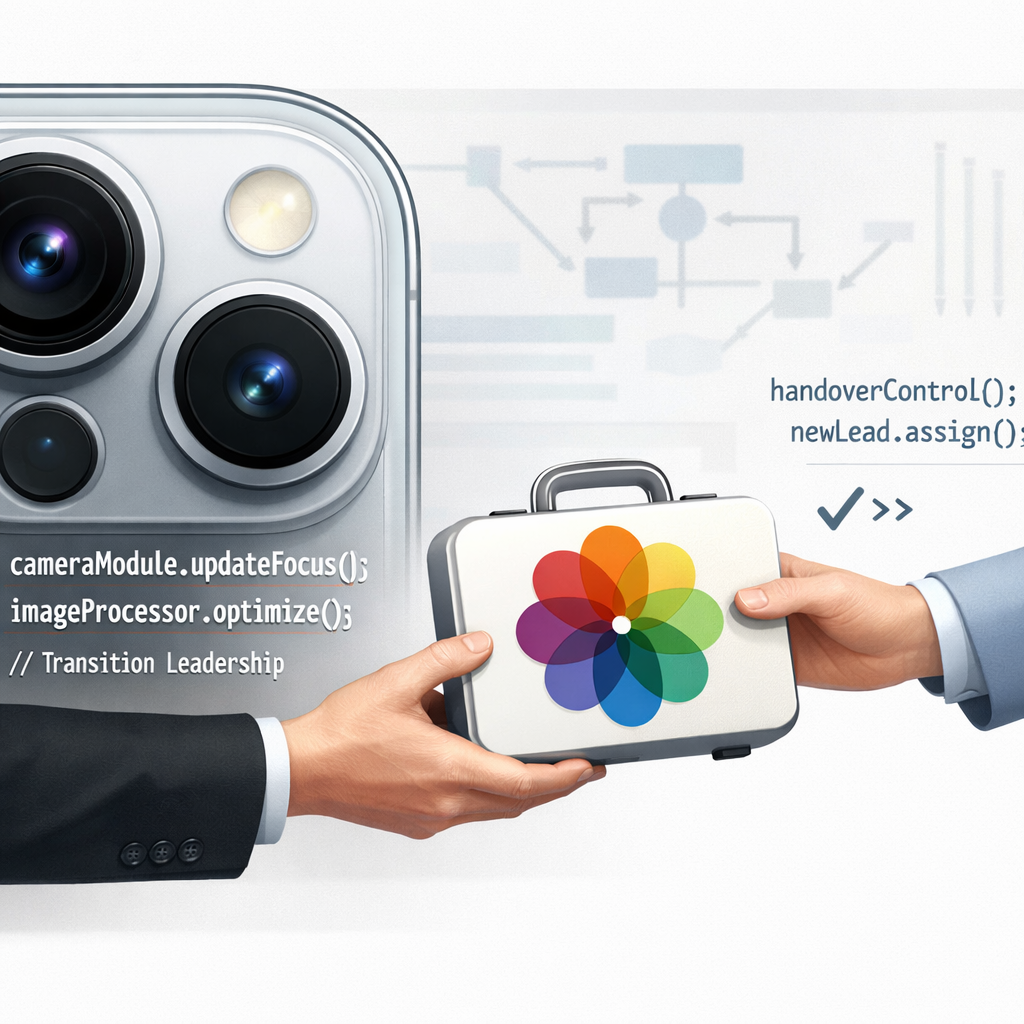
Apple has quietly lost a key executive: Jon McCormack, vice president overseeing Camera and Photos software engineering, ended his tenure at the company in late October 2026. McCormack had spent over eight years in the role, steering developments in the Camera app, Photos app, and related imaging technologies. His retirement was confirmed by sources who monitor Apple’s leadership changes and product teams.
McCormack’s leadership covered core iPhone features, including how the device captures, processes, and stores images. He played a direct role in shaping what many users experience daily—from photo quality and video capture to deep integration of computational photography and other imaging innovations. His departure leaves a significant gap in one of Apple’s most visible engineering domains.
Why This Matters
Apple’s Camera and Photos apps have long served as touchpoints with millions of users. Features like Smart HDR, Night Mode, Deep Fusion, and cinematic video modes hinge not only on hardware but complex software pipelines. Camera and photo software engineering leadership is central to Apple’s efforts to advance how phones capture and handle images—critical for retaining its edge against rivals pushing aggressive AI, multi-camera setups, and third-party computational photography tools. McCormack’s exit could slow or shift direction unless strong successors are already in place.
What’s Next Internally
As of now, it’s unclear who will take over McCormack’s portfolio or what timeline Apple has for appointing a replacement. The Camera and Photos teams are complex and interlinked with machine learning, hardware engineering, silicon development, and UI/UX design. Leadership transitions in this area often take time, partly because advances in camera software increasingly depend on cross-functional collaboration—something Apple tends to build gradually.
While public-facing visual improvements may not shift overnight, momentum in features like improved low-light performance, video capabilities, and source-managed AI enhancements suggest Apple has ongoing work that McCormack helped initiate. Retention of that momentum could influence iPhone’s competitiveness in 2027 and beyond.
Why It’s Significant: Losing the executive in charge of camera and photo software signals deeper changes. This isn’t just about someone walking away—it’s a test of Apple’s ability to maintain its imaging software leadership during a competitive era for smartphones. Watch upcoming iPhone software releases carefully: they may show signs of direction-setting by McCormack’s successor, or reveal areas where the transition introduces friction.