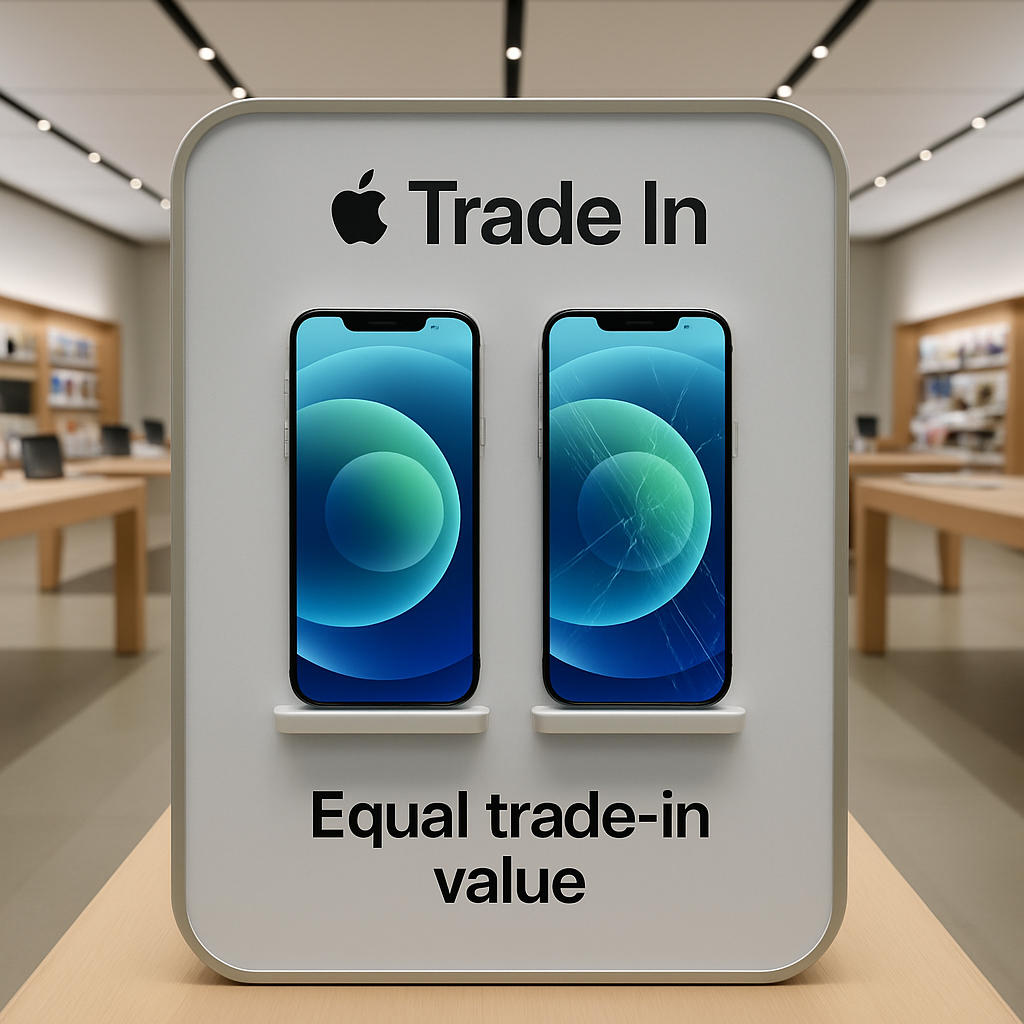
Apple is tweaking its trade-in program to ease the jump into its next iPhone lineup by offering more generous credit for devices with minor cosmetic flaws. The update blurs the line between “perfect” and “imperfect” condition — a small crack in the display might no longer carry a penalty.
What’s New
Starting now, Apple will treat certain devices with minor cosmetic defects—such as small chips or cracks in the glass—as if they were in flawless condition, granting them the same trade-in value. This change applies across the board: older iPhones, as well as current models, will be eligible under the upgraded policy.
Why the Shift?
This move appears timed with the rollout of Apple’s next generation hardware. With new iPhone 18 Pro models expected to debut along with increased pricing—some reports estimate a rise of about $100 per device—Apple seems keen to soften resistance to upgrades. By offering more forgiving trade-in terms, it reduces the sticker shock for customers weighing replacement costs.
Additionally, Apple’s broader strategy earlier this year saw it raise prices for many of its devices. The trade-in adjustments seem to be part of an effort to ease the impact of those inflationary pressures for loyal customers seeking to trade up. It’s not a price cut, but it’s a form of value retention for parts of the user base with slightly damaged gear.
Effective Immediately
The refreshed trade-in policy goes live as soon as Apple’s online store reopens after its product-announcement event. At that point, even devices with blemishes that previously downgraded value may now be assessed at their full, “perfect” value, provided the defects are within the newly accepted threshold.
The hope seems to be that customers who might have held off buying a device in pristine condition—either because of cost or because their current phone shows wear—will feel more inclined to upgrade sooner rather than later. Apple benefits from higher trade-in volume, and users benefit from better return for their old devices.
What to Watch: It’s not yet clear how Apple will set the “minor cosmetic defect” benchmark—how big a crack, what depth of scratch, which types of damage won’t disqualify premium trade-in value. Also unknown: how this policy will influence resale values from third-party refurnishers or the supply of usable trade-ins in Apple’s refurbishing chain.
By softening trade-in standards, Apple is essentially recycling part of its value ladder—ensuring people with slightly imperfect phones aren’t penalized unduly. This signals a strategic pivot toward inclusivity in upgrade economics. It’ll be worth watching how condition thresholds are enforced—those will determine how many users truly benefit versus those who are left paying more.