Apple has officially filed an appeal challenging a $5.7 billion verdict in favor of Taction Technology, arguing that a jury’s decision from September is flawed, unsubstantiated, and legally inconsistent. This ruling stemmed from a 2021 lawsuit in which Taction claimed Apple’s Taptic Engine—used in Apple Watch devices—violated its patented haptic feedback technology. While the jury found Apple guilty of infringement, it did not deem the infringement willful. The damages award, however, shattered patent lawsuit records.
Why Apple Says the Verdict Needs Reversing
At the core of Apple’s appeal is the argument that the damages figure—$5.7 billion—was not tied to reliable proof or proper methodology. According to Apple, the jury was not given the tools or evidence necessary to calculate damages in a legally sound way, forcing it instead to rely on pure speculation. In legal precedent, damages must match demonstrable harm; Apple’s filing asserts this standard was not met here.
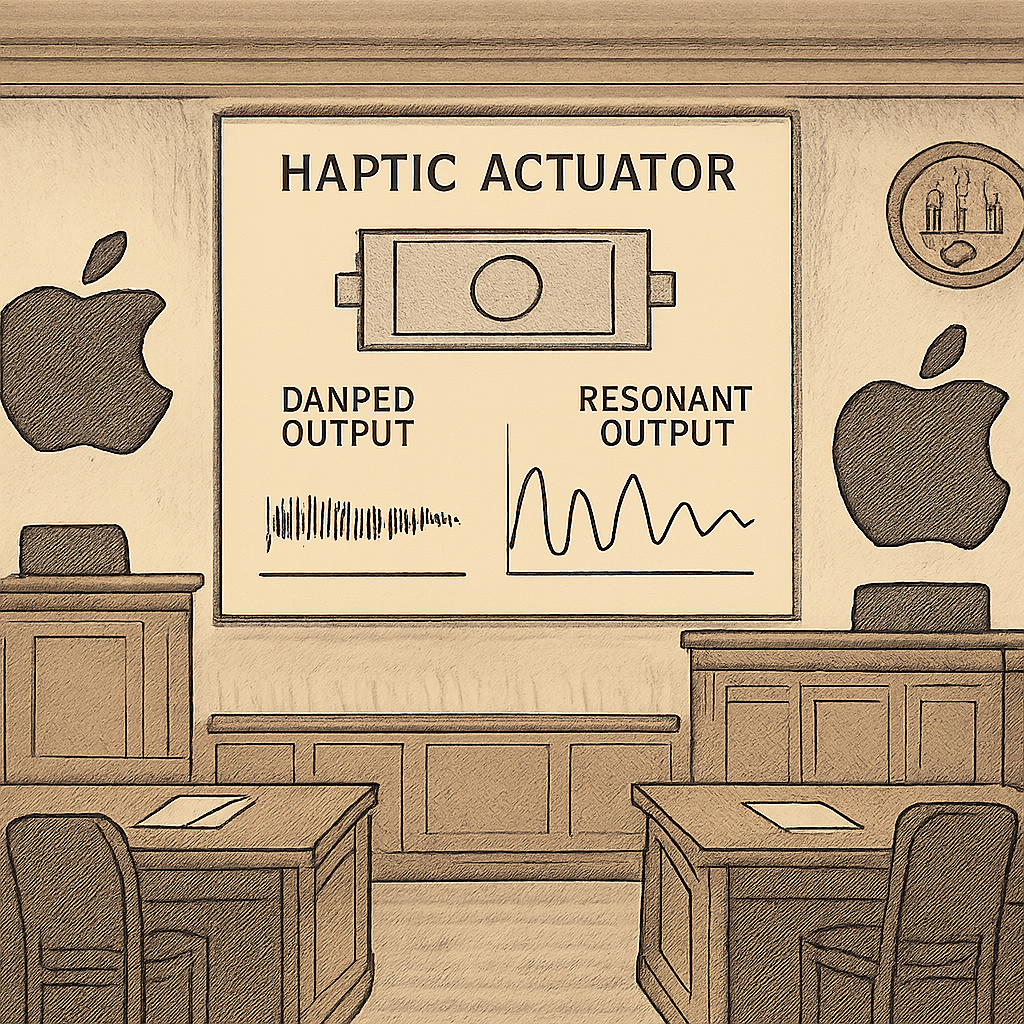
Beyond disputing the damages, Apple contends that its technology diverges significantly from what Taction’s patents cover. The patents focus on “highly damped output” from haptic transducers—meaning rapid fade of vibration. Apple claims its Taptic Engine operates on principles of resonance, which is fundamentally different, and that financial, engineering tests offered to establish infringement end up supporting Apple rather than Taction.
Three Grounds for Invalidity
Apple advances three specific legal reasons why Taction’s patents—or at least the claims asserted against Apple—should be invalidated. First, it argues that what constitutes “highly damped output” lacks clarity: different measurement methods yield conflicting results, rendering the patent claims indefinite. Second, Apple says the patents as written purport to cover technology never described in the specification, and a skilled person in the field could not reasonably infer or fill in those gaps. Third, it disputes non-enablement—that is, that someone skilled in the domain could not make or use Apple’s controller based solely on what’s disclosed in the patent documentation. Combined, these arguments are intended to show that the verdict both misinterpreted and misapplied the patent laws.
Apple’s current motion asks the court to enter judgment in its favor—wiping out damages, overturning the infringement finding, and declaring the patent claims invalid. Failing that, Apple wants a new trial on all counts: infringement, damages, and validity.
Given the magnitude of the award—over $5.7 billion, which exceeds previous patent case verdicts by more than $3 billion—this is one of the most significant appeals currently in the technology sector. Not only for the financial stakes, but because it probes the boundaries of patent vagueness, the proper standards for measuring damages, and how engineered differences in design are treated under intellectual property law.
Apple’s pushback marks just the latest chapter in its long-running legal battles. A final resolution may involve multiple layers of appeals before any sum gets paid.
What Does This Mean Going Forward?
If Apple succeeds, the verdict could be overturned in full, or at least a new trial ordered. That would reset damages, and potentially alter how patents around haptics—already a contentious field—are asserted. On the flip side, if the appeal fails, this award could serve as precedent for massive damages in cases where patent holders allege infringement of design-based technologies.
Analytical Take: This appeal showcases how critical precision is in patent filings—both in what the invention describes and in how damages are justified. It’s not just about copying a feature; it’s about drawing clear lines between designs based on different technical principles. For the broader tech industry, this case could reshape how companies assess risk when developing haptic interfaces or defending similar visually-or-experience-based innovations. Keep an eye on whether the court grants judgment or orders a retrial; either outcome could send ripples through IP law in engineering industries.