Apple has intensified its legal battle against OpenAI by seeking a preliminary injunction to halt the AI company’s development of products allegedly based on Apple’s proprietary technology. This move comes amid revelations that additional former Apple employees may have been involved in the unauthorized transfer of confidential information to OpenAI.
In a recent court filing, Apple requested expedited discovery from key individuals, including former senior systems engineer Chang Liu and OpenAI’s Chief Hardware Officer Tang Yew Tan. The company also seeks information from OpenAI, its foundation, and io—a device startup co-founded by Apple’s former lead designer, Jony Ive.
Apple’s ongoing investigation has identified 11 more former employees who may have played a role in the alleged misappropriation of trade secrets. Notably, one ex-employee reportedly met with Liu and another former Apple staffer, Yu-Ting Peng, before Peng’s interview at OpenAI, during which they discussed proprietary information about unannounced Apple products. Another individual is said to have taken screenshots of confidential documents related to an unreleased product prior to their OpenAI interview.
Further complicating matters, after Apple filed its initial complaint, several former employees now working at OpenAI reportedly reached out to discuss returning Apple-issued devices they had retained upon leaving the company. This suggests a broader pattern of potential misconduct beyond the individuals originally named in the lawsuit.
Apple argues that expedited discovery is essential to uncover the full extent of the alleged trade secret theft and to support its motion for a preliminary injunction. The company contends that immediate action is necessary to prevent OpenAI from further developing products that may incorporate misappropriated Apple technology.
In response, OpenAI has publicly refuted Apple’s claims, stating that the request for a preliminary injunction is based on false information and is unnecessary. OpenAI asserts that it neither possesses nor desires any of Apple’s trade secrets, emphasizing its focus on creating innovative products and technologies independently.
OpenAI also highlighted previous missteps by Apple, including instances where Apple contacted the wrong individuals due to surname confusion and allegedly provided inaccurate information about discussions with OpenAI’s general counsel. Additionally, OpenAI pointed out that Apple’s security procedures allowed former employees to retain access to its systems, suggesting internal lapses contributed to the situation.
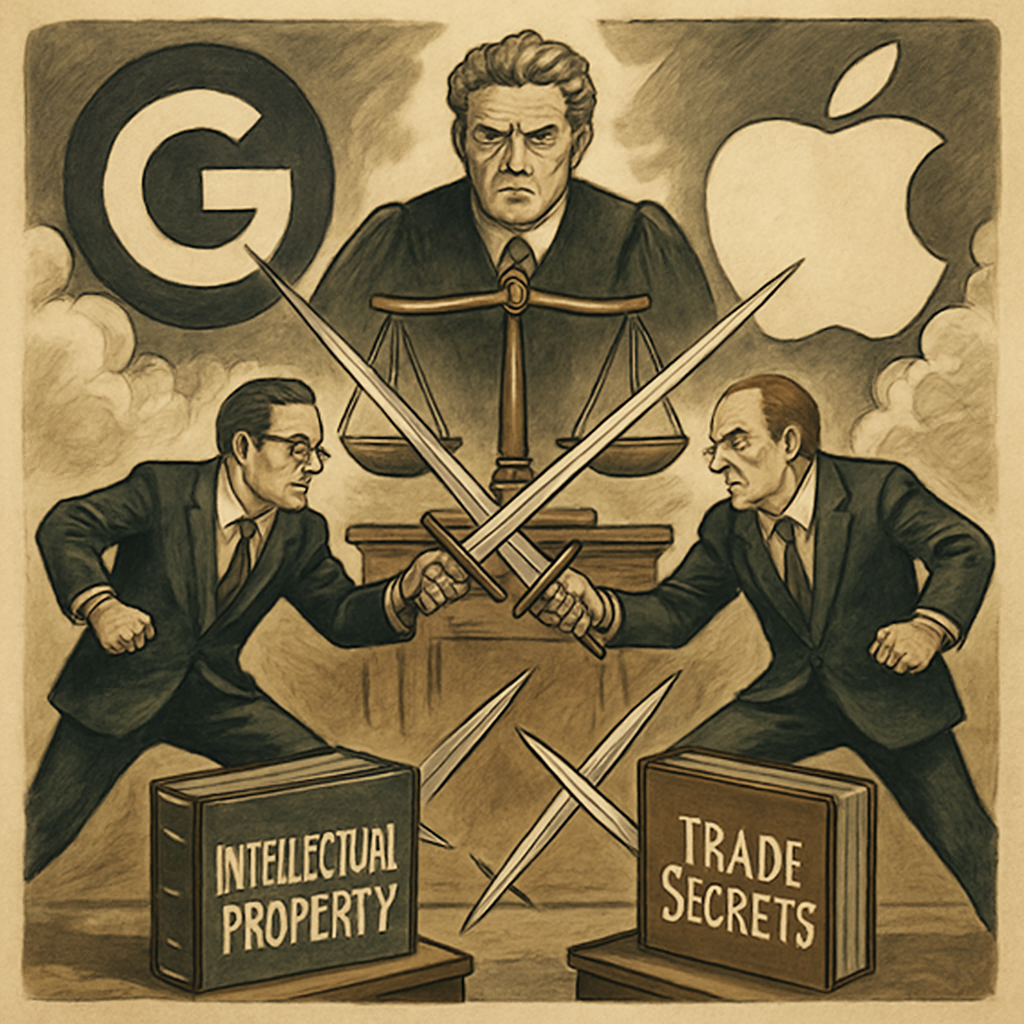
This escalating legal confrontation underscores the challenges tech companies face in safeguarding intellectual property, especially when employees transition to competitors. The outcome of this case could have significant implications for industry practices related to employee mobility and the protection of proprietary information.