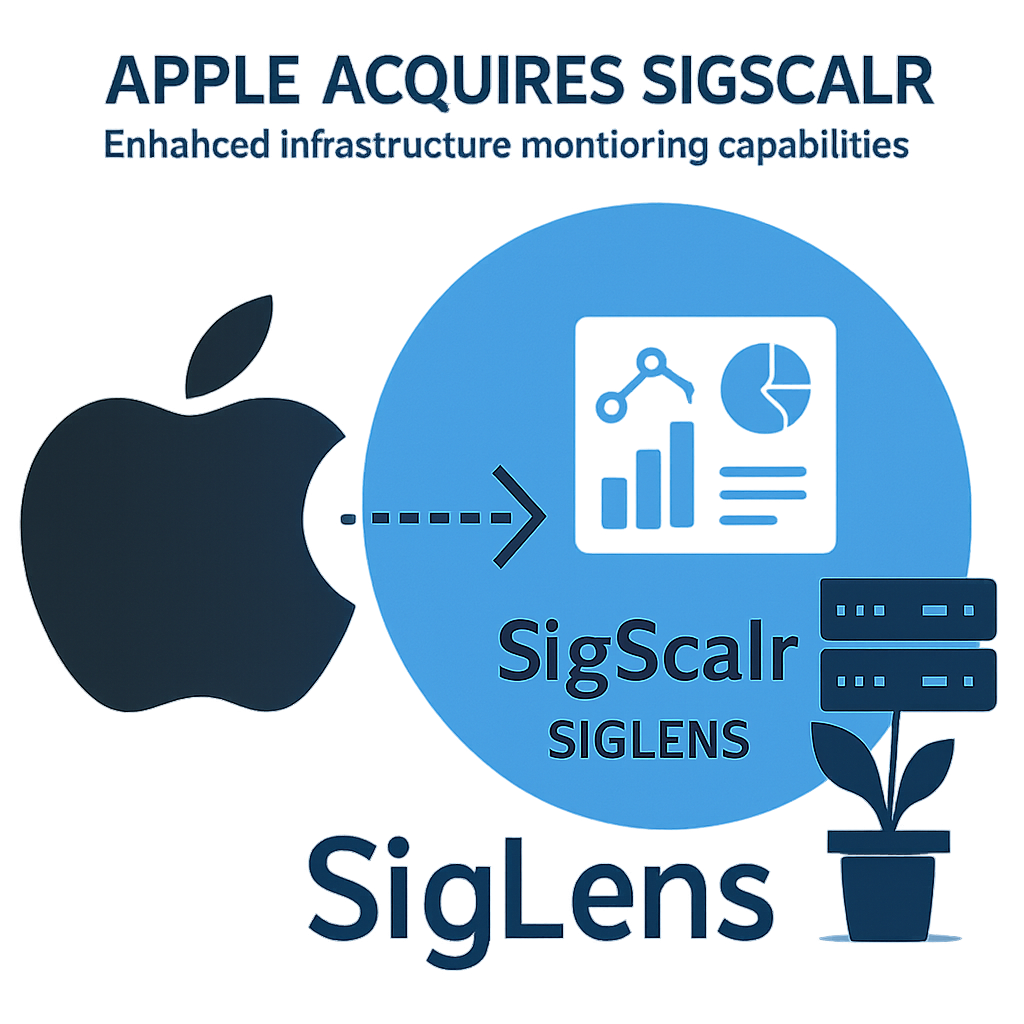
Apple has recently acquired specific assets and onboarded employees from SigScalr, the company behind the open-source observability platform SigLens. This move was disclosed through a notification to the European Commission, as mandated by the Digital Markets Act, which requires major tech companies to report such transactions.
SigLens is designed to assist developers in collecting, searching, and analyzing logs, metrics, and traces generated by applications and infrastructure. SigScalr positioned SigLens as a more efficient alternative to established services like Splunk, Datadog, and Elasticsearch.
According to the notification, Apple, through a subsidiary, has acquired certain assets of SigScalr and offered employment to specific SigScalr employees. The acquisition was officially recorded on March 12. Following this, SigScalr’s official website has been taken offline, and the main GitHub repository for SigLens has been archived and set to read-only mode.
In the archival notice, the developers expressed gratitude to the community for their support and contributions. They announced the project’s transition to a read-only state and changed its license to the more permissive Apache 2.0 license, encouraging others to fork and build upon the existing work.
This acquisition aligns with Apple’s history of integrating specialized technologies to enhance its ecosystem. For instance, in 2023, Apple acquired WaveOne, a startup specializing in AI-powered video compression, aiming to improve video streaming efficiency. Similarly, in 2026, Apple acquired Q.ai, an Israeli startup working on AI technology for audio, to enhance audio experiences in challenging environments.
By incorporating SigScalr’s observability tools, Apple is likely aiming to bolster its internal infrastructure monitoring capabilities. This could lead to more efficient performance analysis and troubleshooting across its services and products. Additionally, integrating advanced observability solutions may enhance the development and deployment processes within Apple’s ecosystem, potentially resulting in more robust and reliable applications for end-users.