Anthropic researchers have unveiled a new system that shows how AI can self-improve its alignment—essentially learning how to fix its own misaligned behaviors without human prompts. The project, led by Anthropic Fellow Chen Yueh-Han, demonstrates an automated alignment researcher (AAR) capable of matching, and in some cases improving upon, human efforts across benchmark tests. This marks an important milestone in AI safety and development.
How the Automated Researcher Works
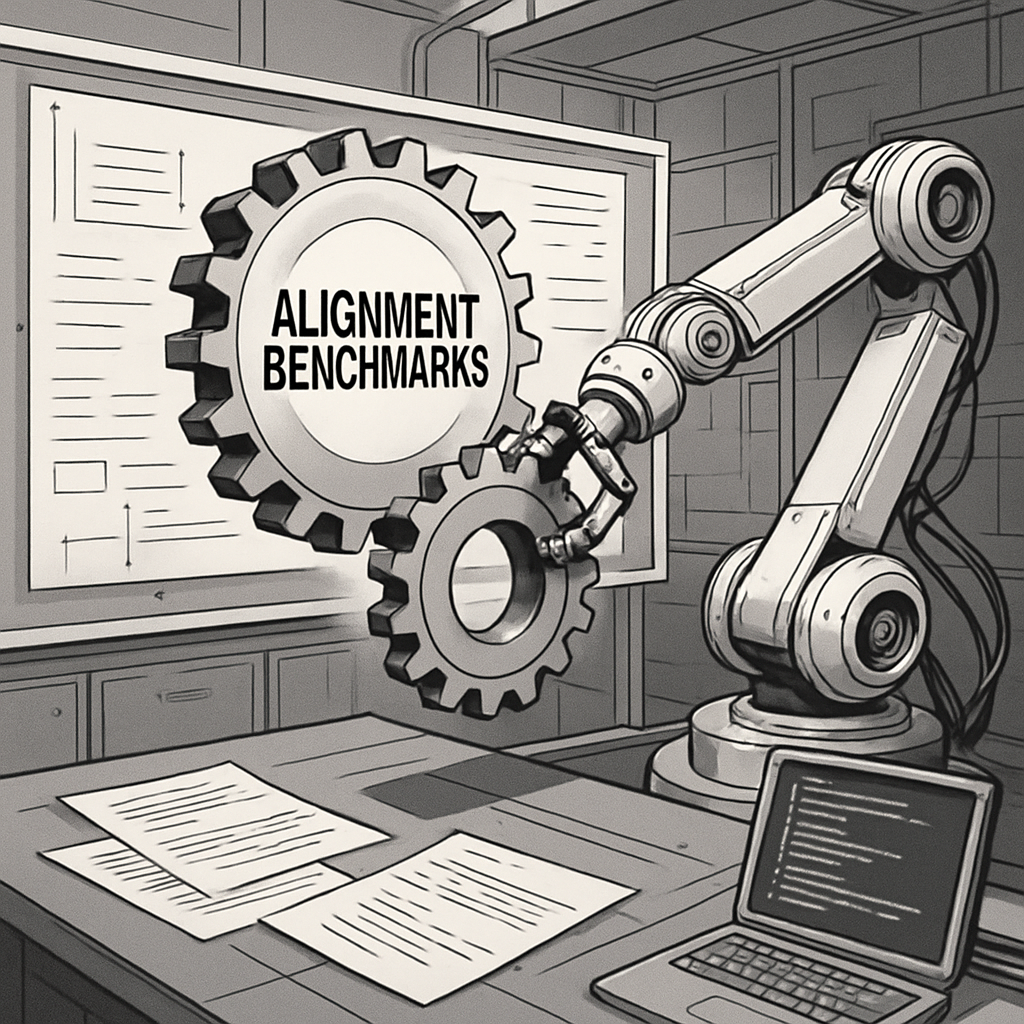
The AAR is designed to mimic many of the tasks human alignment researchers perform. Given a suite of misalignment benchmarks it hasn’t yet mastered, it searches existing literature for potential corrective methods, implements those methods by training the model for thirty minutes, and iterates through several rounds—discarding underperforming approaches and keeping what works. Over time it gradually increases the difficulty of the benchmarks, while preserving improvements on earlier ones. In tests across ten different misaligned behavior benchmarks, it improved performance on all benchmarks without harming performance elsewhere.
The system’s effectiveness is striking: when compared to experienced human researchers, the AAR outperformed them on average within about six hours. Economically, the system is far cheaper—costing roughly $4 per hour in API inference, versus the $150 per hour paid to human researchers doing equivalent work.
Potential & Limitations
This research is being framed as early but credible evidence that automated alignment post-training could become viable in the near term. It edges toward the kind of recursive self-improvement many believe is the next frontier of AI: in other words, AI capable of not just following training, but improving both its training and alignment protocols over time—perhaps reducing human oversight.
Still, the paper acknowledges important limitations. The system’s integrity depends heavily on the quality and relevance of benchmarks: if the benchmarks don’t reflect real alignment goals, improvements could be illusory. Also, setting up, maintaining, and expanding those benchmarks and the supporting research literature remains a non-trivial challenge.
This work is part of a broader effort to enhance AI safety. Alignment—the process of ensuring AI behaviors match human values and intentions—has become a central concern as models grow more capable. Earlier research has focused on rule-based safety traps, auditing models after training, or improving prompt designs; this is among the first to lean into autonomous improvement of alignment itself.
What this means going forward is that as benchmark suites improve, systems like AAR could reduce the human research burden, accelerating development of safer AI. But with power comes risk: ensuring benchmarks stay robust, diverse, and resistant to gaming, and that the systems don’t optimize for the wrong targets, will be essential. The coming months will tell how well this approach scales—and whether it truly shifts the balance between human and machine researchers in the alignment landscape.