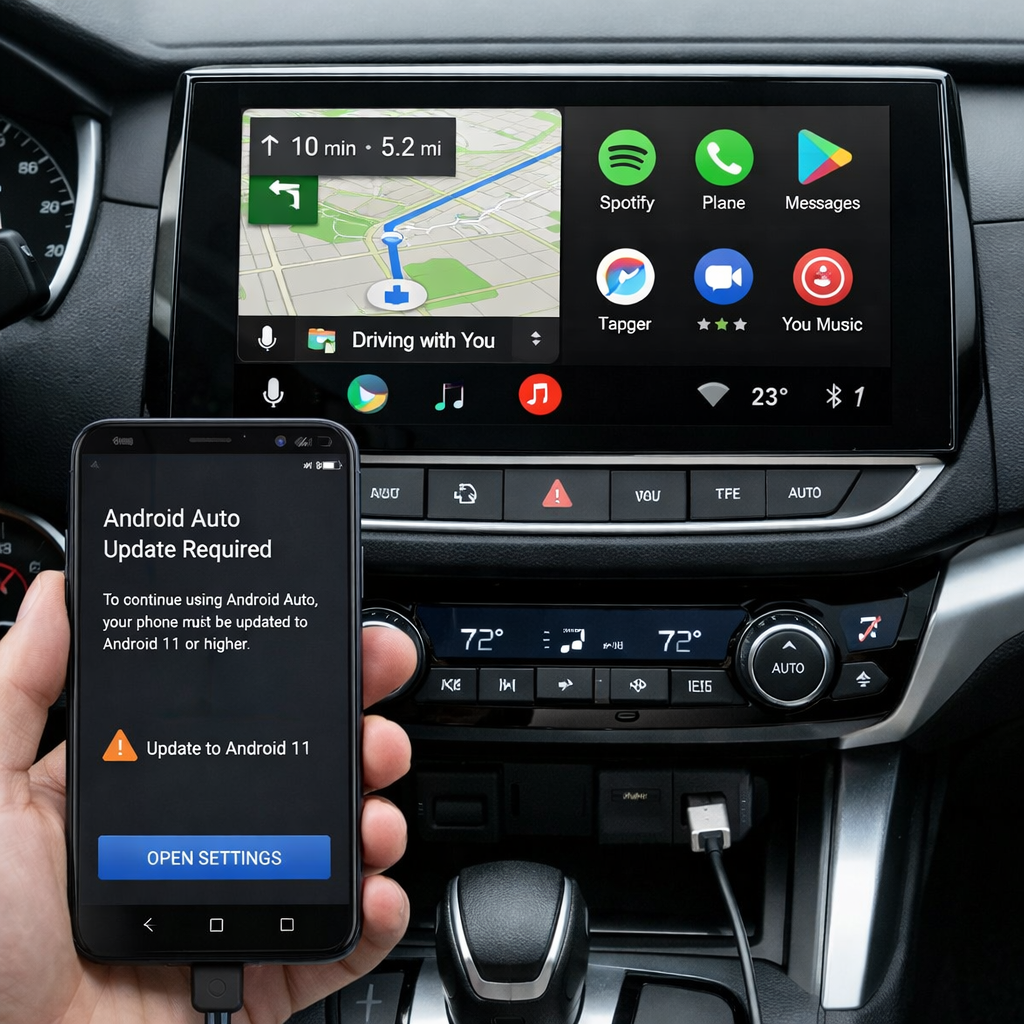
Google has quietly raised the bar for Android Auto users: as of early November 2026, phones running Android 10 or below are no longer supported. To use Android Auto now, a device must run Android 11 (Red Velvet Cake) or above and have an active data plan.
Earlier minimum requirements had allowed devices on Android 9 and Android 10 to access Android Auto—standards that were revised in 2024, though enforcement didn’t begin until 2025. What’s changed now is that the cutoff has officially gone into effect, and Google updated its support documentation this week to reflect the new baseline. Periodic messages warning drivers that their phone “will no longer be supported” began appearing in October 2026. However, the most recent version of the Android Auto app—18.1—still technically works on Android 10 devices, though only with reduced or contingent support.
Why Google Made the Change
This shift isn’t just about phoningly aging operating systems. Android 11 brings important technical and security advances—improved privacy controls, updated APIs, policies for default behaviors around permissions—that older versions lack. Requiring a newer OS puts all users on a more secure foundation, better authorizing features like location access, Bluetooth integration, and data safety when connected to in-vehicle systems.
We should also view this in the context of broader Android lifecycle trends. Google has been pushing forward with evolving requirements for its mobile software—in terms of security patches, app compatibility, and platform consistency. Phasing out support for Android 9 and 10 isn’t an isolated move; it aligns with past shifts where less widely adopted versions become obsolete behind the scenes.
What This Means for Drivers
Anyone still driving with a phone on Android 10 or earlier may soon find key Android Auto functions disabled—or already limited. The late-stage warning messages signal that deprecation is happening in real time. While the app may continue to install or open on older phones, continued support for updates, bug fixes, or compatibility with new in-car hardware may fall away entirely.
For those in this position, there are two paths forward: upgrade the phone to a model that ships with Android 11 or higher, or ensure your current phone is upgraded if possible. Car manufacturers and aftermarket systems that rely on Android Auto should also be tested to guarantee compatibility; some older car infotainment units may not support the newer security or connection protocols now expected.
More broadly, this change underscores an accelerating trend in software obsolescence. Android Auto’s new requirement draws a firm line under what’s supported—and it’s one Android 10 users will cross. Moving forward, updates will likely center around Android 11’s framework, so remaining on older OS versions risks missing out on both features and patches.