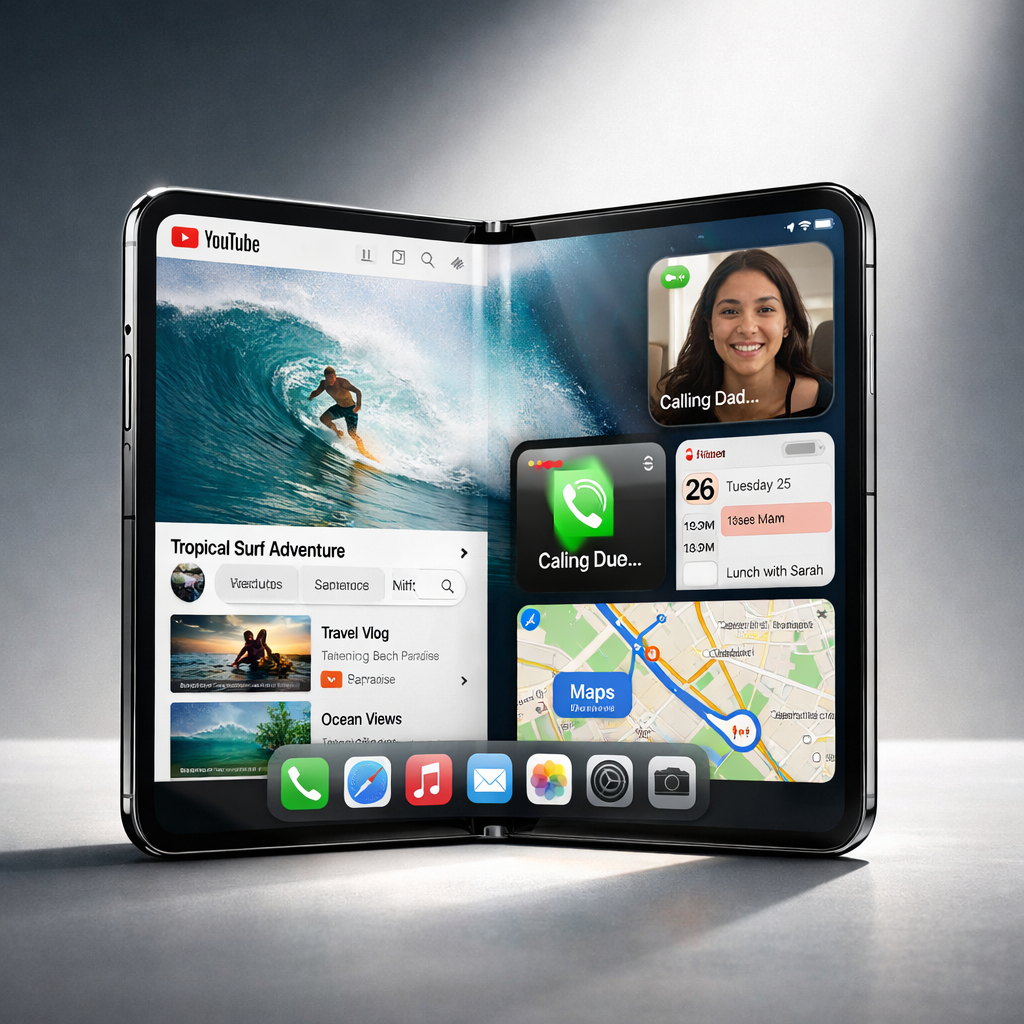
China Renaissance has boosted its forecast for Apple (AAPL), setting a new price target of $425 per share—over 50% higher than its prior valuation. The firm moved Apple from a “Hold” to a “Buy” on November 11, just three months after downgrading it, citing growing confidence that the newly released iPhone Duo could spark a major upgrade wave despite limited long-term sales data.
The iPhone Duo: Big Promise, Tight Evidence
The analysts believe Apple’s first foldable iPhone model—the iPhone Duo—may reshape user behavior and encourage earlier device swaps. Key selling points include the Duo’s large folding screen, enhanced multitasking, and deeper integration of Siri AI. These features are seen as a gateway to replicate iPad-like functionality, though the iPhone Duo still lacks freeform app window support, a hallmark of many tablets.
Despite the bullish tone, the evidence remains thin. The device launched officially on October 23, meaning only a few weeks of sales history are available. Apple has not disclosed how many units have been sold, how strong replacement buying is, or how many orders stem from existing users versus new customers. Preorders reportedly pushed delivery timelines into January 2027, yet it’s unclear whether demand or manufacturing capacity is the limiting factor.
Financial Strains and Comparison To Past Supercycles
Apple’s financials remain mixed. The September quarter delivered record revenue—$114.5 billion overall and a high for iPhones specifically—while services pulled in $31.6 billion. Still, services growth has slowed to around 3% year over year, indicating challenges in sustaining momentum. Rising memory costs and other component pressures have eroded gross margin, projected to fall to 45–46% in the December quarter from the prior 47.9%.
The $425 target from China Renaissance stands out among Wall Street. For comparison, Morgan Stanley had set its target around $350, Evercore ISI pegged theirs at roughly $380. The optimism reflects a gamble: that Apple can overcome cost headwinds and quality issues to deliver a product compelling enough to ignite a widespread upgrade frenzy.
Chinese Renaissance’s confidence may seem optimistic when viewed alongside historical precedent. Earlier launches like the iPhone X were once predicted to launch massive replacement cycles—but those never fully materialized. The difference this time lies in the folding design’s new capabilities. Still, high-end features don’t always translate into broad-based purchases, even if revenue per unit is strong.
Production and quality have already shown early signs of tension. Apple acknowledged screen issues in a small number of iPhone Duo units and is replacing failed devices. The company also confirmed supply constraints in early November, admitting it can’t yet match demand. These are telling signs that hype may be rising faster than rollout.
China Renaissance sees the Duo as a long-term growth driver, expected to offset financial pressures and justify its bullish outlook. But for that to happen, several conditions must be met: stable supply chain performance, acceptance of the high price tag among less enthusiastic buyers, and actual usage gains from the foldable form factor.
Only time will tell whether the iPhone Duo turns into a full-blown supercycle or fades as a high-end niche. To validate China Renaissance’s call, investors and analysts should watch metrics like replacement rates, production volume, and the pace of quality returns—especially around display failures. If those align, Apple’s gamble could pay off in a big way.