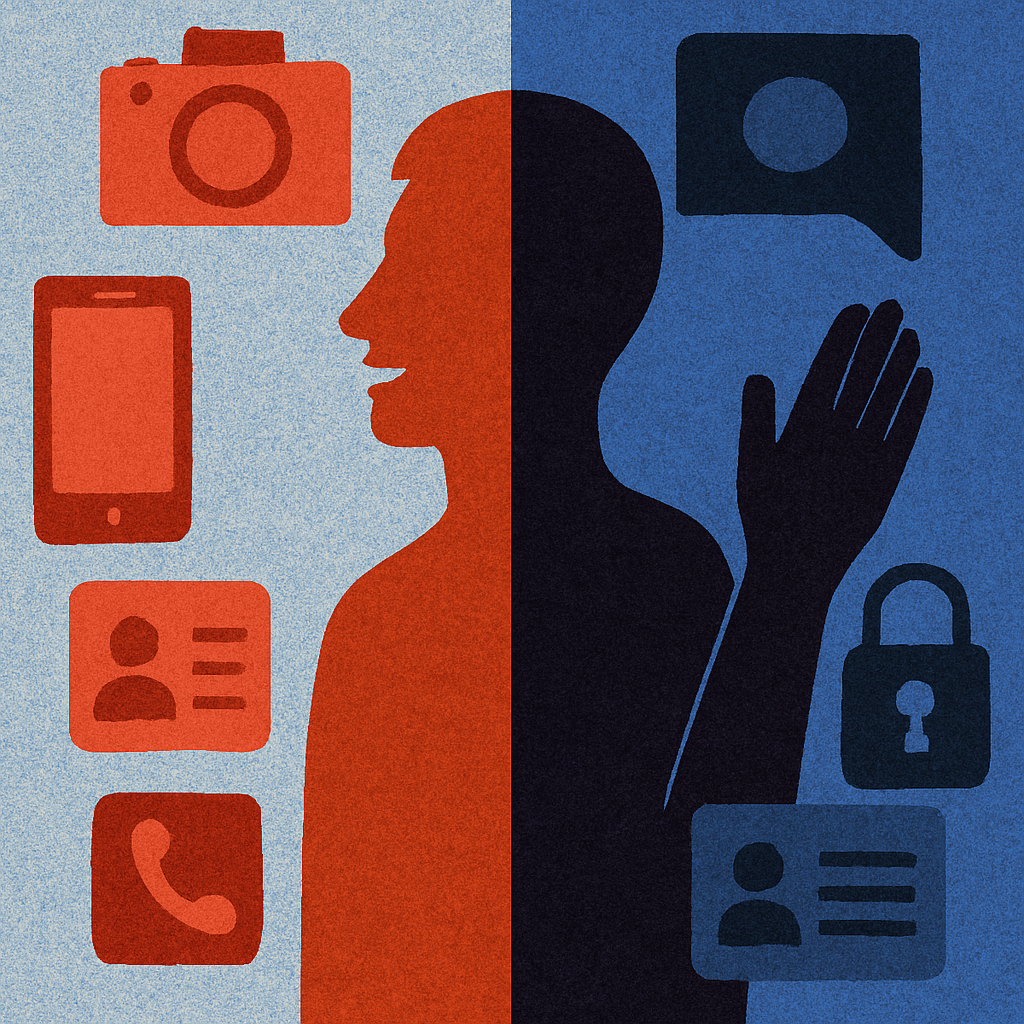
A recent survey exposes a striking gap between Americans’ stated beliefs about privacy and how they behave when it’s tested. Commissioned by a data removal service and conducted among 1,517 U.S. adults, the study found that while 45% claim they aren’t concerned about online privacy, many take protective steps when directly asked to compromise it.
Even those who say they have “nothing to hide” resist handing over their phone or messages to a stranger or a corporation. Over half would refuse to hand over their unlocked device for any sum of money. About 39% regularly put tape or covers over their webcam, and nearly half wouldn’t turn over text messages to either Big Tech or the government — even if offered three months’ income in exchange.
Privacy feels abstract until it’s personal
Ron Zayas, CEO of the data removal company behind the survey, suggests that many people think privacy only matters when it’s personal. According to him, privacy loses meaning when phrased in vague terms — “we value your privacy” — but becomes crucial when the stakes are clear: messages read, habits tracked, personal photos shared, or identity sold.
His advice for taking practical steps toward better privacy aligns heavily with the tools Apple already provides. He recommends disabling ad personalization, location sharing, and contact sharing wherever possible. Treating your phone number with the same care as financial data is also a suggested practice, given how apps can access both your contacts and personal identifiers.
Out of sight, out of mind — until it’s too late
The survey also reveals widespread amnesia about personal data: 65% of respondents don’t know how many websites they’ve signed up with over the years. Many still have accounts they haven’t used in ages, yet those platforms may still hold sensitive data. This suggests a layer of invisible vulnerability — you can’t protect what you’ve forgotten giving away.
Legally, some states offer recourse. Zayas highlights privacy laws like California’s CCPA and the Delete Act, which enable residents to force removal of personal data from brokers and some platforms. But for many Americans, cleaning up data footprint means laborious sorting through settings in apps or mobile operating systems. A few minutes in Privacy & Security tools can offer surprisingly strong protection without going to extremes.
The most revealing paradox of this survey: while many people say privacy doesn’t bother them much, their actions show it matters a lot more when we’re pushed to make real sacrifices. The survey concludes that most Americans act as if their privacy is important — so perhaps it’s time to stop saying it isn’t.
Analysis — What this tells us and why it matters: This gap between people’s stated privacy concerns and their behaviors reflects a long-standing issue in digital culture: privacy fatigue. Users are bombarded by fine print, complex permissions, and opaque corporate policies. What this survey makes clear is that people do crack when those abstractions become real threats. Still, most feel powerless in the interim. Policymakers and platforms have a clear opportunity here — simpler, more visible protections could help close the gap between what people believe and what they do. Privacy laws work, but only when people are aware of them and can easily act. Watch for updates in state privacy laws and platform changes in ad personalization, contact sharing, and device security — these could be levers that shift behavior, not just headspace.