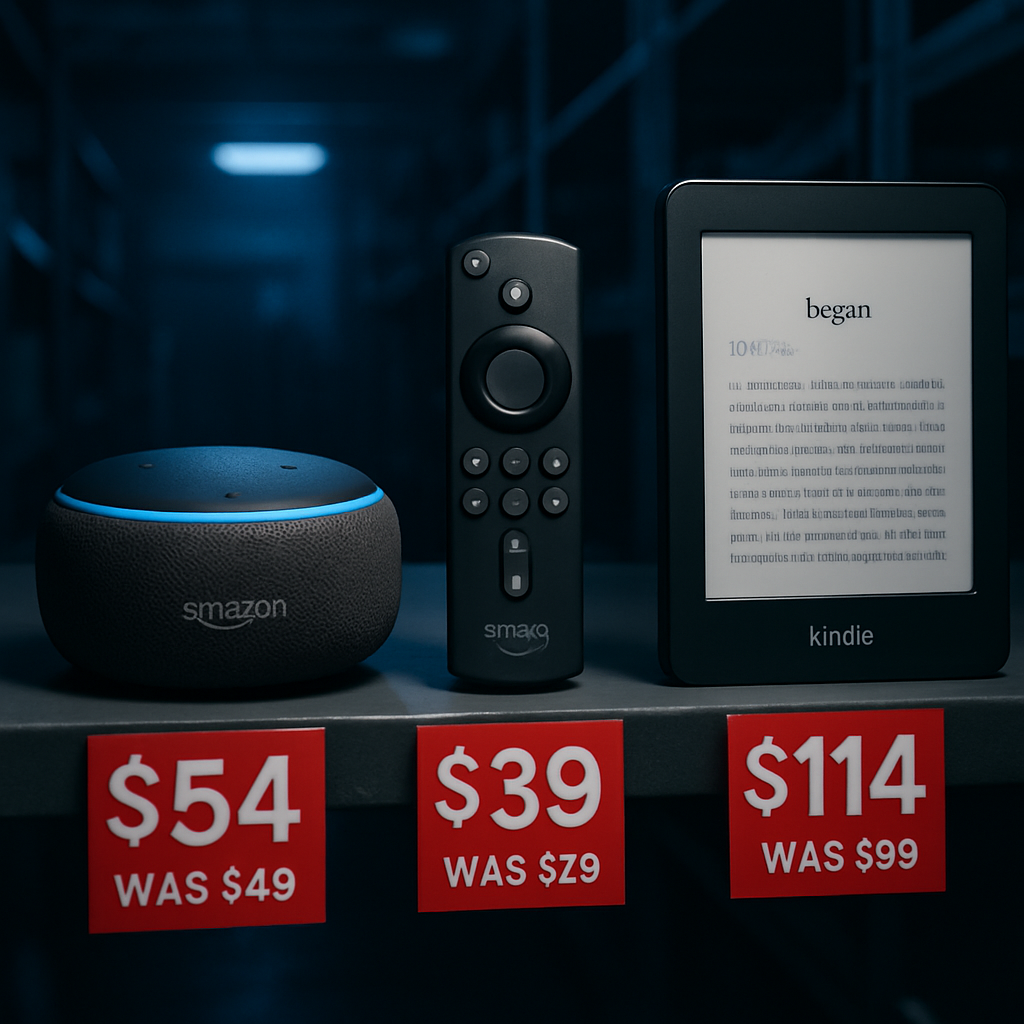
Amazon has sharply increased prices across several hardware lines, attributing the hikes to soaring costs for memory and storage components. Fire TVs, Echo devices, Kindles, and Eero routers were among the affected products, with some seeing up to a 60% jump overnight. The Echo Dot, for instance, rose from around $50 to $79.99. ([techcrunch.com](https://techcrunch.com/2026/08/24/amazon-hikes-hardware-prices-by-60-percent-blaming-memory-shortage/))
The company explained that after absorbing rising costs for hardware parts over time, it recently felt compelled to adjust pricing across its portfolio. Despite the increase, occasional promotions are expected to continue over the next year to help soften the blow for customers. ([techcrunch.com](https://techcrunch.com/2026/08/24/amazon-hikes-hardware-prices-by-60-percent-blaming-memory-shortage/))
Memory Shortage Pressures
This pricing move comes amid a global memory and storage supply crunch, driven in part by increased demand from AI development and data center expansion. Industry watchers have dubbed the shortage “RAMmageddon.” ([techcrunch.com](https://techcrunch.com/2026/08/24/amazon-hikes-hardware-prices-by-60-percent-blaming-memory-shortage/))
Observers expect these shortages and elevated component prices to persist through 2027. Prices may begin to stabilize once new production ramps up, possibly in 2028. ([techcrunch.com](https://techcrunch.com/2026/08/24/amazon-hikes-hardware-prices-by-60-percent-blaming-memory-shortage/))
Wider Industry Ripples
The squeeze isn’t limited to Amazon. Other tech companies are also raising device prices. One notable example is Apple, which has similarly adjusted prices and introduced new financing and leasing options to help customers manage higher costs. ([techcrunch.com](https://techcrunch.com/2026/08/24/amazon-hikes-hardware-prices-by-60-percent-blaming-memory-shortage/))
The confluence of component scarcity and booming demand in AI and cloud infrastructure is transforming hardware supply economics. Costs that once were spread thinly across large volume production are now becoming major profit centers for memory suppliers—forcing brands to pass them on to end users. ([techcrunch.com](https://techcrunch.com/2026/08/24/amazon-hikes-hardware-prices-by-60-percent-blaming-memory-shortage/))
This moment marks a departure for many companies that had long absorbed component cost inflation to preserve device pricing. Amazon’s decision suggests there’s now a tipping point where that model is no longer sustainable. ([techcrunch.com](https://techcrunch.com/2026/08/24/amazon-hikes-hardware-prices-by-60-percent-blaming-memory-shortage/))
What This Means & Why It Matters: Consumers can expect elevated device prices to be the norm rather than a temporary blip. For tech vendors and retailers, component costs must become a core part of pricing strategy rather than a background risk. As new memory fabrication capacity comes online in coming years, price relief could arrive—though not before 2028. Watching how other major manufacturers adapt—whether through design changes, subsidy models, or leasing—will reveal who navigates this market shift most successfully.