Amazon’s AI-Generated Product Images: Enhancing Search or Causing Confusion?
In a bold move to enhance the online shopping experience, Amazon has introduced AI-generated product images within its shopping app. This feature aims to assist customers in refining their search queries by presenting visual representations of products based on their descriptions. However, this innovation has sparked a debate about its practicality and potential to mislead consumers.
Understanding the New Feature
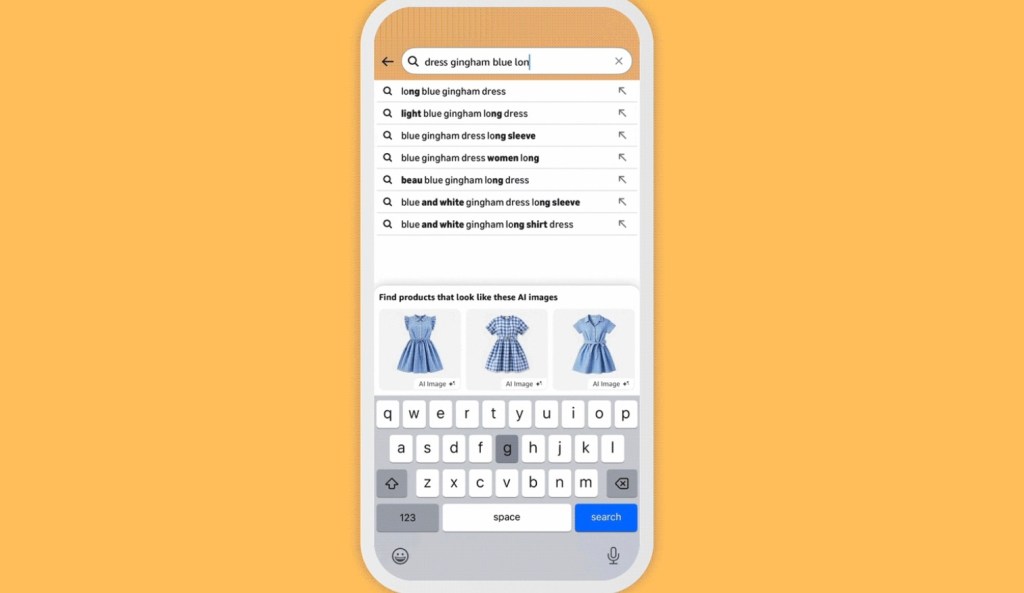
Amazon’s latest AI-driven feature is designed to bridge the gap between a customer’s imagination and product discovery. When users input a search term, such as blue gingham dress, the app generates a variety of AI-created images that align with the description. These images appear below the autocomplete suggestions, offering visual cues to help users refine their searches. By clicking on one of these images, customers are directed to search results that closely match the selected style, leveraging Amazon’s visual search capabilities.
The Rationale Behind AI-Generated Images
The primary goal of this feature is to assist customers who have a specific product in mind but may struggle to articulate it with precise terminology. For instance, a shopper might desire a particular style of shirt but be unfamiliar with terms like cowl neck. By providing AI-generated images, Amazon aims to offer a visual reference that can guide users to the products they seek.
Potential Benefits
1. Enhanced Search Precision: Visual representations can help users identify and select products that match their preferences more accurately.
2. Improved User Experience: By reducing the time spent on trial-and-error searches, customers can enjoy a more streamlined shopping journey.
3. Educational Value: Shoppers can learn about different styles and terminologies through visual examples, expanding their product knowledge.
Concerns and Criticisms
Despite its intended benefits, the introduction of AI-generated product images has raised several concerns:
1. Misleading Representations: Displaying images of non-existent products could lead to confusion and disappointment if customers expect to find the exact item depicted.
2. Authenticity Issues: Shoppers may question the authenticity and availability of products, potentially eroding trust in the platform.
3. Overreliance on AI: Critics argue that creating fictitious images may not be the most effective way to assist users, especially when a vast array of real product photos is available.
Comparative Analysis with Other AI Integrations
Amazon has been integrating AI into its platform in various ways:
– AI-Generated Product Summaries: The company uses AI to summarize customer reviews, providing concise overviews of product pros and cons.
– Audio Product Summaries: AI-generated audio descriptions offer podcast-style highlights of products.
– Visual Search Enhancements: Features like Amazon Lens Live allow users to scan products with their camera to find visual matches.
While some of these integrations have been well-received, the use of AI-generated images for search refinement has been met with skepticism.
Industry Perspectives
The broader e-commerce industry has been exploring AI-generated imagery:
– AI Product Photography: Tools like GreenOnion.ai enable sellers to generate professional product images without traditional photoshoots.
– Compliance with Guidelines: Platforms like Rewarx.com provide guidance on ensuring AI-generated images meet marketplace standards.
These applications focus on enhancing product listings with realistic images, contrasting with Amazon’s approach of using AI to create hypothetical product visuals for search assistance.
Conclusion
Amazon’s introduction of AI-generated product images represents an innovative attempt to enhance the online shopping experience. By providing visual aids based on user descriptions, the company aims to simplify product discovery. However, the effectiveness and reception of this feature remain to be seen, as it walks a fine line between aiding customers and potentially causing confusion. As AI continues to evolve in e-commerce, striking the right balance between innovation and user trust will be crucial.