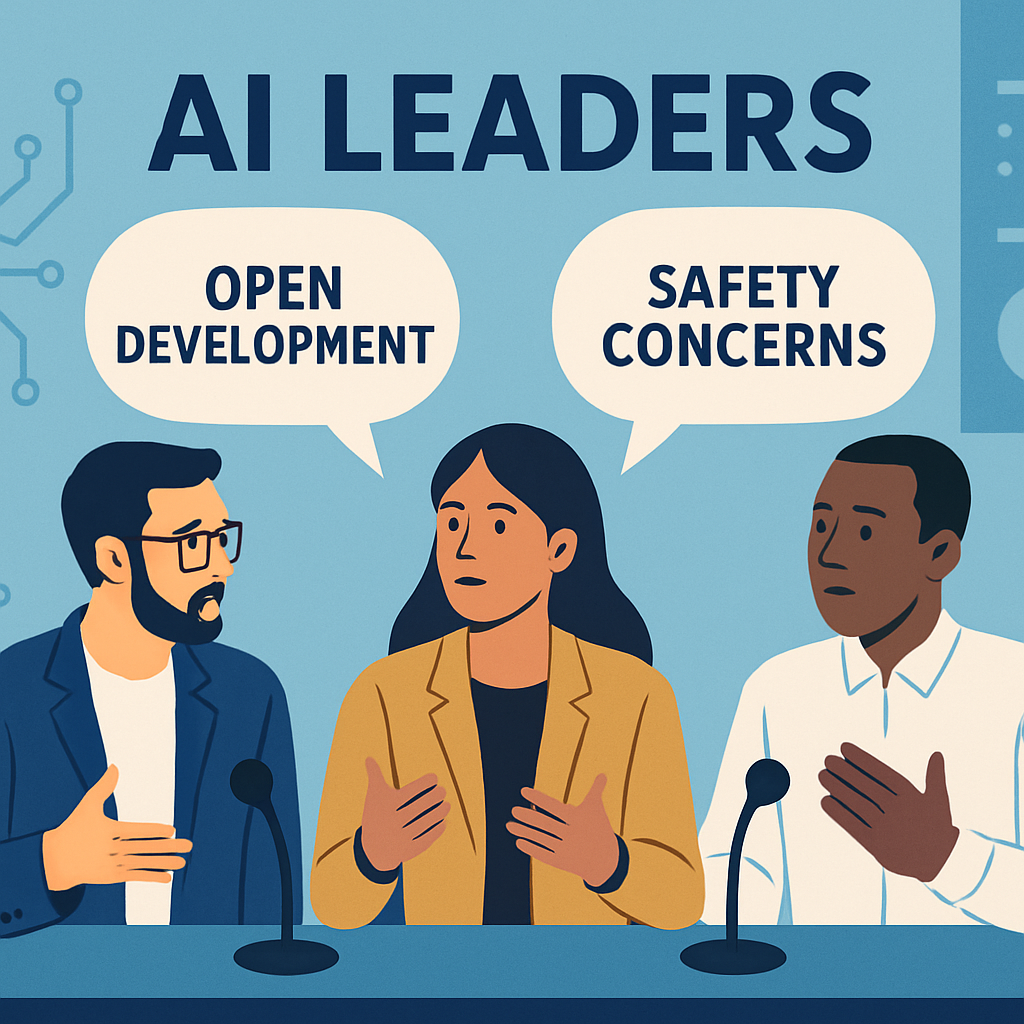
At the recent Ai4 conference in Las Vegas, three prominent figures in artificial intelligence—Geoffrey Hinton, Fei-Fei Li, and Andrew Ng—addressed the ongoing debate over open versus closed AI development. Their discussions highlighted the tension between fostering innovation through openness and mitigating potential risks associated with unrestricted AI access.
Andrew Ng emphasized the importance of preventing a monopolistic control over AI technologies. He expressed concern that allowing a few major companies to dominate the field could stifle innovation and limit accessibility. Ng advocated for a competitive environment where multiple providers offer diverse AI models, ensuring that the technology remains in the hands of many rather than a select few.
Geoffrey Hinton, while acknowledging the benefits of open-source software, differentiated it from open-weight AI models. He pointed out that releasing the parameters of trained AI models to the public could lower the barrier for malicious actors to misuse the technology, such as in cyberattacks. Despite his reservations, Hinton recognized that open-weight models are now an established part of the AI landscape and suggested that the focus should shift to managing associated risks.
Fei-Fei Li highlighted the potential for open AI models to democratize access to technology, particularly in regions with limited resources. She noted that open models could empower developers worldwide to build applications tailored to their specific needs, fostering global innovation. However, Li also stressed the necessity of implementing safeguards to prevent misuse and ensure that the benefits of open AI are realized responsibly.
The discussions at Ai4 underscore a critical juncture in AI development. While openness can drive innovation and accessibility, it also necessitates a careful approach to safety and ethical considerations. The challenge lies in balancing these factors to harness AI’s potential while mitigating its risks.
As the AI community continues to grapple with these issues, it is essential to establish frameworks that promote responsible development. Collaborative efforts between industry leaders, policymakers, and researchers will be crucial in shaping an AI ecosystem that is both open and secure, ensuring that the technology serves the broader interests of society.