Phishing attacks involving fake login pages have long been a concern, but generative AI is now making them dramatically more dangerous and efficient. Cybercriminals can mimic real interfaces, cloak malicious domains, and even replicate multi-step authentication flows to steal credentials, bypass multi-factor protections, and hijack sessions. With account takeovers rising across industries, organizations are under pressure to rethink both detection and defense.
What’s Changed: Generative AI’s Role
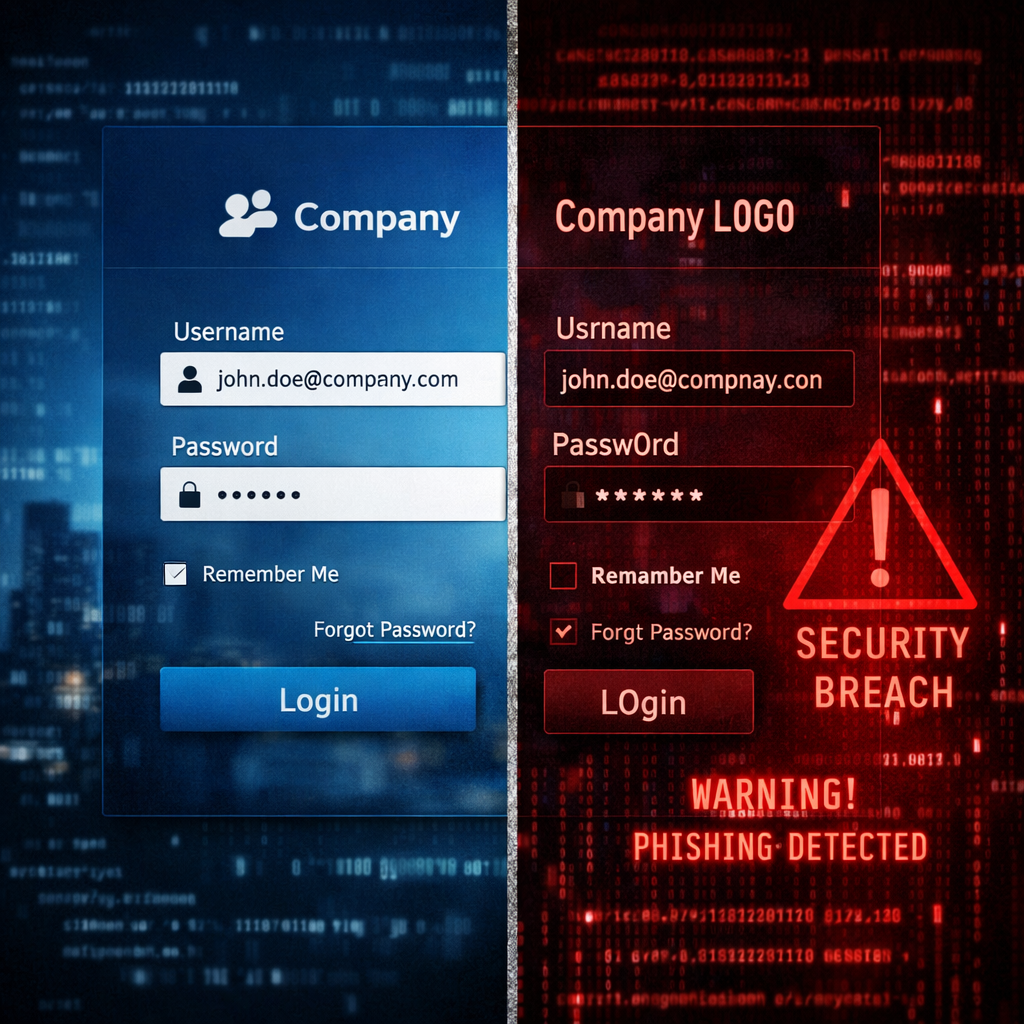
Attackers are no longer limited to crude HTML replicas. AI tools make it easier to recreate familiar login portals—complete with company logos, layouts, and brand cues that employees trust. These fake setups can closely resemble legit web pages, making it far harder to tell the difference. Coupled with look-alike domains—slight spelling tweaks or extra characters—these phishing attempts are becoming shockingly effective.
Beyond just username and password theft, some fraudsters replicate MFA screens to capture codes or use Adversary-in-the-Middle (AiTM) techniques that relay authentication in real time. Once inside, they can hijack sessions using stolen tokens or cookies, giving them ongoing access even without passwords or MFA challenges.
Why Traditional Defenses Are Losing Ground
Security awareness campaigns still help, but when a page looks identical to what users expect, even experienced ones miss the warning signs. Email filters or URL reputation systems often fail too—new domains and short-lived phishing sites frequently fly under the radar. And HTTPS? It no longer signals safety; spoofed pages can still have valid certificates.
Tools like URL inspection offer extra protection, but identifying deceptive domain names is tricky work. Once a look-alike sneaks past the defenses, attackers can deliver their payload via text, chat, or even search ads, evading traditional email-based defenses.
Stronger Strategies: What Organizations Can Do
To counter the evolving threat, companies are advised to adopt a multi-layered defense centered on identity security. Key steps include:
- Phishing-resistant MFA and passkeys:Moving beyond SMS, email OTPs or push notifications to cryptographic methods like FIDO2 hardware keys or passkeys. These are bound to authentic domains, making them unusable on spoofed sites. Microsoft refers to these as essential components in its Secure Future Initiative.
- Browser-based phishing protection:Local AI models in browser extensions can detect clone domains, unusual URL structures, or form requests from suspicious sources—warning users before they enter credentials. This includes zero-knowledge approaches that analyze pages locally without sending user data off-device.
- Continuous session monitoring:Watch for anomalies such as access from odd locations, new devices, or strange session behaviors. These are signs of account takeover in progress.
- Least-privilege policies:Grant minimal access rights and limit standing privileges. Just-in-time access helps reduce what attackers can do with a compromised account.
- Clear response plans:Organizations should define how to report suspected phishing, revoke compromised sessions, reset credentials, and investigate incidents. Preparation can limit damage.
Keeper Security has introduced a new browser-extension feature called Phishing Protection that targets suspicious login pages. It uses an AI engine running locally on the device to catch look-alike domains, impersonated brands, deceptive login prompts, and risks hidden in URLs or link structures—before credentials are ever entered.
Why This Matters & What’s Next
This evolution in phishing tactics isn’t just a theoretical risk—it’s already reshaping how cyber incidents begin. AI-assisted phishing is proving faster, more scalable, and tougher to catch with legacy defenses. The result? Even with MFA, attackers are gaining entry, often via session hijacking or stolen cookies.
We’re entering a point where reactive defense isn’t enough. Organizations need identity-centric security frameworks that assume phishing will succeed occasionally. Look-ahead visibility, strong cryptographic authentication, and resilient access controls must become standard. What to watch for next: adoption rates for phishing-resistant MFA, browser vendors’ rollout of local phishing detection, and new regulatory or standards mandates pushing zero-trust identity forward.