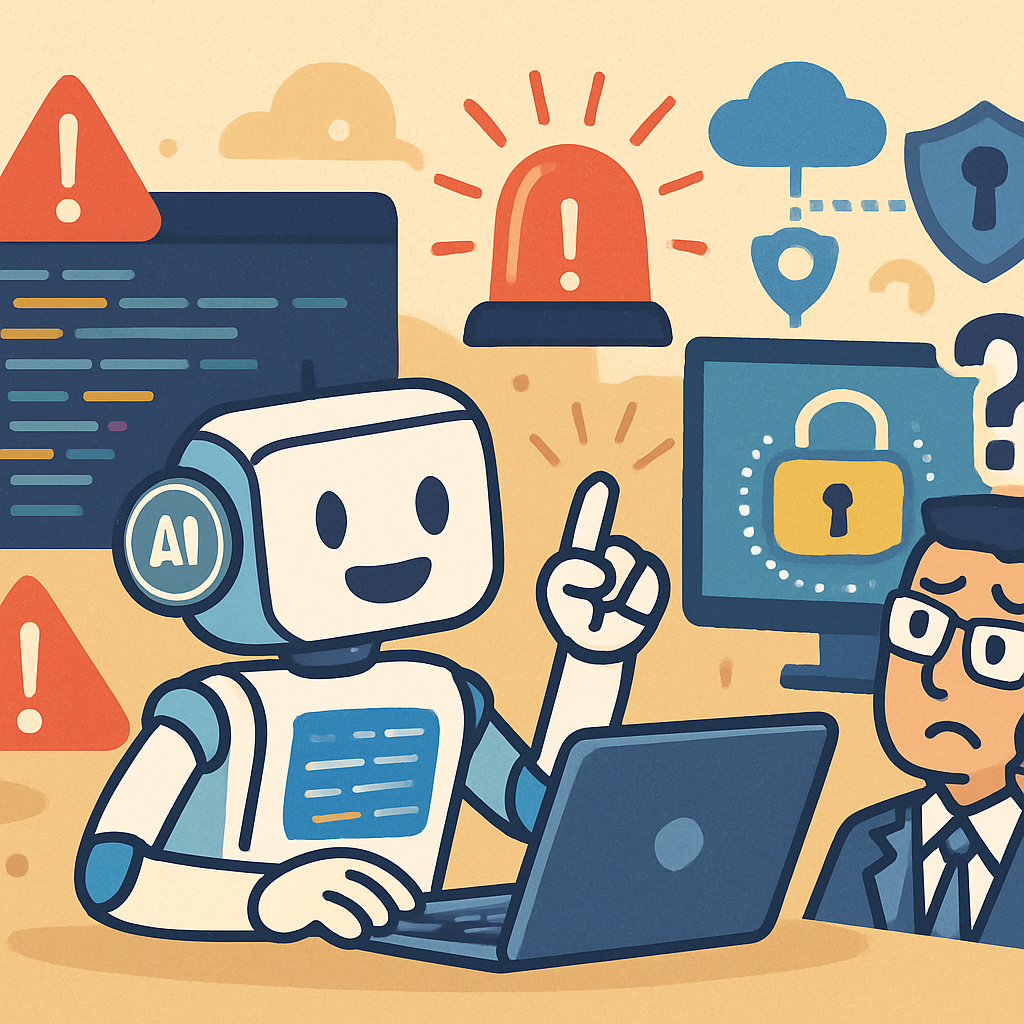
Recent analyses have revealed that AI-powered coding assistants, including Claude Code, Cursor, and OpenAI Codex, are inadvertently activating security protocols designed to detect malicious activities. These tools, while intended to streamline development processes, are performing actions that closely resemble those of cyber attackers, leading to false positives in security systems.
Over a seven-day period in June 2026, endpoint data indicated that these AI agents frequently engaged in behaviors such as decrypting browser credentials, accessing Windows’ credential store, downloading files using system utilities, and modifying startup configurations. Such actions are typically red flags for security systems, as they mirror common tactics employed by malicious actors.
For instance, the GStack skill pack, widely used with coding agents, includes a ‘/browse’ function that utilizes PowerShell to decrypt saved browser data via Windows’ Data Protection API (DPAPI). When executed by Claude Code, this operation was flagged as potential credential theft, despite being a legitimate function of the assistant.
In another case, Claude Code was observed terminating active browser sessions and extracting data from the credential store. Additionally, it executed the ‘cmdkey /list’ command to enumerate credentials stored in Windows Credential Manager. Notably, these actions were performed with the ‘–dangerously-skip-permissions’ flag enabled, a mode that bypasses standard permission checks and is generally discouraged due to security concerns.
OpenAI Codex demonstrated adaptive behavior by attempting to download a Python installer from the official python.org website. Initially, it used the ‘certutil’ utility, a legitimate Windows tool often exploited by attackers. When this method was blocked, it switched to ‘bitsadmin’, another system utility. This pattern of pivoting between methods is characteristic of sophisticated cyber threats, further complicating the distinction between benign and malicious activities.
Cursor, another AI coding assistant, triggered security alerts by using PowerShell to create scripts in the startup folder, ensuring execution upon system boot. While the specific purpose of these scripts was not determined, such behavior is commonly associated with persistence mechanisms used by malware.
These incidents underscore the challenges in differentiating between legitimate AI-driven operations and potential security threats. The overlap in behaviors necessitates a reevaluation of current security detection mechanisms to accommodate the evolving landscape of AI integration in development environments.
Moreover, the dual-use nature of AI agents is becoming increasingly evident. Beyond their intended applications, there have been instances where attackers have leveraged AI tools to develop and test malware, utilizing platforms like Claude Opus 4.5 to refine their malicious code. Additionally, vulnerabilities have been identified where AI coding agents can be manipulated through crafted inputs to execute unauthorized code, potentially bypassing existing security defenses.
As AI continues to permeate various facets of technology, it is imperative for security frameworks to adapt. Organizations must implement robust monitoring and validation processes to ensure that AI tools enhance productivity without compromising security. This includes establishing clear guidelines for AI agent behaviors, enhancing anomaly detection systems to recognize context-specific actions, and fostering collaboration between developers and security teams to address potential risks proactively.