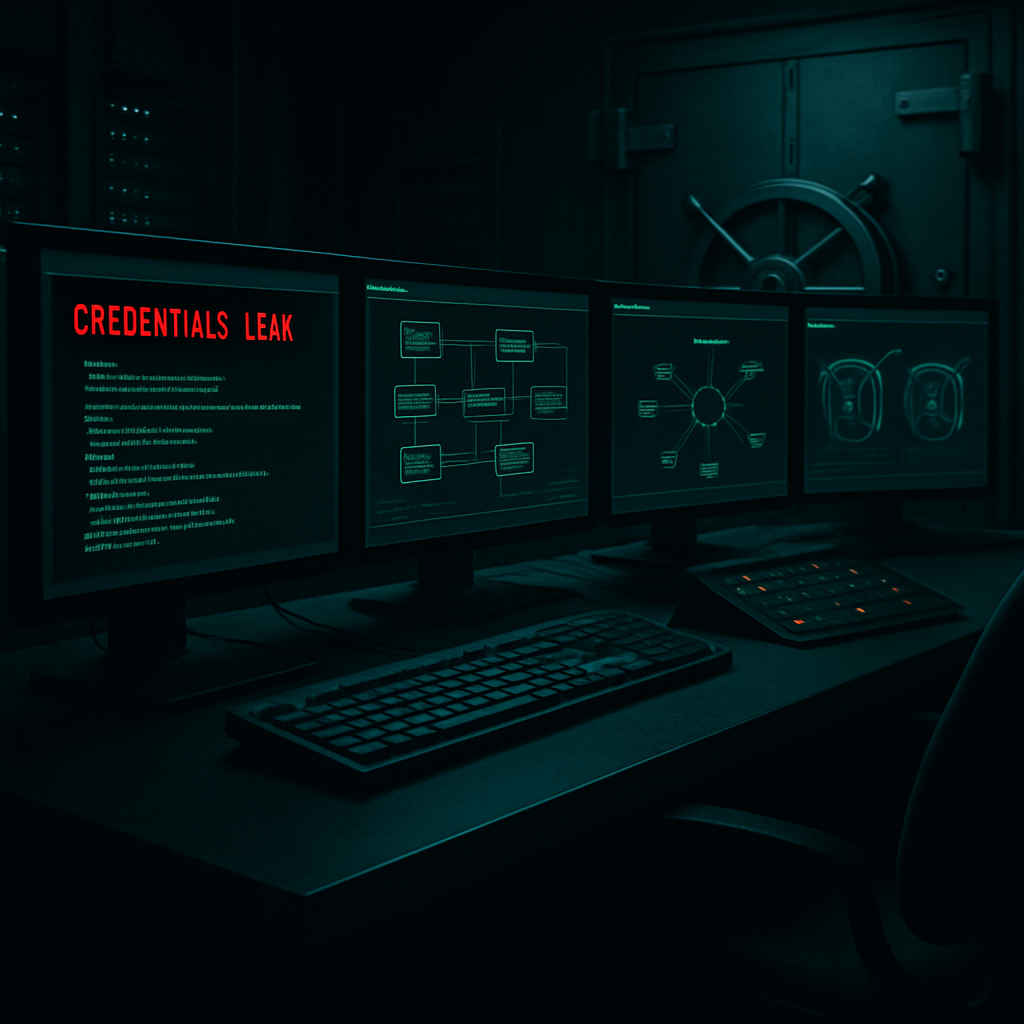
A hacker group tied to Blackhatsect0r and DXQRTXX built an automated attack system to hunt for security weak spots online. But they made a critical mistake: their control panel was unsecured, letting researchers see inside the operation. A vault of credentials, tool source code, target lists, browser logs, fraud notes — it was all exposed. This slip-up offers a rare glimpse into a live campaign.
How the Attack Machine Worked
Rather than launching single-shot intrusions, the system was designed for persistent reconnaissance and exploitation. Its discovery engine—built in Go and Python—continuously scanned for exposed services, weak creds, and leaked secrets. It queried certificate records, monitored DNS entries, and tested subdomains, flagging anything that might be useful for bigger operations. The infrastructure also organized those findings for later use.
Investigators uncovered tens of thousands of leaked credentials—over 16,400 sets—and nearly half a million URLs identified as potential targets by the system. Among them: some 449 subdomains tied to the French government. Researchers found the setup after discovering public-facing directories that lacked even basic authentication.
From Discovery to Actual Attacks
The operation didn’t stop at reconnaissance. Documents showed two assault campaigns in motion. One focused on ANTAI, a French government traffic ticket system. The hackers inspected client-side application code, tried to forge auth tokens, tested how requests are handled, and attempted to enumerate payment records—actions that could lead to unauthorized access.
The second campaign targeted a crypto exchange. Attackers located a readable environment file containing secrets. From there they probed account balances and prepared to initiate bogus withdrawals. Neither operation used a known zero-day; both hinged on widely avoidable issues—hardcoded secrets, exposed configuration files, and poorly protected application paths.
The group also shared internal tools and discussions via Telegram. They began by leaking data, then shifted toward dispensing offensive tools to subscribers—reflecting a move from hoarding to facilitating wider threat actor involvement.
What This Reveals & What Should Be Done
This breach shows that even sophisticated automation can’t compensate for basic security lapses. When configuration is sloppy, credentials are hardcoded, and secret keys are left in public view, attackers don’t need zero-days to break in—they just need routine oversight failings.
Organizations should ensure configuration files and version-control directories are never accessible via public paths, store token-signing keys only server-side, avoid default or static passwords, and rotate secrets if there’s any chance of exposure. Keep admin interfaces restricted, monitor external footprints continuously, and set up alerts for strange authentication or token activity. Reviewing logs for reconnaissance patterns can help catch escalation before damage occurs.
The clear lesson here isn’t that every cybercriminal network will build a full attack platform—it’s that attackers who automate discovery can exploit routine errors at scale. Closing even small loopholes can greatly reduce their ability to map targets and execute attacks.
Why It Matters: This case underlines a key point in cybersecurity today: while AI and automation amplify threat volumes, the weakest link often remains human or process-driven negligence. As these AI-enhanced threat machines proliferate, organizations must focus equally on hardened infrastructure and governance. What to watch next: how defenders respond to automated discovery, and whether exposure-based alerts become standard in security operations.