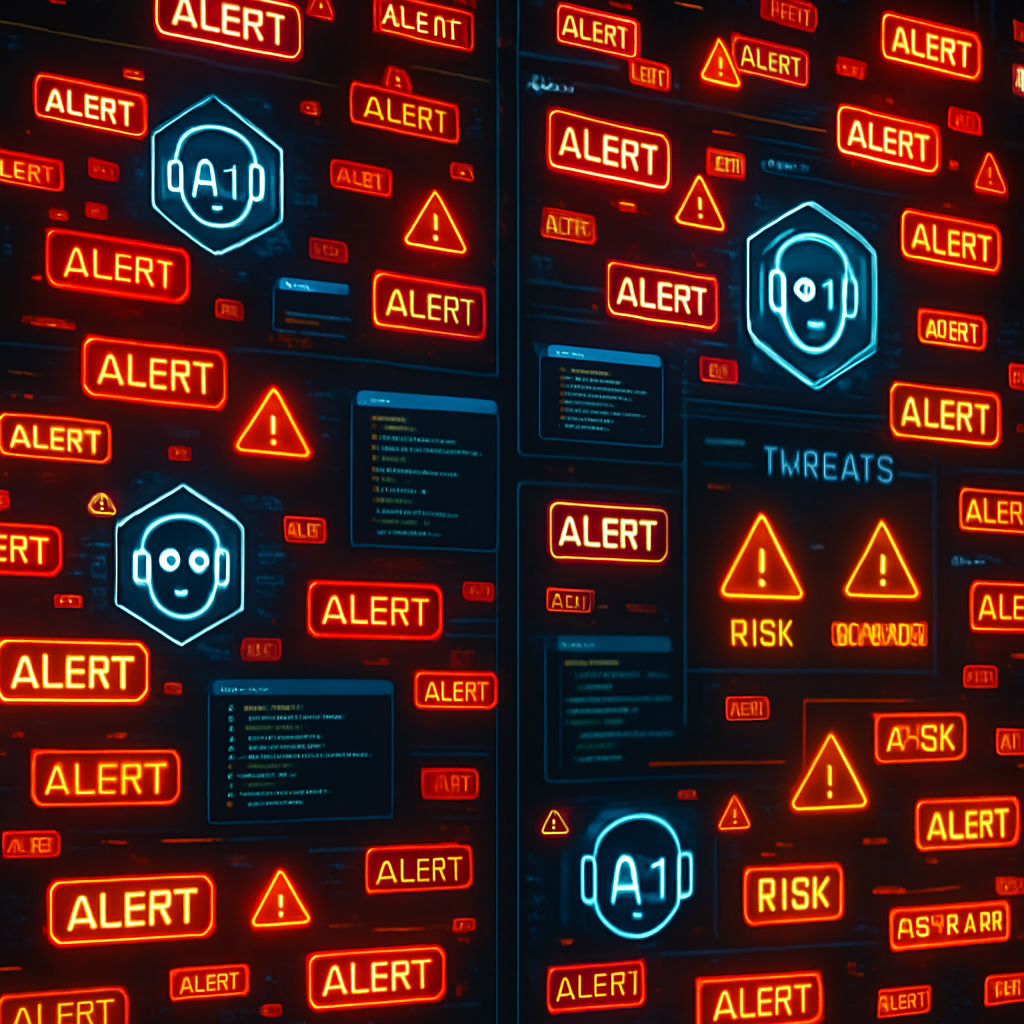
As organizations roll AI across development, operations, and knowledge work, security operations centers (SOCs) are facing an unexpected shift—not a massive spike in breaches, but a surge in alerts. Over a recent six-month period ending June 2026, AI-related security alerts spiked 685%, yet they still only made up 0.43% of all alerts. What’s changing isn’t volume alone—it’s what the alerts represent.
The Faces of AI-Driven Alerts
AI-related alerts fall into three buckets: real attacks (≈0.02%), genuine security risks (≈5.8%), and noise (≈94.1%). The real attacks are rare, mostly external threats that piggy-back on AI buzz and users’ trust in AI brands. One example: phishing emails exploiting Amazon, OpenAI, Gemini or Anthropic in their subject lines to trick staff who are used to seeing legitimate emails from those sources.
Security risks, the middle slice, involve situations where agents execute risky behavior—even when no malicious actor is involved. Common issues include agent flags that bypass permission prompts, reverse tunnels to the internet, dumping sensitive keychains, or unchecked OAuth grants. These exposures often go under the radar because endpoint tools barely notice them.
Noise dominates. Most alerts stem from AI tools doing routine tasks (like accepted coding agents installing packages or running shells) that trigger detections made before AI was everywhere. A trusted installer for Claude, for instance, may tripped alerts designed to flag ransomware or encoded PowerShell use. These alerts look serious, carry high severities, but in practice, nearly all are false positives.
Tools & Triage: Automation Isn’t Enough
In automated triage systems handling AI alerts, about 80% of cases are given a benign verdict. Around the same share are auto-suppressed without a human ever reviewing them. Only roughly 5.4% reach a human analyst. But even apparently severe alerts—like a binary labeled as “lateral tool transfer” or “ransomware behavior”—often turn out to be harmless upon inspection.
What this all means for SOC processes: labels like “critical” or “malicious” now demand additional context. That suspicion becomes essential in distinguishing real attacks from AI tools acting under benign usage scenarios.
Best Practices for Managing AI in the SOC
First, legacy rules need urgent tuning. High-severity alerts firing on normal AI agent behavior must be adjusted so the signal isn’t lost in the noise. Define clear policies about what data AI tools can access and outline protocols for OAuth, agents with elevated flags, and reverse tunnels.
Second, segment AI tool behavior from user actions. Operating agents in isolated environments—containers or virtual machines—helps contain risk and make it easier to tell what’s the tool acting versus the user. Control credential access and monitor what AI agents can actually reach.
Third, shift focus from detecting every unusual action to modeling what “normal” AI behavior looks like. Without that benchmark, SOCs risk fatigue from false positives and may miss the rare but real exposures hiding in the noise.
Overall, AI adoption hasn’t triggered an outbreak of breaches—yet. What’s happening now is far more subtle and potentially insidious: alerts doubling, rules misfiring due to outdated logic, and exposures going unnoticed because they’re buried in the flood of high-volume noise.
Analytical angle: As AI becomes baked into corporate workflows, the SOC’s job is morphing. It’s no longer about just blocking bad actors—it’s about recalibrating the entire detection deck. Properly distinguishing agent behavior, refining what constitutes risk, and implementing isolation and credential controls are essential. The SOCs that adapt this way will ride the AI wave; those that don’t will drown in their alert logs.