Addigy has rolled out the Intelligence Suite — a tightly integrated AI layer for Apple device management designed for managed service providers (MSPs) and IT teams overseeing Mac fleets. Rather than being a separate add-on, this new suite embeds AI directly within the Addigy platform to offer administrators stronger control over AI adoption, compliance, and oversight.
Features Designed for Real-Time Control and Trust
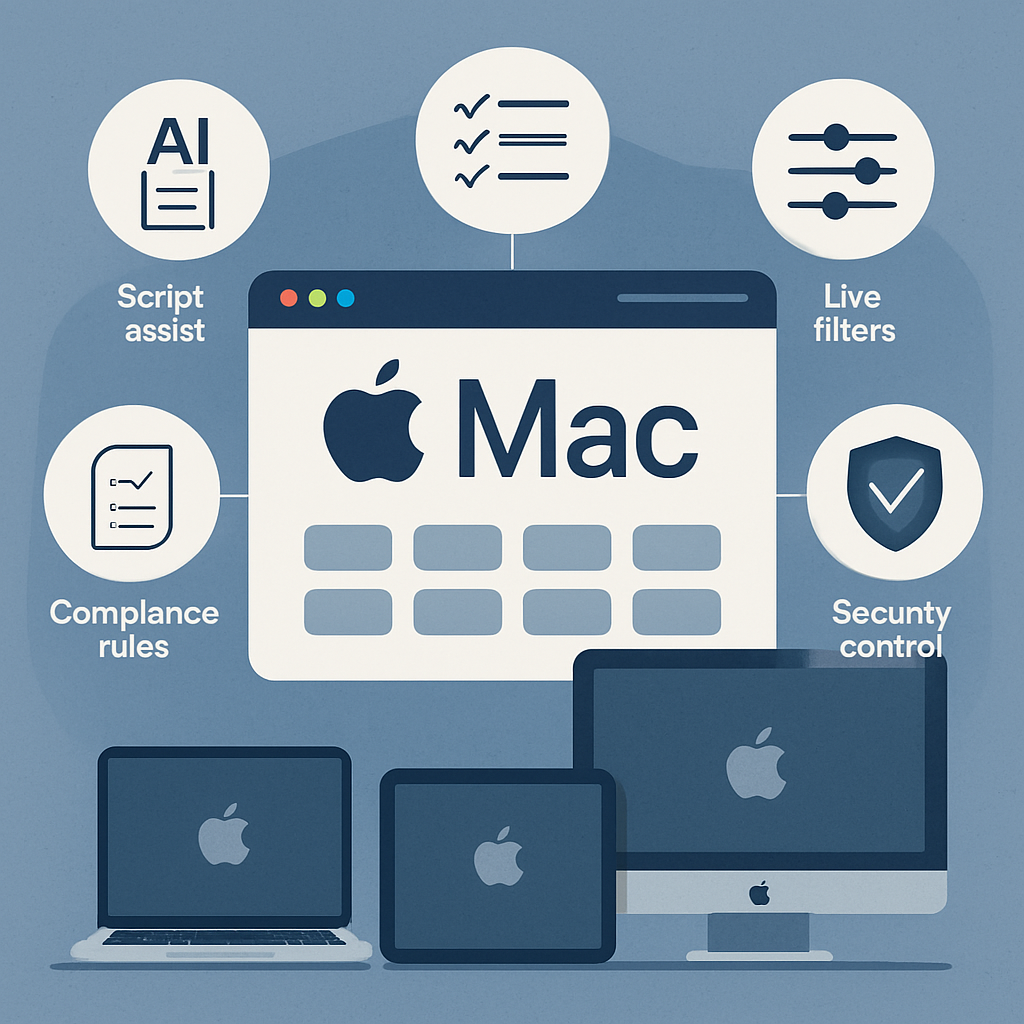
The Intelligence Suite introduces several core tools that work together. “Script Assist” enables admins to describe desired outcomes in plain language; the system then generates, audits, or suggests scripts that adhere to existing role-based access control (RBAC). Natural-language commands power the report system, letting users by-pass complex filter-building to generate up-to-date insights based on a device’s live state.
Another central component is “Smart Filters,” which allow admins to build conditions (such as seeing which Macs lack patches or are running outdated OS builds) using plain English. It evaluates these conditions against real-time device facts rather than waiting for device check-ins. Meanwhile, the suite also includes a compliance tool called the AI Compliance Benchmark with over 30 prebuilt app- and network-level controls to monitor, block, or report on AI use across Macs — key to preventing unapproved or so-called “shadow AI” from slipping through.
The platform’s latest piece — Addigy’s Model Context Protocol (MCP) — lets organizations integrate their own agents or tooling. Administrators can grant scoped permissions via API keys, and the AI agents inherit permissions already established through RBAC, ensuring agents can’t overstep boundaries. Crucially, no action executes on a device without human review via an approval gate.
Privacy, Architecture & What’s Not Included
Addigy emphasizes that customer device data never feeds into external training models. AI processing happens over third-party models (like Anthropic Claude and Cohere models) via Addigy’s AWS-based infrastructure. Sensitive values in scripts are stripped before model calls; environmental data captured by MCP is access-limited—agents can only see what their assigned API keys allow.
At launch, some features are still incomplete: while the Compliance Benchmark monitors whether AI tools are blocked, it does not detect unapproved ones. Also, systems embedded with AI or tools contained within other apps or platforms may not yet be fully covered if not among the prioritized tools.
Who Benefits & What’s Next
The Intelligence Suite is built for two main audiences. MSPs managing many client environments can deploy updates, compliance checks, and fixes across clients without repetitive manual work. For internal IT teams, the suite reduces friction in managing large fleets — letting techs skip writing custom syntax or filter logic and instead focus on the issue, leaving the tooling to translate intent to action, subject to admin approval. The full suite will be free for existing customers until October 31, 2026, after which details around pricing and packaging will be finalized.
This change reflects a broader push across the enterprise tech sector to wrap AI promises in accountability. As Apple-centric environments face growing regulatory scrutiny and internal pressure to secure shadow AI, tools like Addigy’s Intelligence Suite show how governance can be baked in rather than bolted on. What to watch for: speed and scalability once large fleets adopt it, how comprehensive shadow-AI detection becomes, and whether pricing lets smaller orgs take it on without vendor lock-in or surprise costs.