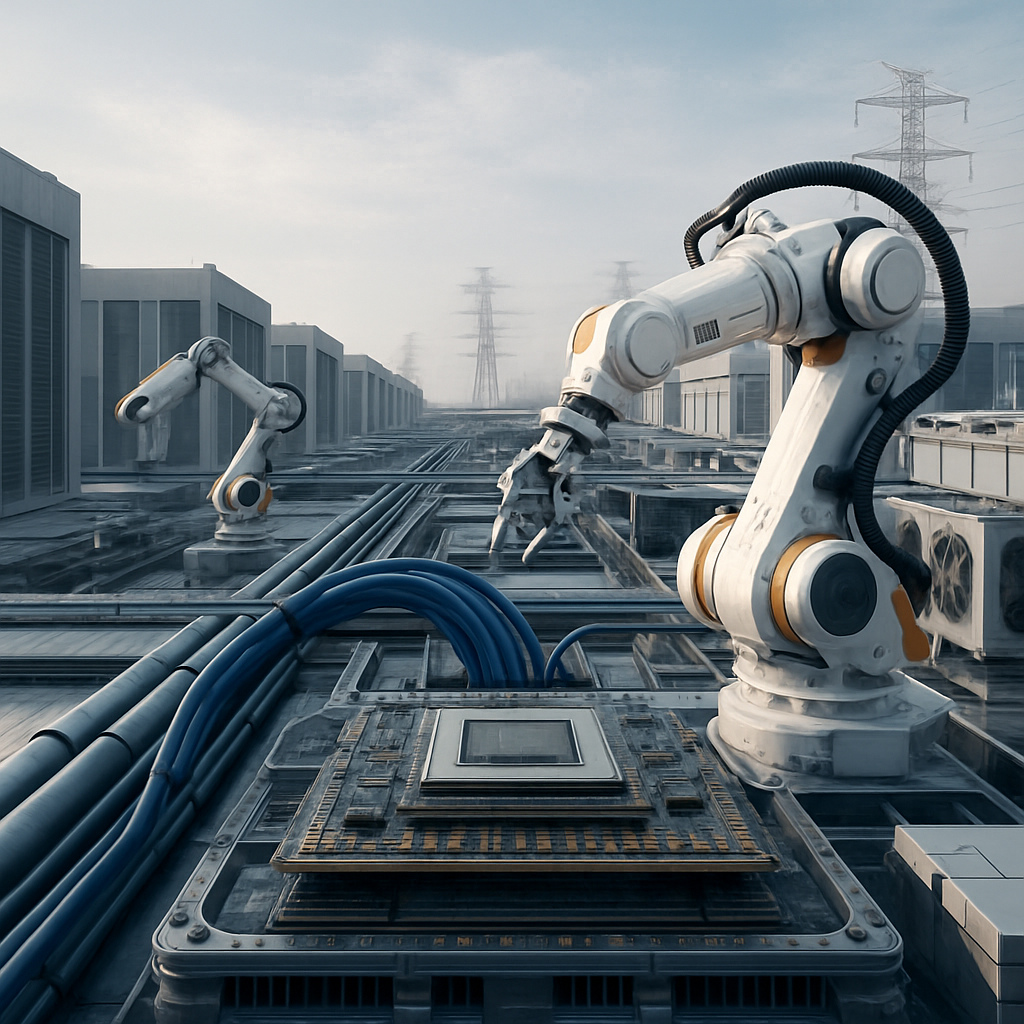
Andreessen Horowitz (a16z) has launched a $1.1 billion fund dubbed “Machine Age,” dedicated to accelerating the physical infrastructure that underpins advanced AI systems. Unlike most of its prior bets, which emphasized software and AI tools, this new fund shifts focus toward components like chips, memory, data centers, and robotics — the hardware and logistical backbone needed to scale AI in the real world.
The Machine Age fund aims to fuel investment across the AI-memory hierarchy, inter-node interconnects, and power-efficient edge devices. It also allocates capital toward supporting critical secondary systems such as cooling, materials supply, real estate, and power delivery — the physical and environmental systems required to keep ever-growing AI infrastructures operational.
a16z frames this move as more than just a venture play — it’s positioned as a social and national imperative. The firm describes AI as the most potent problem-solving tool developed so far, with the potential to deliver abundance. With this in mind, Machine Age seeks to “open the throttle” on the physical buildout of AI to meet demand and sustain innovation.
Why Hardware Matters Now
The AI boom has revealed that software alone cannot close the gap to higher performance. As models grow bigger and more complex, bottlenecks in memory bandwidth, power delivery, cooling, and node-to-node latency are becoming performance and cost hurdles. Edge devices — from autonomous robots to on-device AI tools — demand low-latency and energy-efficient hardware, which current infrastructure often struggles to deliver. The shortage of efficient memory, scalable interconnects for distributed systems, and access to power and real estate are growing tensions in the AI supply chain.
Most venture capital funds haven’t been investing heavily in the “physical” side of AI — historically far more expensive to build and slower to scale compared to software. By committing over a billion dollars specifically to infrastructure, hardware, and industrial-scale systems, a16z is signaling confidence that the industry is ready for the next phase: making the physical foundations of AI as advanced as the digital layers.
What to Watch Going Forward
Companies building novel memory technologies, custom AI accelerators, efficient cooling systems, and edge devices may become prime candidates for funding under Machine Age. Real estate developers specializing in data center campuses, electrical grid upgrades, and materials suppliers could also see a surge in investment opportunities. With material inputs and energy infrastructure often regulated, policy and permitting will likely become as important as technical innovation.
For a16z, this fund marks a shift in venture strategy: more capital, longer timelines, deeper technical risk. The success of Machine Age could redefine what kind of startups attract top-tier early investment — not just those with clever software, but those who solve hardware, supply chain, and physical infrastructure challenges. If it works, we may finally see the AI revolution translate into visible, physical build-out — from labs to factories, chips to cooling systems.
****
This development is pivotal because the long-term potential of AI hinges not only on algorithmic advances, but on the physical systems that support them. a16z’s Machine Age fund signals that the hardware bottleneck can no longer be ignored. What to watch next: which companies can bridge the gap between software promise and hardware reality, and whether investors and governments align to build the foundations needed for the next generation of AI.