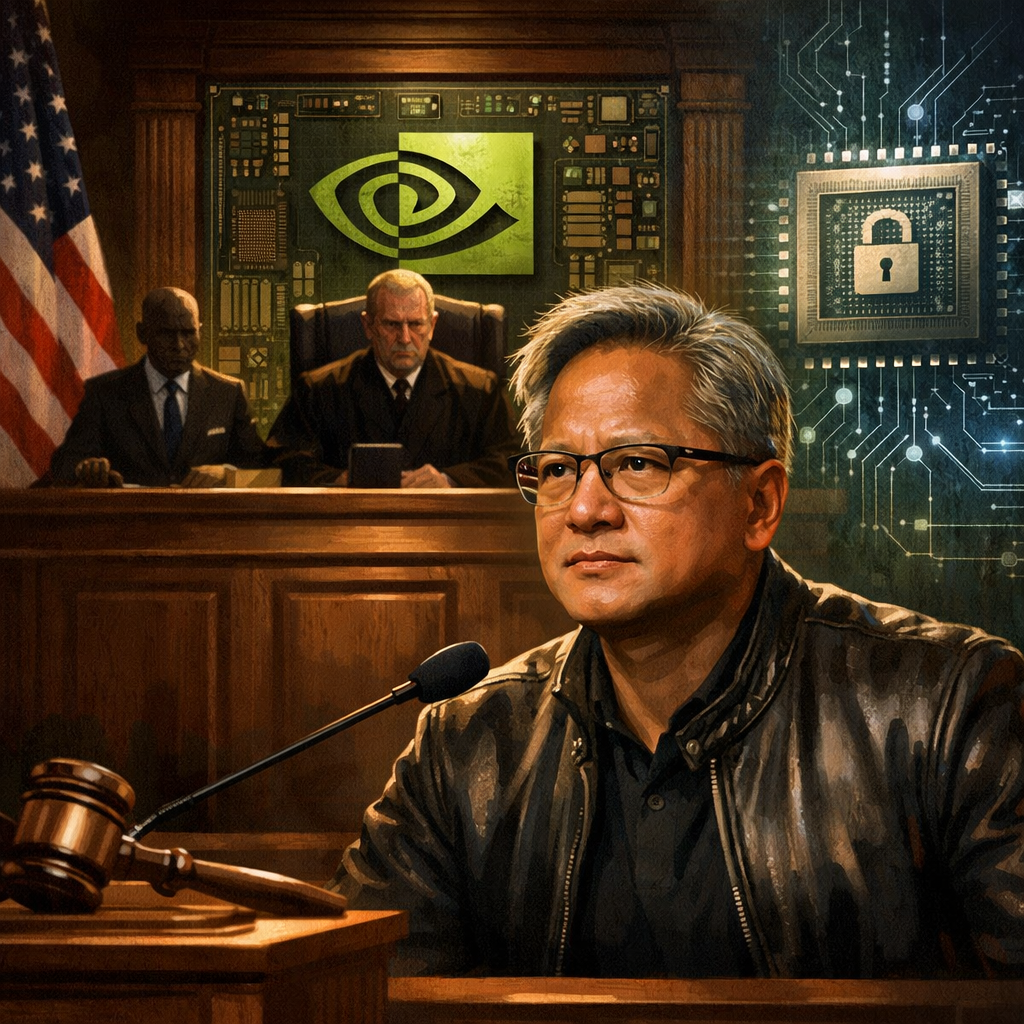
Business scholar Jeffrey Sonnenfeld of Yale has issued a searing critique of Nvidia, warning that recent decisions by its board could lead to historic legal liability—and arguing that the company may be undermining rather than bolstering U.S. industrial power. His comments follow Nvidia’s controversial move to reinstate CEO Jensen Huang and bring him back onto the board, despite ongoing investigations into foreign intelligence concerns.
Board’s Reinstatement Decision Under Fire
Sonnenfeld blasted the board for what he called a failure of diligence and competence. He claimed directors ignored clear warning signs, delayed essential investigations, and reversed themselves without sufficient evidence. All this, he said, indicates a weak liabilities policy and opens the board members up to significant legal risks. His argument came after vice president’s intervention, presidential pressure, and private conversations that culminated in Huang’s return, even though Nvidia had said it was probing whether foreign intelligence operations had targeted the CEO.
Export Risks, Legal Threats, and Industrial Consequences
According to Sonnenfeld, Nvidia has allowed its most advanced chips to reach China despite U.S. export restrictions—a move he believes has serious national security implications. He also linked falling market values of firms like Anthropic to the realization that Chinese AI models are being developed by copying or distilling U.S. lab work, exploiting access to high-end chips. “Rather than being a pillar of U.S. industrial might, Nvidia is enabling adversaries,” he suggested.
Meanwhile, Nvidia is facing multiple legal and regulatory challenges. These include a class-action lawsuit seeking damages for investors, a derivative suit targeting the board’s conduct, a Justice Department antitrust investigation, a Securities and Exchange Commission review of its accounting practices, an FBI inquiry, and a California subpoena. There’s also a growing spectrum of congressional inquiries and tight scrutiny from export control authorities—particularly after Nvidia partner Megaspeed was placed on the U.S. trade blacklist.
Leadership vs. Operational Intelligence
Sonnenfeld also pushed back on the narrative that Huang’s return was essential to Nvidia’s technical progress. He emphasized that key innovations—such as the GPU designs by co-founder Chris Malachowsky and others, and CUDA software by Ian Buck—pre-date or operate independently of Huang. Thus, in his view, the CEO’s presence on the board doesn’t materially affect their work. He also highlighted internal unrest, noting concerns among staff over leadership accountability, particularly around issues of favoritism and HR policy.
This debate matters because it shines a light on the tensions between corporate governance, national security, and technological leadership. Nvidia’s alleged chip exports into military institutions in China—chips that may end up in Russia or Iran—raise obvious geopolitical concerns. Behind that, investors are already suing over whether the company has been transparent, and how its internal policies handle sensitive misconduct claims.
Ultimately, Sonnenfeld presents a warning: decisions made by Nvidia’s board in haste and under political pressure may not only expose the company to legal peril but could also erode U.S. industrial dominance. How the courts, regulators, and shareholders respond will be critical—and whether Nvidia can reclaim trust and demonstrate responsible tech stewardship may define its legacy.