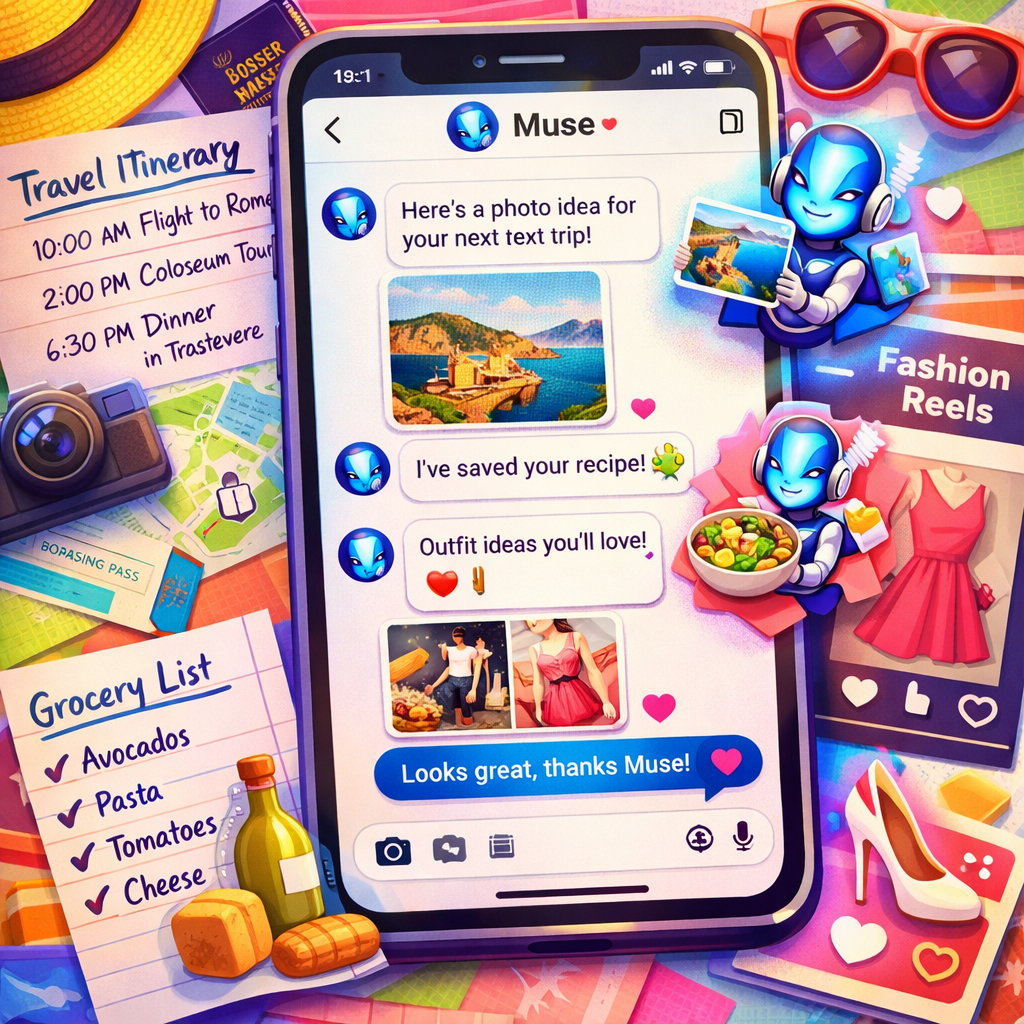
Meta is weaving its AI assistant Muse directly into Instagram’s messaging platform. Starting Tuesday, users in the U.S., Canada, Mexico, Japan, and Singapore can chat with Muse inside Instagram DMs on both iOS and Android. This tight integration eliminates the need to switch between Instagram and the separate Muse app to get help or insights on posts, places, or products they come across. Muse can also help users catch up on conversations they missed from other DMs.
What Muse Can Do Inside DMs
Now, when you share a post with Muse inside a DM, you can ask it to take action—like adding a coffee shop to your travel itinerary, tracking down Black Friday deals, or helping with recommendations based on your content. Muse is also being woven into Instagram’s saved content system. For example, it can sort your bookmarked posts into custom Collections, convert recipe videos into grocery lists, turn saved travel content into itineraries, or suggest outfits using fashion reels.
When a user saves a post, they’ll soon see prompts to ask Muse to organize it. That feature will be live initially in the U.S. and Canada. Meta stresses that while Muse is more deeply embedded, users are always in control: nothing gets shared or published without approval, and users can make Muse forget information or reverse actions.
Why This Matters
This move reflects Meta’s push to make AI assistants part of users’ everyday routines. Adding Muse into Instagram—already a major hub for discovery and social sharing—boosts Muse’s usability and reach. It mirrors moves by other tech giants who are embedding AI across apps people already use daily, rather than in standalone tools.
This change could make Instagram more than just a social or visual platform—it’s becoming a space where you manage travel planning, shopping, content curation, and more, all via simple conversations with an AI. It also raises new questions about privacy, control, and how personal data is handled across Meta’s family of apps.
By bringing Muse directly into Instagram DMs, Meta is making AI assistants more accessible where people already spend much of their time. The success of this strategy will hinge on users feeling they’ve gained convenience without sacrificing control—and whether Muse’s suggestions and actions match expectations. Watching for how effectively Muse handles nuanced requests, protects user data, and balances automation with user authority will be critical going forward.