Apple’s upcoming models—iPhone Air 2 and the regular iPhone 18—are rumored to feature noticeably thicker camera modules than their predecessors, based on leaked CAD designs from a supply chain source. The new camera bump dimension is expected to be 3.8mm in height, up from the current 3.45mm measurement, even though the main bodies of the phones appear to maintain their existing slim profiles.
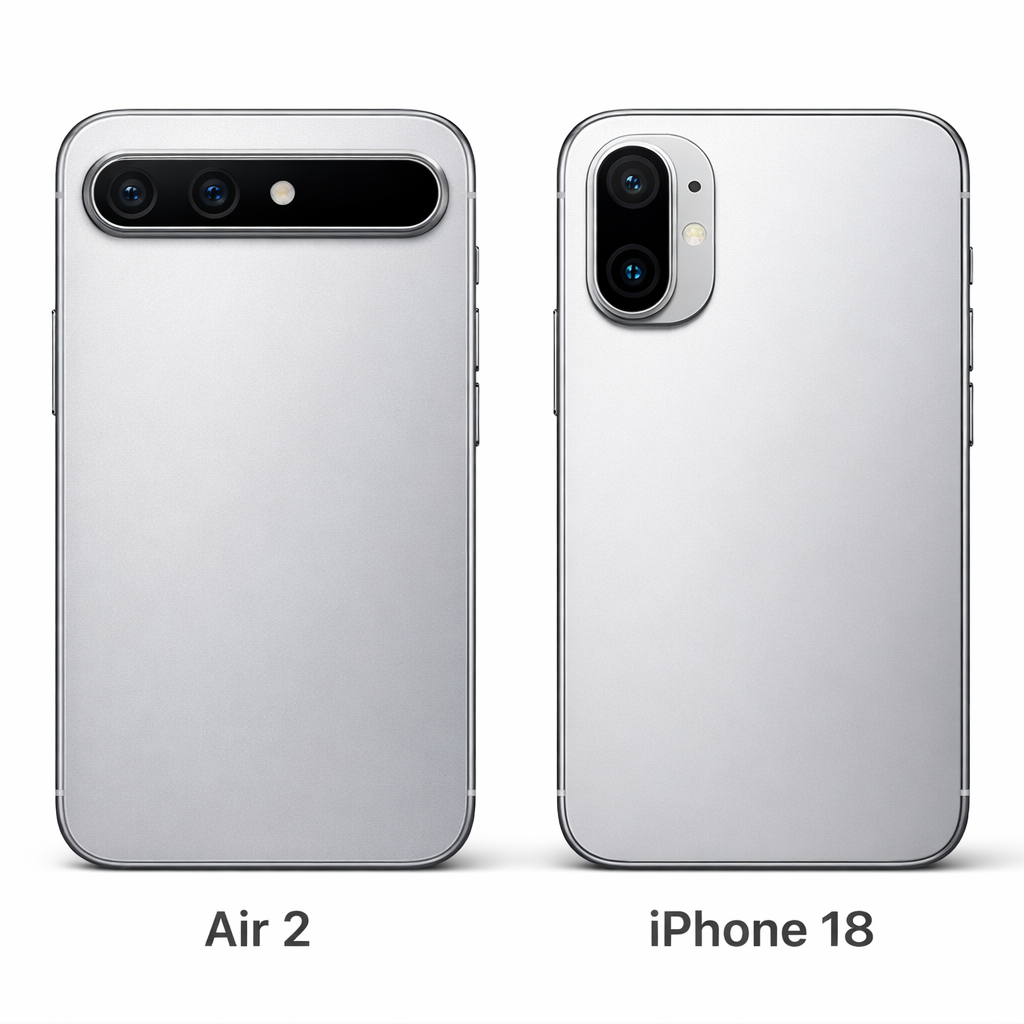
For the iPhone Air 2, the leak shows a dual rear camera setup—two lenses side-by-side—versus the single camera in the current Air model. These lenses are positioned horizontally on a raised plateau, with the flash and microphone to the right. Notably, this mirrors earlier dummy model leaks and tips about Apple introducing a 48-megapixel Ultra Wide sensor alongside the existing primary wide-angle lens.
The standard iPhone 18 seems to undergo less dramatic design changes. It retains its vertical dual-lens arrangement in a pill-shaped bump, similar to the iPhone 17. However, its camera housing also appears to increase in height to 3.8mm—even while the body thickness stays roughly the same as its predecessor.
Other Rumored Upgrades & Timeline
The Air 2 is expected to feature top-tier internal upgrades: an A20 Pro chip, a C2 modem, and an N2 wireless networking chip. Display size is likely to stay at approximately 6.5-inches, and RAM may be bumped to 12GB. Camera-wise, the front-facing Center Stage sensor is rumored to offer around 18 megapixels. These updates indicate a significant boost in power and flexibility compared to the current thin-body Air model.
The leak suggests both the iPhone Air 2 and the standard iPhone 18 will launch in early 2027, possibly alongside another model dubbed the iPhone 18e.
These CAD leaks reportedly trace back to a supply chain source that has previously provided accurate details about color options and other specs in Apple’s lineup, lending a degree of credibility to the design changes.
What This Means:Should these changes materialize, the iPhone Air line would shed one of its biggest limitations—camera flexibility—by adding a second lens, while still preserving its signature thin chassis. The standard iPhone 18’s thicker camera bump hints at improved optics or stabilization. What to watch for next: whether Apple can balance the protrusion with durability and case design, and how these hardware tweaks will deliver in real-world shooting. Together, this could mark a subtle yet meaningful shift in how Apple differentiates its premium vs ultra-thin phones.