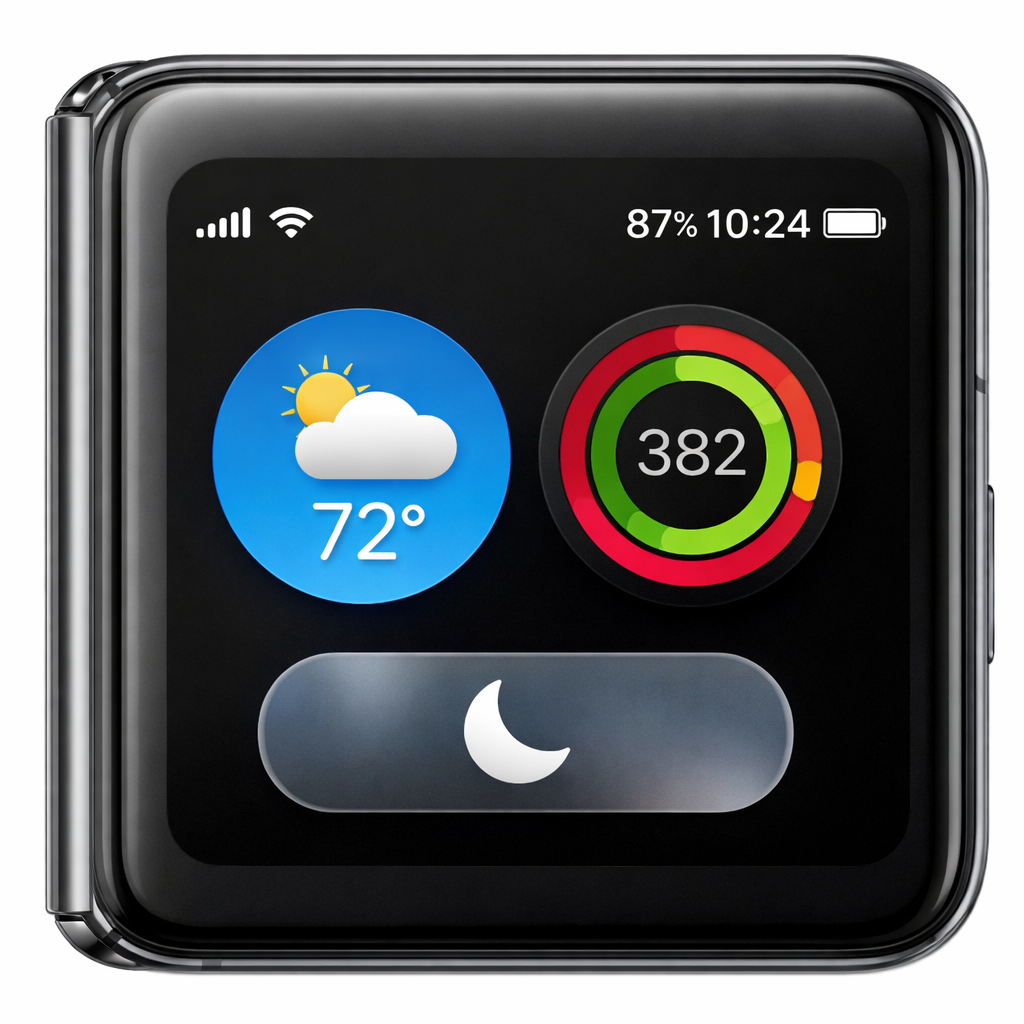
Code unearthed in the iOS 27 developer beta confirms Apple has experimented with expanding widget support on the iPhone Duo’s compact outer display. The change introduces a vertical “complication column” of two circular widgets placed beneath the status icon, above the Focus Mode symbol. This layout would match the device’s design constraints and make room for more at-a-glance info without overloading the screen.
More Widgets, Same Screen Real Estate
Originally unveiled with iOS 16 in 2022, widgets became a staple of the iPhone home screen and later the lock screen. On the iPhone Duo, these features were slightly reconfigured to accommodate its smaller outer display. The new code reveals Apple has been testing space for two additional circular widgets stacked vertically in a dedicated slot. These would sit between the status icon and the Focus Mode icon.
Even when Focus Mode is activated, the position beneath the status icon remains reserved so the Focus icon doesn’t shift. Because Focus Mode icons show only when relevant (e.g. Do Not Disturb), Apple has kept enough room so extra widgets won’t intrude on meaningful system indicators.
Still in Testing, Not Guaranteed
The feature first surfaced in code tied to the iOS 27.1 developer beta and remains in iOS 27.3 with no flagging changes, suggesting it is under active evaluation. Yet the absence of a public rollout implies Apple is still deciding whether it’ll make this enhancement available to all Duo users.
The codename “pdfu” uncovered this discovery, also showing work on refining the Focus Mode UI. Whether or not Apple enables the widget trick permanently, the persistence of the code hints at strong internal interest.
With competition heating up in foldable phones and dual-screen devices, unique features on devices like the iPhone Duo could provide a decisive edge. If Apple officially launches this widget expansion, it would enhance user customization without compromising the Duo’s distinctive outer screen layout. Watch for this landing with an upcoming iOS version—potentially iOS 27.4 or 28.