The US smartphone landscape in Q3 2026 saw Apple strengthening its lead, but Google Pixel—despite its Pixel 11 launch—managed to hold steady amid a softer overall market.
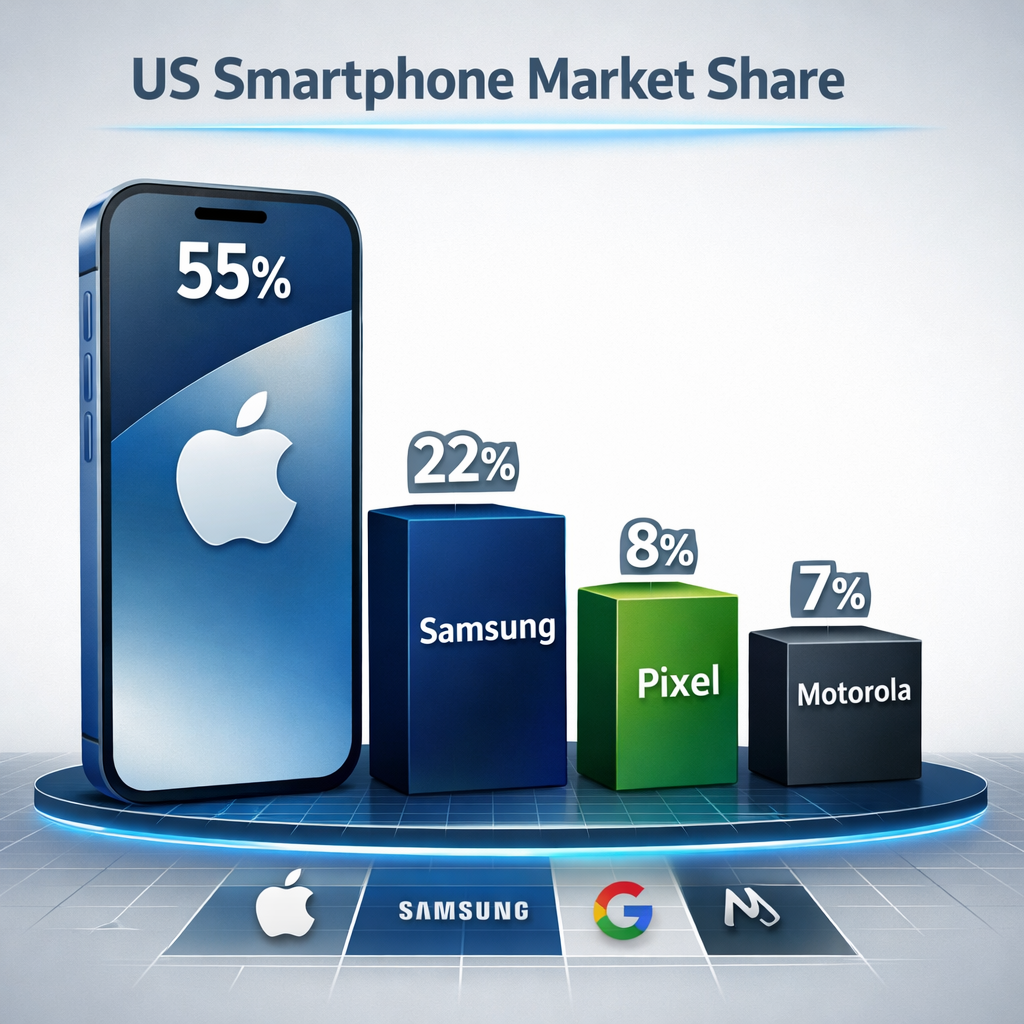
In Q3, Apple solidified its dominance in the US smartphone scene, capturing about 57% market share—up from roughly 50% a year earlier. Samsung landed second with 25%, representing a 1% increase year over year, buoyed in part by the success of its Fold 8 model during the quarter. Motorola, meanwhile, saw its share fall from 12% to 8% over the same period.
Google Pixel came in fourth with approximately 6% of the market, down 1 percentage point from Q3 2025. The drop is linked to a less impressive debut of Pixel 11 and higher prices compared to its predecessor. Still, experts note the decline isn’t major given how stiff the competition has become.
Bright Spots: Year-to-Date Performance and Carrier Presence
Though Q3 showed a slight dip, Pixel’s performance over earlier quarters in 2026 paints a more positive picture. In both Q1 and Q2, Google saw year-over-year gains in its market share. Experts highlight that Pixel has been particularly aggressive in postpaid carrier channels, which helped offset weaker year-over-year shipments.
The Pixel 11 launch, while anticipated, didn’t spark as much excitement as past flagship releases. Its debut didn’t deliver strong momentum, particularly when stacked against Apple’s continuing dominance. Price hikes also seem to have dampened consumer enthusiasm.
Comparative Analysis: Pixel vs. Rivals
Apple’s growth of 7 points in year-over-year market share emphasizes its grip on the US market. Samsung’s modest gain suggests its Fold 8 played a key role, though it still trails Apple by a hefty margin. Motorola’s slide from 12% down to 8% signals more serious losses, potentially leaving room for Google to carve out stability or even growth.
For Google, holding at 6% shows resilience—but it also points to challenges. The Q3 decline is modest yet important, especially considering the launch of Pixel 11 during that period. Weak shipment numbers suggest the device didn’t connect with buyers more broadly, despite decent performance in certain channels.
What this means: The US smartphone market remains fiercely competitive, making even a 1-point drop for a brand like Pixel significant. As Apple reap gains and Samsung holds firm, Google must work harder to ensure future flagships reignite interest—especially if pricing and launch timing continue to impact momentum. Looking ahead to Q4 and next year, Google’s strategy in carriers, pricing, and hardware will be pivotal to shifting this plateau into growth.