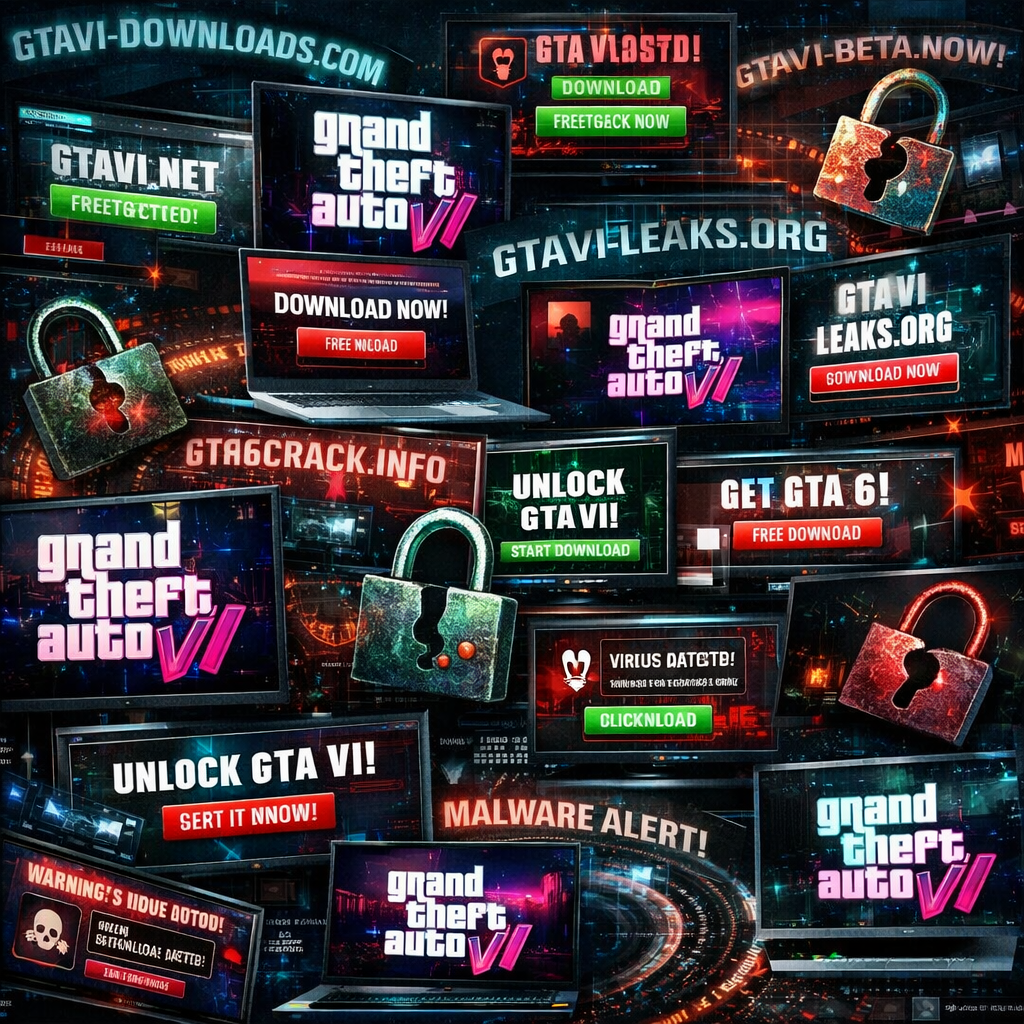
A massive malware campaign dubbed CyberLeek is exploiting over 355 domains and subdomains to peddle fake PC launchers for Grand Theft Auto VI (GTA VI). Instead of installing the game, victims receive ZIP files that house malicious software pretending to be launchers. The fraud has been active since mid-October 2026 and surged in November. Researchers from Vecert Foundation uncovered the scheme while tracking domain and certificate records. Key details remain unknown regarding exactly what the malware does after installation, but the scale and deceptive nature are clear.
How the Campaign Works
Fraudulent websites in the CyberLeek network pose as sources offering leaked or early versions of GTA VI for Windows 10 and 11. These sites employ search-friendly content and page structures to appear legitimate, often with prominent buttons advertising “no ad wall” downloads. However, those buttons typically lead to ZIP archives—sometimes via different URLs hosted on public platforms or fallback download links—rather than any official installers. Because of the domain diversity, blocking a single link doesn’t disrupt access to the overall campaign.
While visiting a site or downloading a ZIP file doesn’t automatically compromise users, executing the installer inside the archive is the trigger for infection. One previous campaign involving fake GTA VI demos was found to contain Vidar malware—a tool designed to steal browser sessions and credentials. For CyberLeek, researchers have not confirmed which malware families are being deployed, nor the full scope of data exfiltration or damage.
Signs, Safeguards, and Cleanup
Security experts recommend defenders begin by reviewing DNS and web proxy logs for connections to known CyberLeek-associated hosts. Matching those with records of any downloaded archive or installer launches strengthens detection. Simple indicators like generic filenames or script names aren’t sufficient proof of compromise; observing the installer run after visiting a suspect domain provides a much stronger basis to investigate device behavior and network traffic.
If you downloaded the ZIP but didn’t run it, delete it immediately. If you did run the installer, isolate your device from the network, and have it examined for unusual processes. Alter any important passwords and terminate active sessions using a clean device, since credential theft can persist even after malware removal. Moving forward, only download game files from published announcements by reputable publishers or licensed digital storefronts—not from sites promising early or leaked versions.
Indicators observed by Vecert include domain names like “cyberleekland[.]com,” subdomains such as “api[.]cyberleek[.]link,” the advertised ZIP named “GTA6Launcher Cyberleek.zip,” and an installer called “GTA6-Launcher-Setup.exe.” Script names like “download.js” and URL paths redirecting to changing download hosts were also noted. Hashes for files weren’t published.
This threat is part of a broader pattern where attackers abuse demand for upcoming games to spread malware, especially by poisoning search results and impersonating trusted download channels. The GTA VI community has already been a target for earlier scam bundles containing data stealers and ransomware—but CyberLeek stands out for its infrastructure size and its modular approach to overlapping domains and subdomains.
What this means: even anticipating official releases doesn’t protect you from becoming a target. CyberLeek’s use of dozens of domains, fallback download paths, and credible-looking web pages creates a layered deception. Defenders and users alike must prioritize verifying sources, monitoring network indicators, and handling suspicious files with extreme caution. Going forward, we should watch for confirmed attribution of what malware is being deployed, any proof of data theft tied to CyberLeek, and how law enforcement or service providers respond to takedown or blocking efforts.