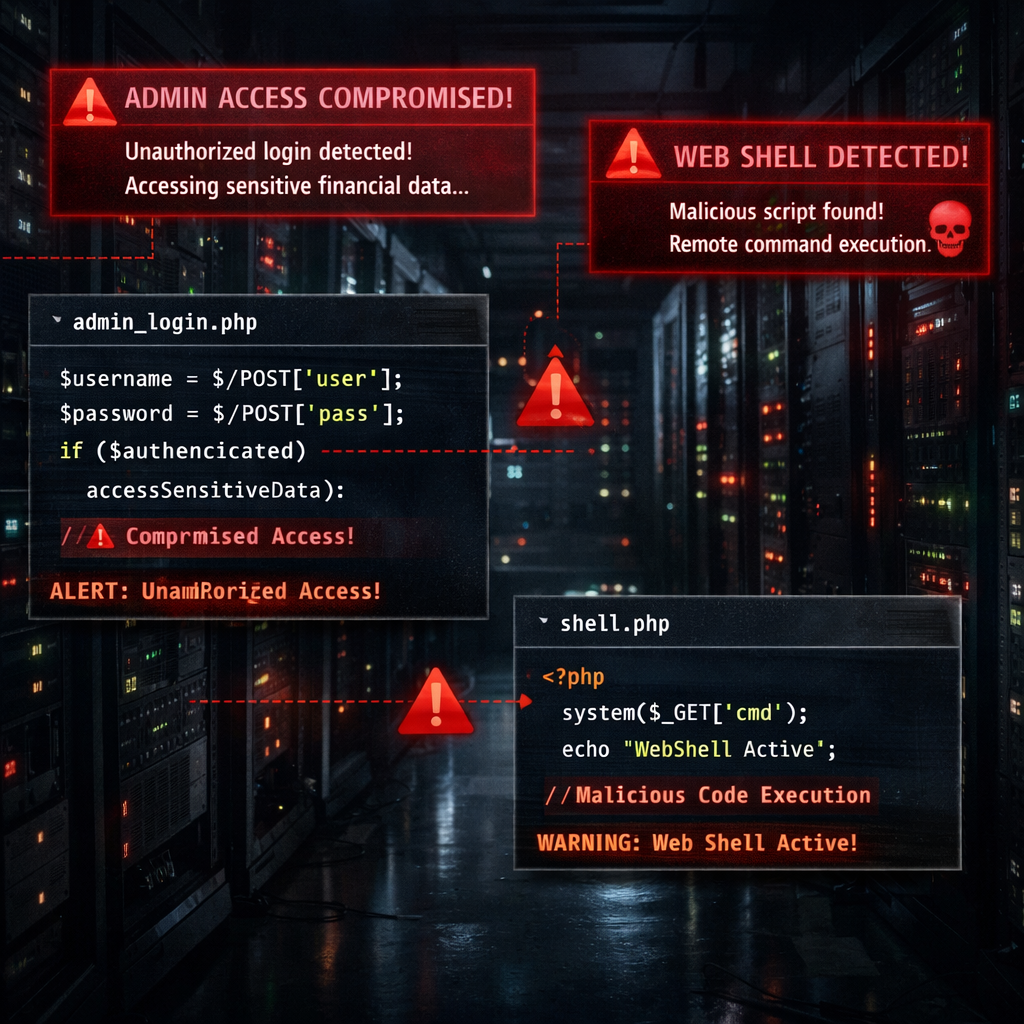
Hackers have exploited a misconfiguration in a banking platform from Temenos, specifically targeting its Quantum Fabric (formerly Kony Fabric), to deploy web shells without needing any password. The breach, named BankWeaver by Forescout’s Vedere Labs, stemmed from an authentication service that granted privileged access to anonymous users. One financial institution has been confirmed as compromised, while six others around the world showed similar exposure, though no additional breaches are yet confirmed.
How the breach worked
Quantum Fabric is used to bridge customer-facing applications—web, mobile—with identity systems, payment services, and internal databases. The vulnerability arose in the Fabric authentication service: it was set to accept anonymous access and issue tokens intended only for non-administrative functions. Attackers leveraged this weakness to obtain administrative privileges without providing login credentials. Once inside, they used Quantum Fabric’s support for custom Java integrations to install two malicious components, FabricShell and FabricShadow, which allowed deep system control and reconnaissance.
FabricShell enabled the attackers to run OS commands, execute database queries, and directly access networking and system functions. Hardcoded PostgreSQL credentials found in one victim’s configuration suggested the possibility of both reading and modifying data. Meanwhile, FabricShadow harvested system information—including hostnames, Java runtime versions, network interfaces, and service account details—before forwarding the data externally.
Scope, indicators, and responses
While Forescout confirmed one financial institution was breached in early September, it identified six other banks in Asia, the Middle East, Europe, and the Americas with the same exposed configuration. However, no compromise has been verified in those cases as of the latest report. The campaign made use of more than 30 IP addresses, relaying traffic through compromised devices and victim servers.
Indicators of compromise documented include domains and payloads like sendit[.]sh, temp[.]sh, plainraw[.]com; Java artifacts such as recon.ReconService, recon_svc.jar; host files named shell.sh, shell<number>.sh; reconnaissance outputs in /tmp/.recon_out; content markers like RECON_PREPROCESSOR or RECON_DONE; and unexpected outbound ports such as 5005, 5006, and 25565.
In response, Temenos released patches and guidance to close off internet access to Spotlight and Fabric’s administrative services, especially the authentication service. However, existing implants won’t be removed by configuration changes alone. Organizations are urged to look for unexpected Java package registrations and service imports, monitor for shell or downloader activity, and pay attention to abnormal outbound communications and log anomalies. Key recommended remediation steps include revoking active sessions, rotating exposed credentials, and rebuilding affected servers from clean images.
This issue adds to a growing trend of attacks exploiting misconfigurations in enterprise tools—parallel to past campaigns involving backdoors in VMware vCenter or IIS servers. The core lesson lies in isolating internal services from public access, ensuring anonymous or unauthenticated tokens do not gain higher privileges than intended.
What to watch going forward
As the financial industry strengthens defenses, the focus will likely sharpen on configuration management and token-based access controls. Providers and customers must verify that anonymous access is strictly limited to public-facing workflows, and administrative boundaries are properly enforced. Any signs of implanted backdoors should trigger immediate forensic response. How Temenos and its clients implement these safeguards—and how threat actors adapt—will set the tone for secure platform deployment in banking systems.
Why this matters: The BankWeaver breach demonstrates how assumptions about authentication and network access can collapse into serious security incidents. It elevates misconfiguration from just a risk to a weapon—especially where platforms like Quantum Fabric tie together critical services. As dev teams build more interconnected systems, it’s not the innovation that gets you in trouble—it’s forgetting to lock the doors.