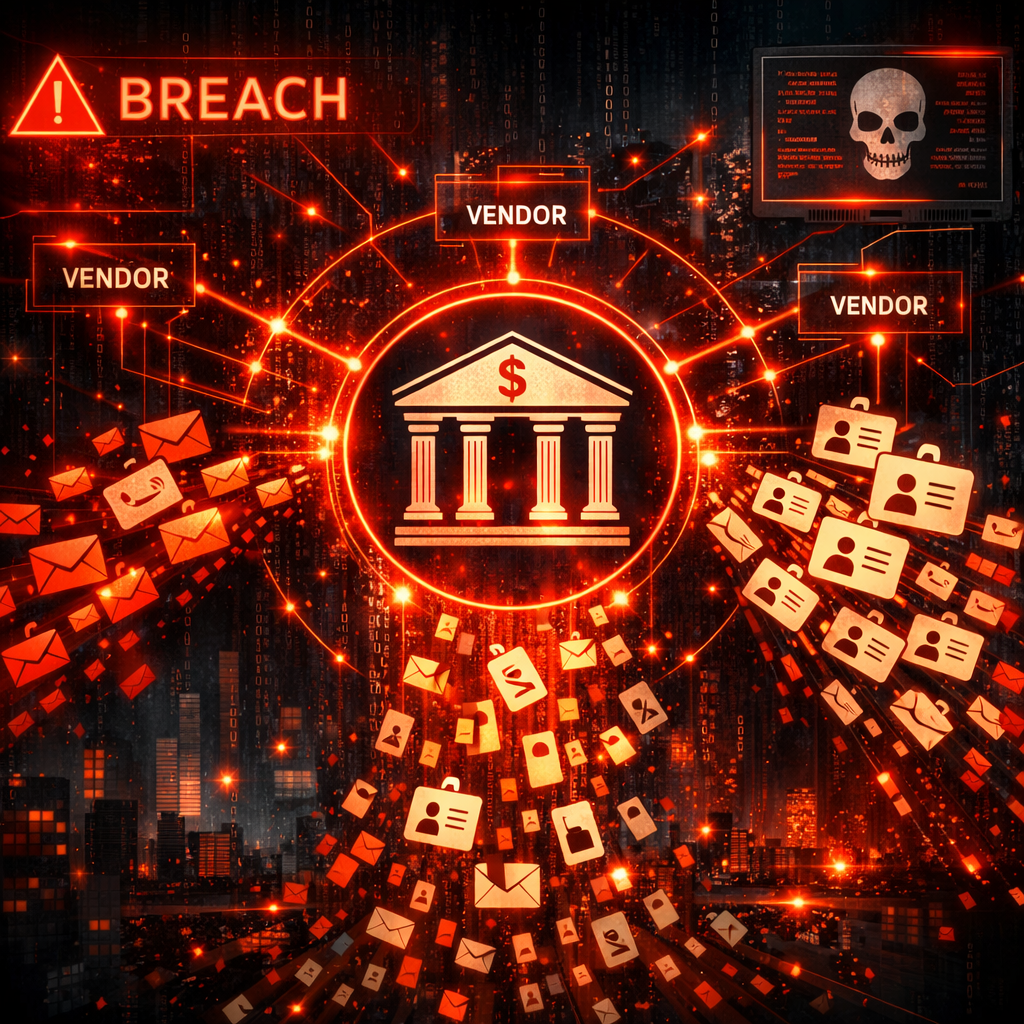
JPMorgan Chase has disclosed a recent cyberattack targeting external vendors linked to its operations. Though the bank says core systems and customer accounts remain secure, certain marketing data—potentially including customer names and email addresses—held by those third-party providers may have been accessed. Details such as how many individuals are affected remain unclear.
What’s Known So Far
The breach does not appear to stem from a direct intrusion into JPMorgan’s own infrastructure. Instead, attackers compromised data stored by vendors working with the bank. The exposed information was confined to marketing-related content; sensitive data like passwords, account numbers, or transaction details are not believed to have been accessed. Even so, the bank has not clarified which vendors were involved, the method of infiltration, or whether the accessed data was copied or merely viewed.
Official statements from JPMorgan highlight that the incident is not linked to an earlier service outage the bank experienced on November 16. That disruption was attributed to a software bug within JPMorgan’s hardware, and investigations found no signs of cyber intrusion related to that particular event.
Customer Response & Risks
JPMorgan intends to notify any customers whose data was affected and will provide support options, including complimentary credit monitoring. These notices haven’t been issued yet, and the duration of monitoring remains undecided. While customer service functionality hasn’t been impacted, the breach poses risks such as phishing campaigns, where attackers could use exposed names and emails to craft convincing fake notices.
As a precaution, customers are urged to be wary of unsolicited messages requesting personal information or directing them to unfamiliar links or attachments. JPMorgan has provided guidance on verifying legitimate communications and established channels for reporting suspicious activity.
Key outstanding questions include the scale of the breach, which records were compromised, whether the data was copied, and which vendors are involved. JPMorgan has not yet provided enough detail to fully assess exposure.
This incident is one of several recent cases showing how organizations are vulnerable not just from direct attacks, but also from weaknesses in their supply chains—particularly third-party providers who hold customer data.
Analytically, while JPMorgan’s reputation for robust security likely mitigated worst-case outcomes, the reliance on external vendors remains a vulnerability. What matters now is transparency: visible vendor accountability, timelines for customer notices, and clear measures to protect against phishing. Watching for how JPMorgan strengthens its vendor oversight and incident disclosure will reveal how seriously these risks are being addressed.