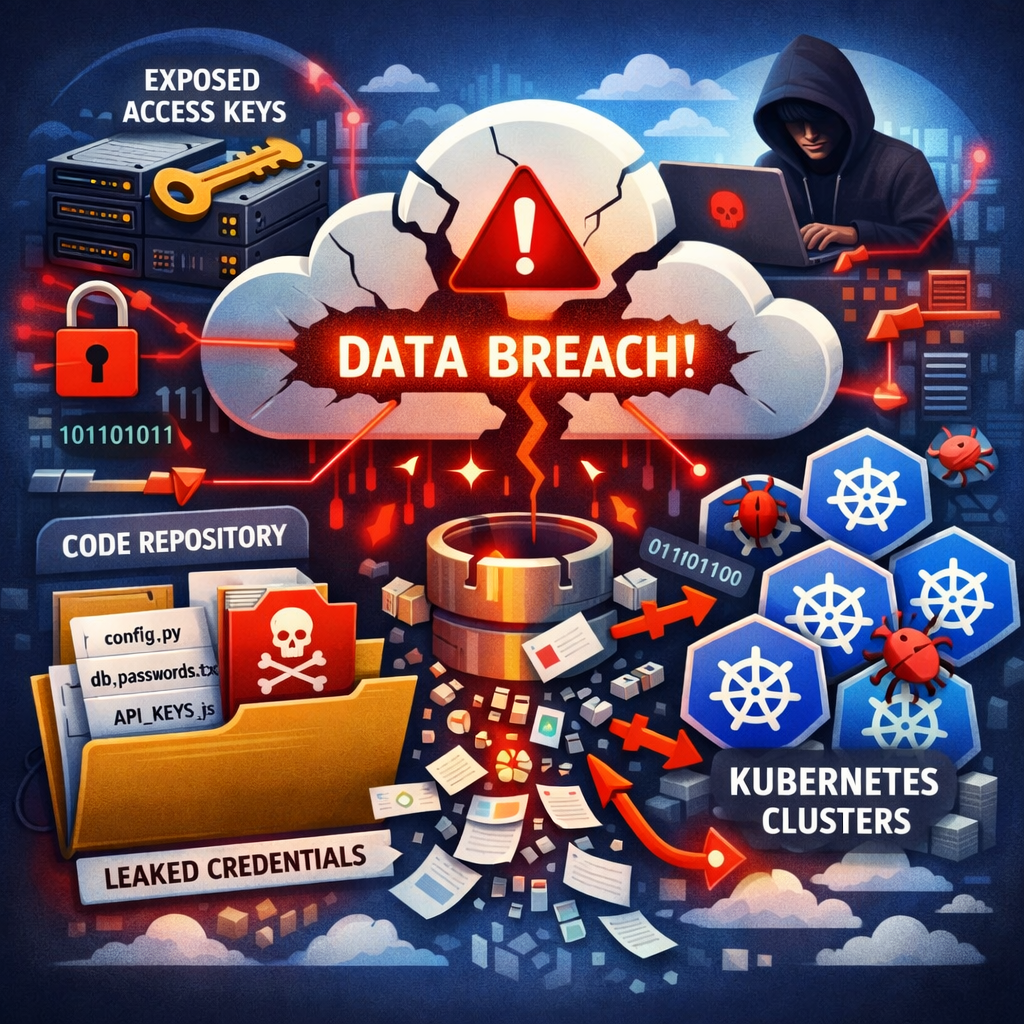
Barracuda has confirmed that a cloud access key, exposed through an AI vendor’s development environment, was used to breach around 10 of its cloud accounts over a span of just 44 hours between November 1 and 2, 2026. The attack started when hackers accessed the vendor’s GitHub repository where a credential was stored in a configuration file—even after the vendor’s project had wrapped.
How the Intrusion Unfolded
The breach began when the exposed key — compromised during the vendor’s internal work in October — allowed the attacker to enter Barracuda’s cloud environment. Initial access at 04:33 UTC on November 1 revealed stored secrets including AWS access keys and Azure service principal secrets. These credentials unlocked deeper access, including to data analytics systems, source code tokens, and Kubernetes clusters. Each discovery paved the way for more access.
On the morning of November 2, the attacker pushed temporary branches to repositories to trigger build workflows. By doing so, they managed to expose build secrets in job logs. Some of these secrets were encoded in ways meant to evade detection, revealing tactics similar to other GitHub-related credential thefts.
What Barracuda Found & What It Did
Barracuda identified patterns in the activity that matched ARTEX — an AI-powered open-source penetration testing tool — based on resource names, workflow behavior, and credential searches. However, using ARTEX doesn’t confirm the identity of the attacker.
The attacker also searched for sensitive materials like mnemonics, private keys, crypto wallets, and environment variables such as SEED, MNEMONIC, WALLET, or PRIV. Although there was no evidence of wallet-related secrets in the systems they accessed, an attempt to create a new cloud administrative identity was blocked. A container in a Kubernetes cluster that had read-only access to the server’s underlying file system also exposed credentials.
Response and Customer Guidance
The incident was traced back on November 4. Barracuda removed the compromised container and rotated affected credentials. Some systems connected to Barracuda XDR had integration credentials stored; no proof yet that those were accessed, though incomplete logging prevents certainty.
Customers impacted by the breach have been asked to recreate integration credentials and review activities in linked systems dating back to November 1. Other clients not notified have no action required, per Barracuda’s advisory.
Wider Trends & Future Protections
This incident follows another involving Railway AI, where stolen AI vendor credentials led to nearly $740,000 in unauthorized cloud charges. Barracuda, while not confirming a financial theft motive here, acknowledges that AI service credentials were exposed. The company is now phasing out long-lived keys, tightening Kubernetes access controls, and enhancing audit logging to limit the reach of similar attacks.
Analysis: This breach highlights just how fast exposure in one vendor’s environment can cascade into a full-scale incident. With AI tools becoming woven into enterprise systems, securing every link in the chain — from vendor GitHub repos to build workflows — is essential. Moving forward, customer-facing firms need continuous validation of vendor security practices, tighter integration credential lifecycles, and stronger detection at build-time to prevent credential exfiltration before it snowballs into a breach.