Bedrock Energy, a startup using AI-directed geothermal rigs to lower costs for commercial heating and cooling, has raised $24 million to expand its operations. The funding will be used to build more rigs and accelerate deployment in enterprise buildings that can benefit from deep, efficient boiler‐replacement geothermal systems.
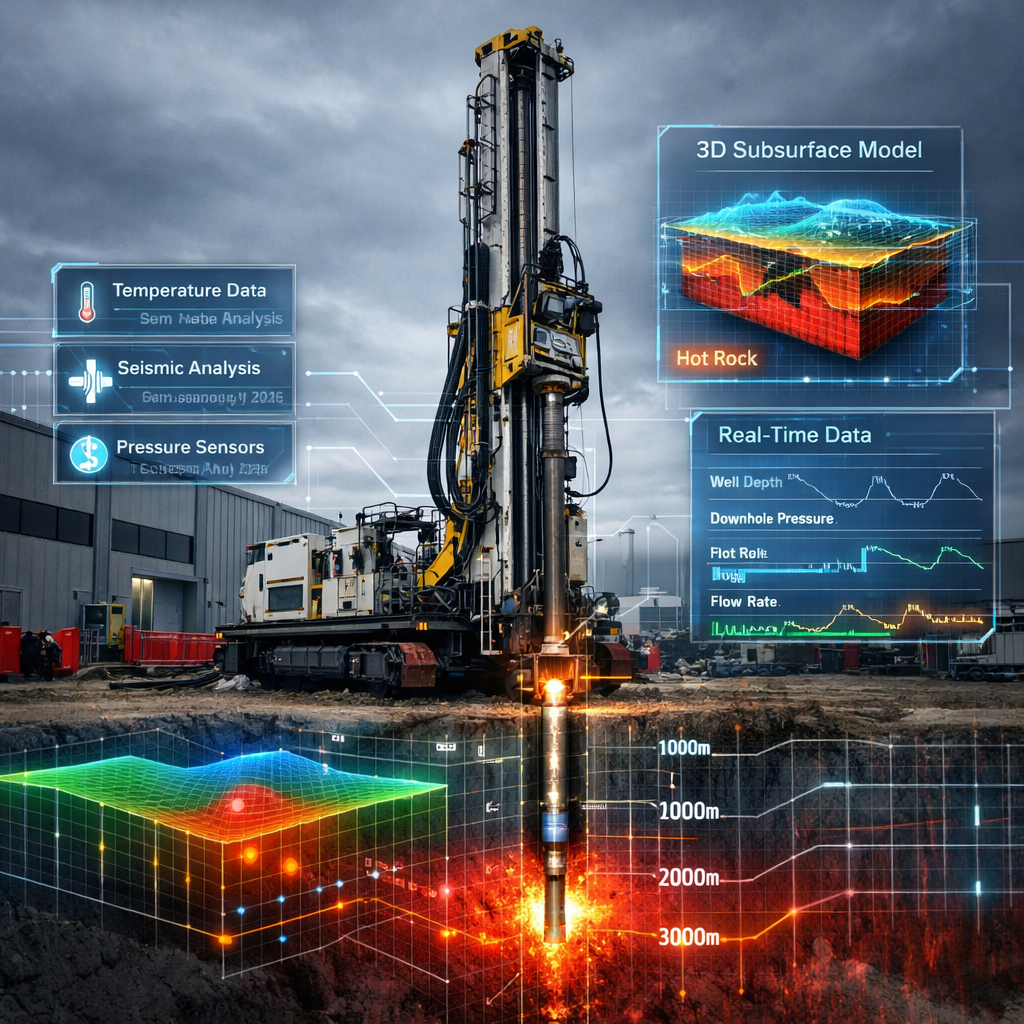
Geothermal heat pumps – systems that draw consistent ground temperatures for heating in winter and cooling in summer – are a proven but under‐adopted technology in the U.S. One of the main barriers has been the expense and time required to drill boreholes. Bedrock’s model claims to reduce drilling timelines by up to 80% by pairing directional drilling techniques from the oil and gas industry with AI-informed subsurface modeling and real-time sensor feedback.
How Bedrock’s System Works & Where It’s Operating
Most typical geothermal drills are similar in capability to those used for water wells. Bedrock’s rigs are more advanced: they employ directional drilling guided by subsurface geological models to accurately place boreholes, backed by sensor data that refines those models during and after drilling. The company is targeting shallow geothermal depths of up to 10,000 feet—deep enough to ensure consistent ground temperatures, yet still within reach of enterprise installations.
The startup is already delivering on its promise. It currently operates in Utah, Colorado, New York, Alberta, and Texas. With the newly secured capital, Bedrock plans to expand into New England, New Jersey, the upper Midwest, and additional Western states, adding rigs to meet rising demand.
Focus Markets & Customer Types
Bedrock is focusing mostly on commercial properties, where deep boreholes can justify their complexity and expense, often on tight footprints. Data centers have also expressed interest. Some see geothermal systems as a way to provide steady cooling loads for server racks; others are motivated by load management—using neighboring building properties to deliver power grid capacity and potentially begin operations earlier, unlocking revenue sooner.
Already, Bedrock has drilled boreholes at nine sites and has signed agreements with customers anticipating projects in the next one to two years. Its geothermal installations require minimal maintenance compared to traditional HVAC systems, which can lower long‐term infrastructure costs.
Funding Details & Investors
The $24 million round was led by Clean Energy Ventures and Clearvision Ventures, with participation from climate, health, and energy investors including GVP Climate, Susquehanna Sustainable Investments, Catalytic Capital for Climate and Health by Temasek Trust, MUUS, Great Wave Ventures, Autodesk Foundation, Titanium Ventures, Energy Impact Partners, Wireframe Ventures, Elemental Impact, and SFV Capital. Earlier rounds included a $12 million Series A in 2025 and an $8.5 million seed stage in 2023.
This influx will help Bedrock build out its rig fleet as it scales into new territories. The company expects most of its new contracts — and related drilling — will take place within the next one to two years.
Analytical Angle: Bedrock Energy’s approach treads the intersection of climate technology, AI, and infrastructure modernization. The company addresses two key pain points holding back geothermal adoption: high drilling costs and long timelines. If Bedrock’s claims—up to an 80% cut in drilling time—hold in broad deployment, this model could transform large‐scale HVAC in commercial real estate and data centers. Key things to watch: whether the AI‐guided subsurface modeling consistently delivers performance across diverse geologies; how competitors respond; and whether state and federal policy frameworks sufficiently reward deep geothermal investments to support large‐scale build‐outs.