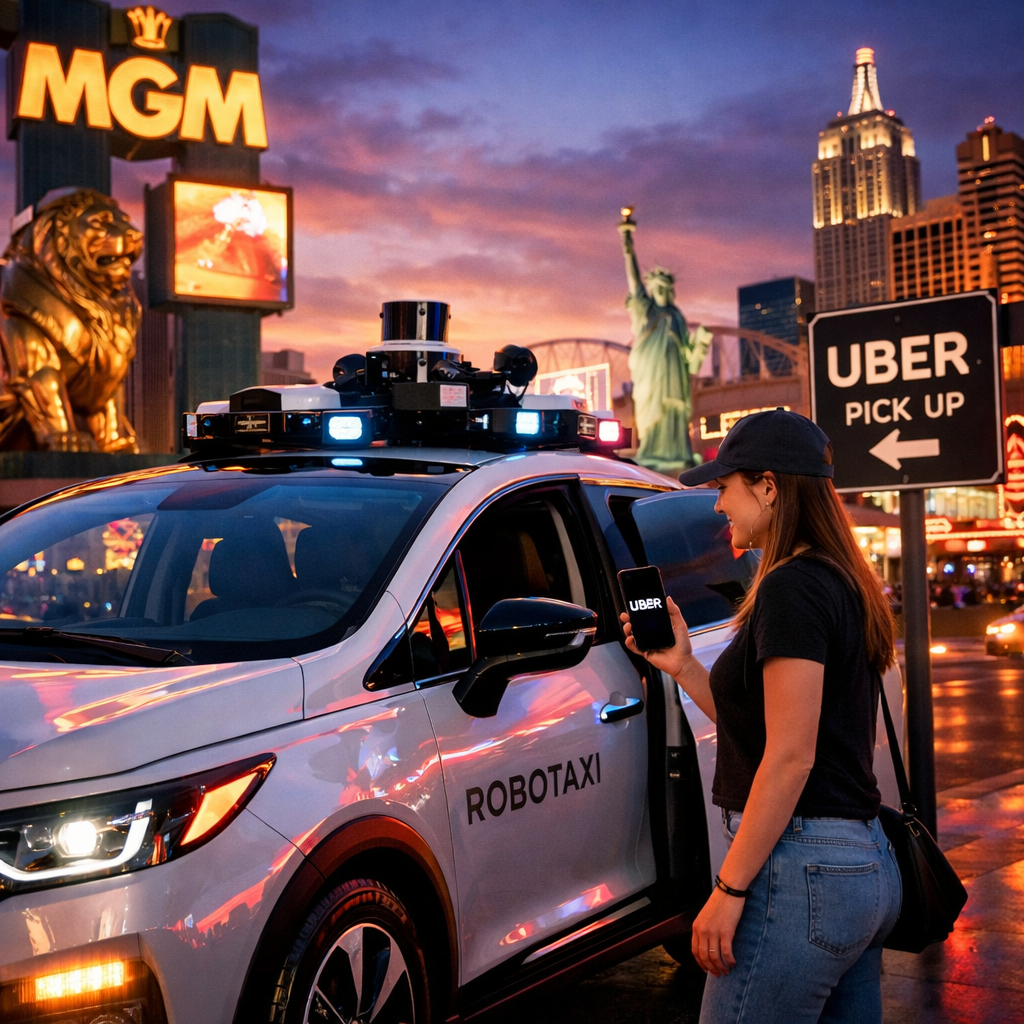
Zoox, the autonomous vehicle company owned by Amazon, has made its robotaxi service available via the Uber app in Las Vegas. This collaboration marks Zoox’s first partnership with a third-party ride-hail platform, and a major push for Uber’s strategy to dominate the autonomous vehicle (AV) ride market across North America, Europe, and the Middle East.
Uber has been building a diversified portfolio of AV partners—over 30 companies working on self-driving cars, robotaxis, sidewalk delivery, and drone projects—though many have yet to reach large-scale deployment. With Zoox onboard, Uber gains access to its custom built driverless taxis; for Zoox, this opens up exposure to riders who might not otherwise try its service, especially as it competes behind leaders like Waymo and Tesla.
Initial rollout, expansion plans
The rollout begins in Las Vegas, Zoox’s first city with commercial robotaxi operations. While riders can request UberX, Uber Comfort, Uber Electric, Uber Comfort Electric, or Wait & Save rides, they may be matched with a Zoox robotaxi randomly—users won’t be able to specifically request one at launch. Uber has, however, added a ride-preference setting in its app for those who want to increase their likelihood of getting a robotaxi.
Looking ahead, Zoox plans to start offering rides in Los Angeles this year, with full integration into Uber’s app coming in 2027. In Las Vegas, the partnership extends beyond just ride matching: Uber and Zoox have struck a multi-year agreement with MGM Resorts International. They’ll collaborate on improving pickup and drop-off signage and locations at resort properties to help riders find robotaxis more easily.
Regulatory permits, rival ties, and shifting alliances
Uber received approval from the Nevada Transportation Authority to deploy up to 1,000 robotaxis in Clark County, which includes Las Vegas, operating through its partnerships with both Zoox and Motional. That permit was granted unanimously earlier this year, clearing a key regulatory hurdle.
One of the interesting strategic moves is how Uber is repositioning its relationship with Waymo. Currently, Waymo robotaxis are available through Uber’s app in cities like Austin and Atlanta, but that partnership is scheduled to end in January 2028. After that, Waymo intends to offer rides exclusively via its own app in those markets.
Uber also confirmed that it won’t handle maintenance or other operations for Zoox in Las Vegas, setting that responsibility entirely on Zoox itself. Meanwhile, Uber CEO Dara Khosrowshahi said that a dedicated autonomous-ride option will be added to the app once robotaxi availability and reliability reach certain thresholds.
Why this matters: Zoox’s integration into Uber accelerates the operating scale and consumer access for robotaxi services. For Uber, this strengthens its AV ecosystem; for Zoox, it offers a path toward broader recognition and competitiveness. As robotaxis shift from experimental deployments to everyday transit options, what happens in Las Vegas—and soon Los Angeles—could set the tone for wider AV adoption. Key to watch are rider uptake, operational reliability, and how the regulatory environment keeps pace.