Danfoss AK-SM800A refrigeration controllers are exposed to dangerous vulnerabilities that allow remote attackers to take control without any login credentials, according to research published by security firm Midnight Blue. Despite a recent firmware upgrade to version 5.4.0, the six flaws uncovered—present in all firmware versions through 5.3.2—remain unpatched. Government agencies in Belgium, Ireland, and Germany are now warning that simply updating the firmware, using default credentials, or enabling “Strict Mode” is insufficient protection.
What’s at Risk
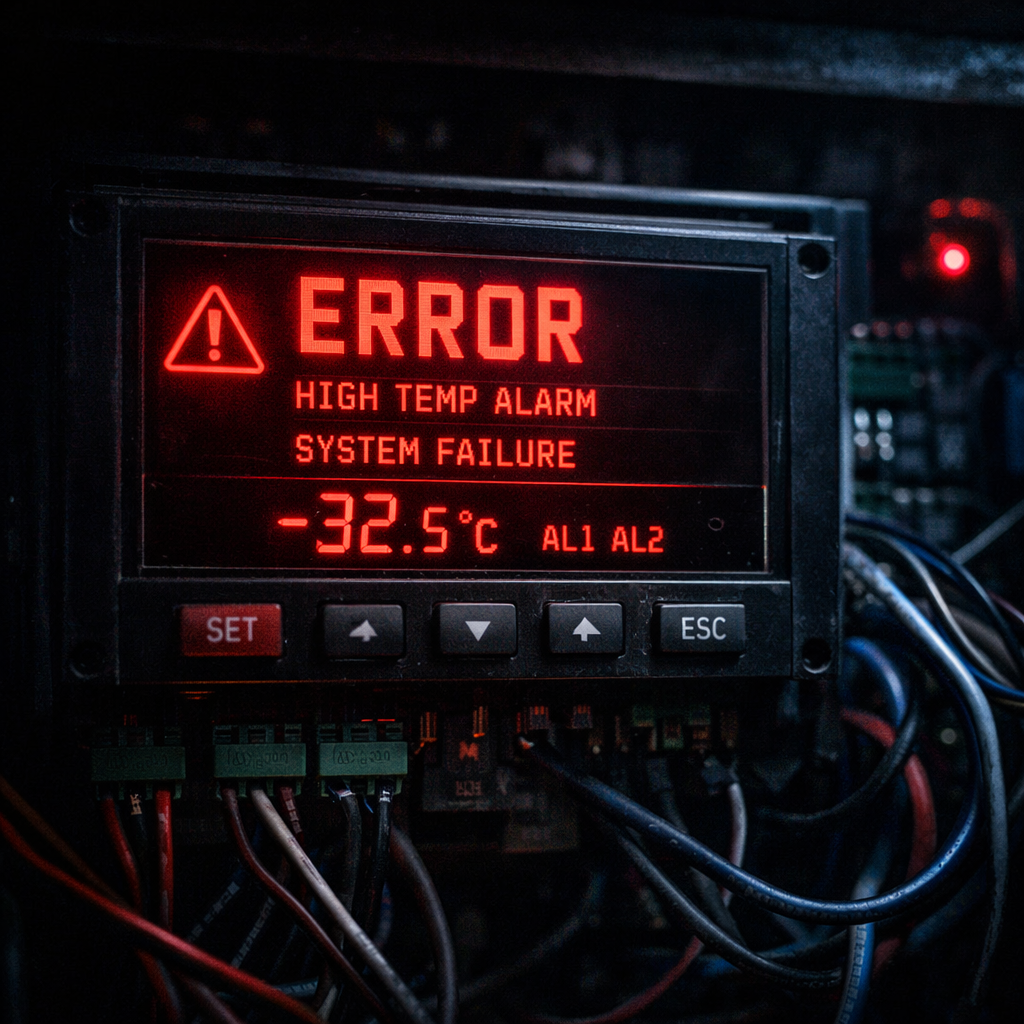
The AK-SM800A units are used in refrigeration and freezer systems at commercial locations, managed remotely by service firms. Attackers have already started exploiting these controllers in a wave of assaults: an initial set of incidents began in France on October 11, followed by a broader spread across Europe during a second wave. These attacks triggered unintended defrost cycles and destroyed perishable stock. Germany’s security agency has linked earlier tampering incidents involving these units to the newly identified flaws, although it has not confirmed that they exploited these specific vulnerabilities.
The six issues include multiple pre-authentication bugs in web request handlers that operate with root privileges. One such flaw enables execution of arbitrary code as root on firmware as old as version 3.3.0, with concrete evidence that those same vulnerabilities persist through version 5.3.2. Even with “Strict Mode” engaged—which is intended to enforce login, encrypt sessions, and limit interfaces—a gateway component that enforces: that mode is itself flawed and can be crashed. Through that crash, an attacker could escalate to full code execution. The firmware also lacks basic exploit mitigations such as stack canaries, making even generic attacks feasible.
Firmware, Mitigations, and What Operators Can Do
Danfoss released firmware 5.4.0 in November, but Midnight Blue’s research confirms it does not address any of the six vulnerabilities. In fact, the firmware appears to have been compiled before the second wave of ongoing attacks and before the flaws were formally reported. The German security agency originally stated 5.4.0 was safe, but then retracted that, acknowledging that it cannot exclude the possibility that it is also vulnerable. Danfoss has not published an advisory specific to the newly disclosed flaws, nor given a timeline for fixes.
Authorities in Belgium and Ireland recommend immediately disconnecting controller management interfaces from the internet—including via cellular 4G or 5G links. Remote access should, instead, be limited to VPNs or internal networks, or by permitting only trusted IP addresses temporarily. Operators are also advised to audit system settings—temperature triggers, defrost schedules, user accounts, remote access logs—and replace any credentials if compromise is suspected. Danfoss’ own guidance continues to emphasize that controllers should never be directly accessible from the public internet, regardless of firmware version or security mode.
These flaws are especially severe because they allow root-level control without needing valid login credentials. That means an attacker could alter logs, trigger defrost cycles that ruin stock, or even implant code that survives firmware updates or a factory reset—given that secure boot isn’t implemented in the affected devices.
Although past vulnerabilities in these controllers have been fixed—in 2023 and 2025—these new flaws are fresh and have not been covered by prior updates. Versions released up to and including 5.3.2 are all compromised. As of now, there are no CVE IDs assigned, but the researchers have withheld technical detail pending full disclosure with Danfoss.
Why This Matters: Refrigeration controllers like the AK-SM800A are core components in retail, food storage, healthcare facilities—anywhere loss of cooling can mean massive spoilage or health risks. Operational Technology (OT) devices with remote exposure are a growing target, especially now that vulnerabilities bypass authentication altogether.
What to Watch For: A patch from Danfoss that actually resolves all six flaws. Confirmation from agencies or third parties that firmware 5.4.0 is now verified secure. New advisory releases with CVE assignments. Meanwhile, urgent operational risk: companies using AK-SM800A should immediately audit their network exposure and access controls.