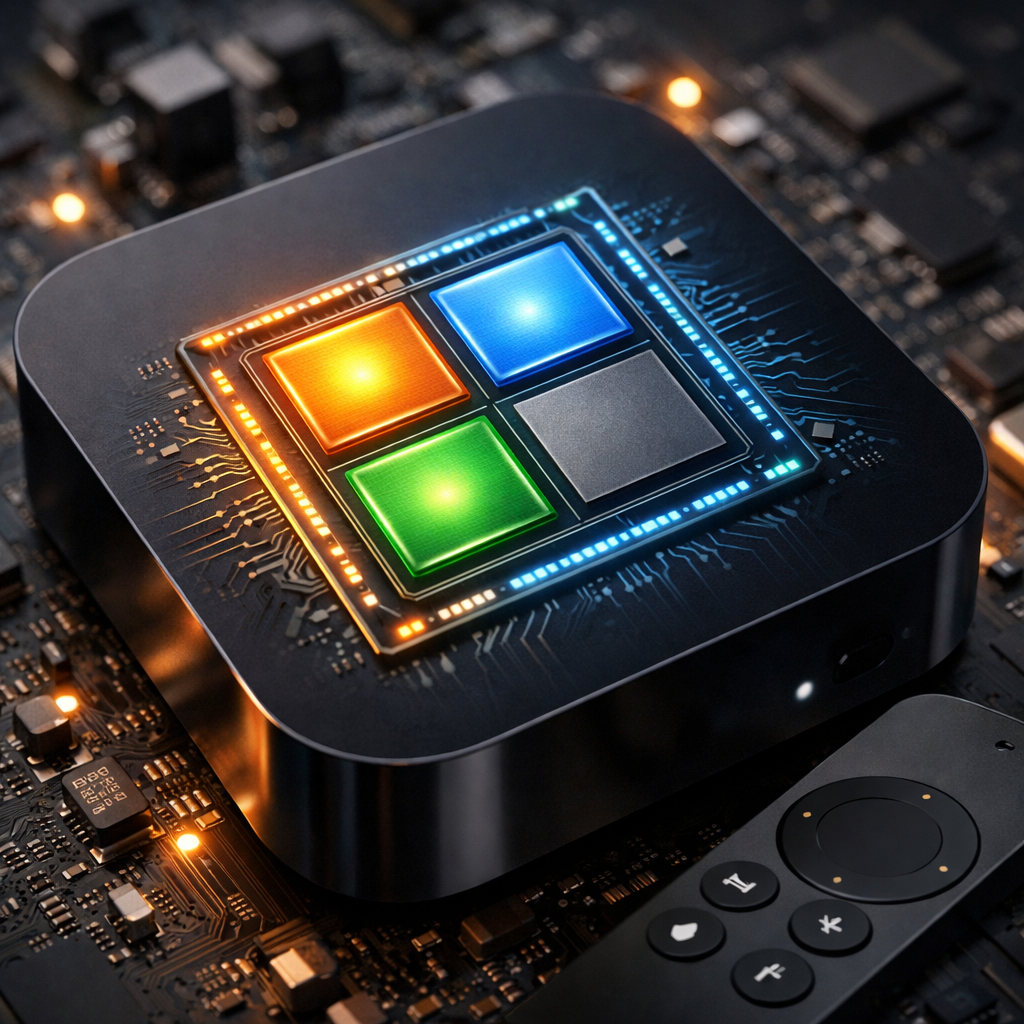
Apple’s latest fourth-generation Apple TV 4K ships with an A19 chip, but system diagnostic logs show one of its efficiency cores is disabled. While the CPU appears to retain two performance cores and three energy‐saving efficiency cores active, it’s falling short of full capacity. This sits in contrast to Apple’s iPhone 17 chip, which reportedly includes a six-core CPU with the full slate of efficiency cores engaged. The insight comes from code-explorer data shared alongside the new model’s launch.
Specifications and What’s Disabled
The maximum clock speed reported for the performance cores in this A19 chip clocks in at 4.26 GHz, while the active efficiency cores reach about 2.592 GHz. The GPU portion operates with a five-core configuration and peaks at around 1.47 GHz. These figures reflect top speeds, not what the chip maintains under load.
Inside, the CPU layout is likened to a five-core setup, comprising two performance cores and three efficiency cores. The inactive core is likely disabled permanently—perhaps due to defects discovered during chip fabrication. Apple has used this approach before: the 2022 Apple TV 4K’s A15 chip similarly shipped with one core disabled.
What This Means—and What It Doesn’t
While a disabled efficiency core reduces potential multitasking headroom, it doesn’t necessarily impact daily performance in streaming, gaming, or smart home tasks performed by Apple TV 4K. Efficiency cores are primarily designed to handle light background tasks while consuming less power. Performance cores, which are still intact at two, do the heavy lifting.
Apple’s use of binned chips—processors that are sorted and downgraded due to minor silicon defects—allows for better yields and reduced waste. Disabling a single core preserves much of the chip’s utility, ensuring most users won’t notice a drop in day-to-day experience, especially if the software is tuned to the active cores.
The chip still boasts 8 GB of RAM in this new model, putting it on par with high-end versions of Apple TV hardware. Although full six-core efficiency isn’t provided here, the structural specifications remain strong for what consumers expect from a modern media and smart home hub.
Broader context: Apple often leverages disabled cores in silicon when certain dies don’t meet spec but are close enough in performance. It’s a common practice across the semiconductor industry. For users, what matters more is how software leverages the available cores and how the system manages heat, power consumption, and thermals under load.
In short, the new Apple TV 4K carries a capable chip setup even with one efficiency core missing. It’s unlikely to hamper common use cases, but it’s a reminder of how much happens behind the scenes in chip design and manufacturing.
This matters because it underscores Apple’s balancing act between yield, cost, and performance. As silicon fabrication faces tighter tolerances and rising costs, decisions like disabling cores become more than technical footnotes—they influence product pricing, longevity, and what consumers get versus what the hardware could ideally deliver. Watch for how this plays out in firmware optimization, power draw, and whether future Apple TV 4K units might re-enable or repurpose the disabled core.