A major breach has been uncovered in the Russian software sector: a threat group named BO Team infiltrated a developer’s network, compromising its infrastructure and code-signing server by exploiting a known vulnerability in VMware vCenter. The attack targeted servers across both Windows and Linux environments, as well as workstations, hypervisors, backup systems, and security tooling.
How BO Team Gained Entry
The breach was discovered after the affected company, based in Russia, reached out in June 2025. The attackers used an exposed SSH service on a Linux terminal server to map out internal systems. They scanned for common network services like SMB, Kerberos, Telnet, FTP, HTTP/S, WinRM, and LDAP—as well as internal portals and VMware vCenter’s web interface.
While initial login attempts to vCenter failed, BO Team did successfully exploit CVE-2021-44228—also known as Log4Shell—in VMware vCenter version 7.0.3. This allowed them to gain root access, SSH into the hypervisor, and then plant a backdoor disguised as a PostgreSQL component. The backdoor was scripted to download and run malware via hourly cron jobs using tools like Global Socket (GSocket). Some variants even prepared for further escalation by staging payloads based on hostname, with activation controlled via DNS changes.
Beyond the Hypervisor: Deep Supply Chain Risk
BO Team didn’t stop at system access. They exfiltrated the source code, seized private keys from GitLab repositories, and abused orchestration tools like Ansible. Their ultimate goal appears twofold: injecting malicious code into builds just before signing, and stealing signing credentials to later sign malware themselves.
Notably, these tactics point toward a potential full supply chain compromise—a scenario where customers of the affected developer could unknowingly receive tainted software signed with legitimate credentials. Post-exploitation actions also included Windows domain controller access, memory dumps, registry theft, credential extraction, and more.
Detection, Phishing, and Fallout
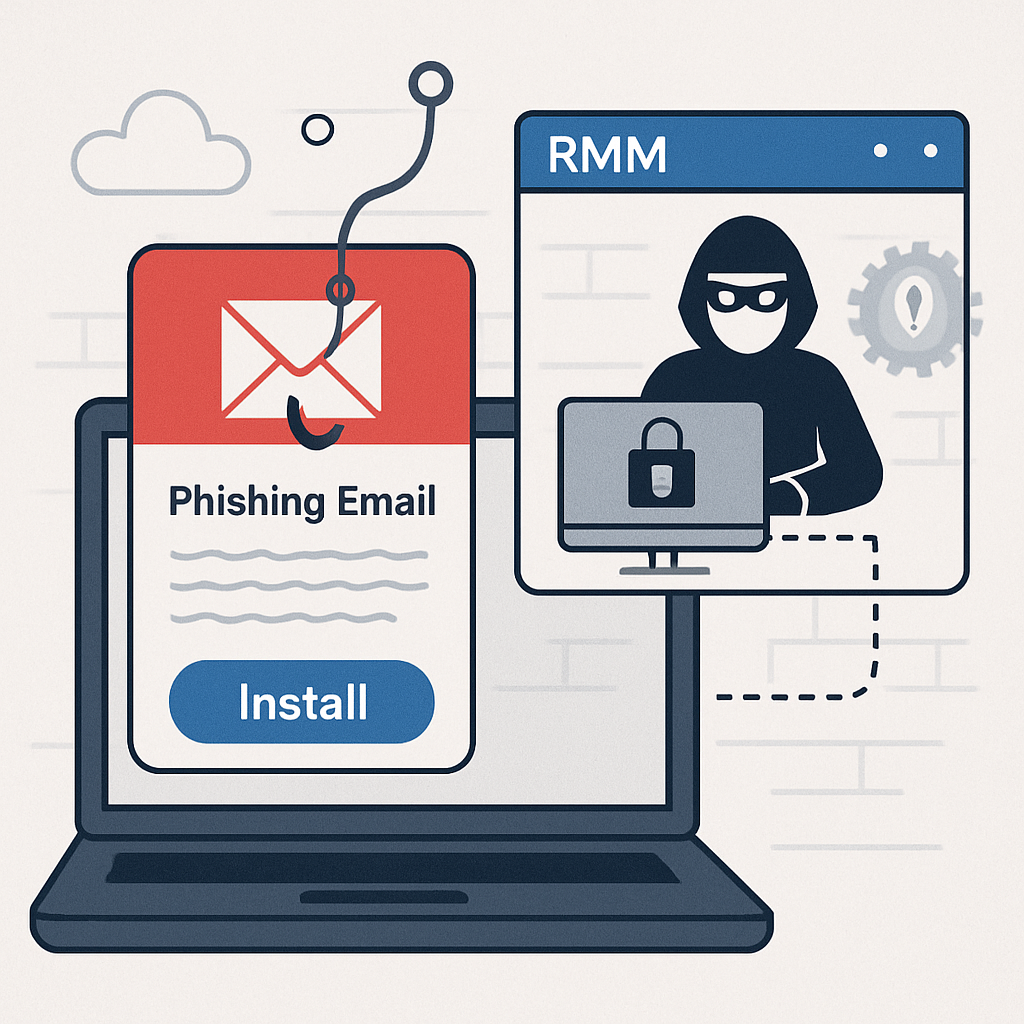
The intrusion also saw a phishing campaign in mid-July after some level of detection. Emails claiming “Account disconnected from the mail server” were delivered, aiming to trick employees into giving up their credentials. These emails bypassed standard email security checks using a compromised private key. Thankfully, this attack was spotted and stopped before any successful credential harvesting.
For evasion, BO Team leveraged lots of “living-off-the-land” techniques—using built-in utilities like SSH, RDP, and SCP rather than deploying visible malware. Further efforts at clean-ups included deleting logs, obfuscating shell scripts and binaries, timestomping, and utilizing legitimate system tools to fly under defensive radars.
BO Team, also known by names like Black Owl, Hoody Hyena, and Lifting Zmiy, has been active since at least 2023. Their operations, attributed to a likely Ukrainian origin, repeatedly target Russian entities with motives rooted in cyber espionage and political messaging. Their toolkit includes custom threats like BrockenDoor and ZeronetKit, and they lean heavily on reconnaissance, persistence, and stealth over destruction.
While BO Team’s infiltration reached deep, incident response efforts eventually squeezed them out before their supply chain plans could fully activate. Systems were secured, unauthorized access pathways shut down, and ongoing control disrupted.
Why it matters: This incident underlines the severe risks when code-signing infrastructure is compromised. Attackers don’t need to sink your ship—they just need to hijack the paintbrush and make every ship look under your crest. It’s a wake-up call for developers, especially in high-stakes sectors, to continuously monitor exposed services, regularly patch known vulnerabilities like Log4Shell, tightly control access to signing keys, and assume supply chain attacks are a present threat—not a hypothetical.