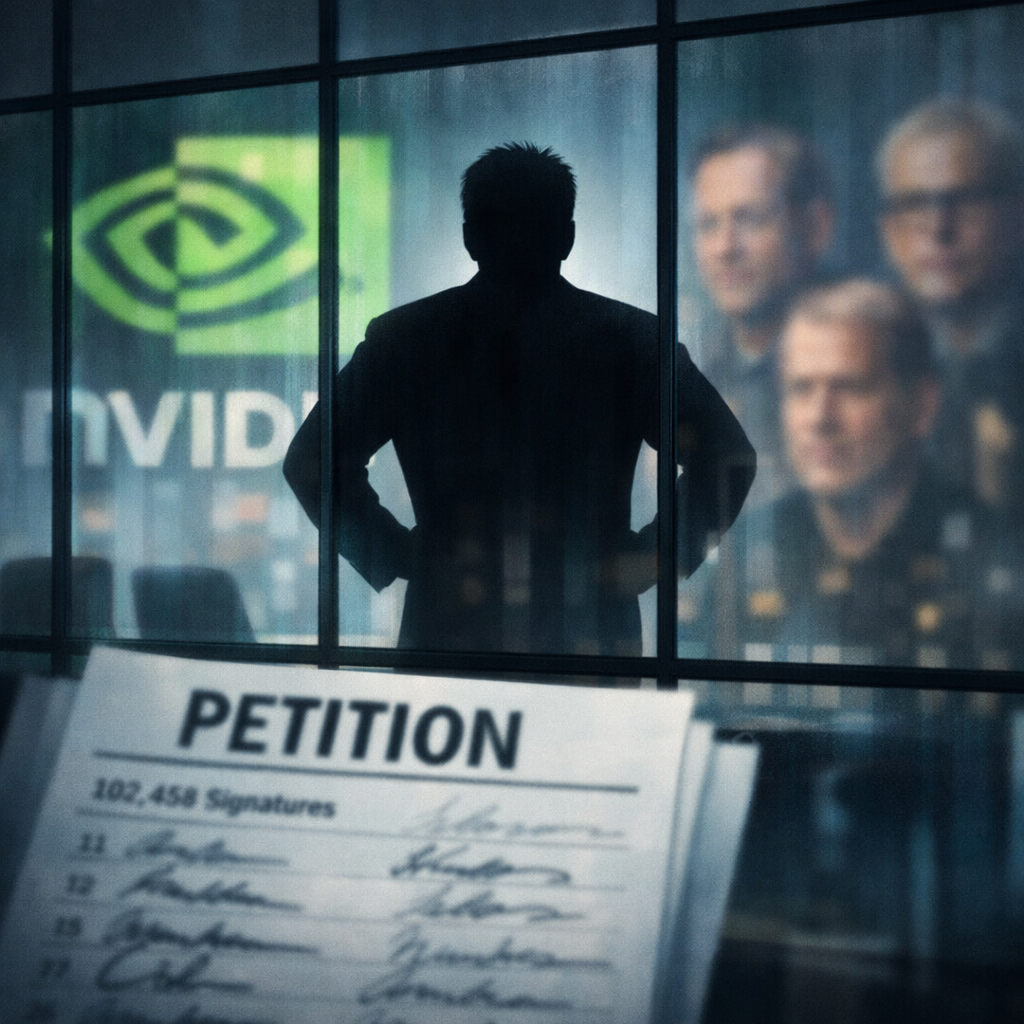
A petition calling for Nvidia to bring back Jensen Huang as CEO has gathered over 115,000 signatures, including support from major figures like Elon Musk, Tim Sweeney, and Amjad Masad. It accuses the board of removing Huang without proper due process and demands an independent investigation. Colette Kress is now serving as interim CEO as Nvidia looks for a permanent replacement.
The petition highlights widespread concern among current and former employees, shareholders, and outside observers. By Saturday afternoon, nearly 6,000 Nvidia employees and over 1,100 former staffers had signed, along with more than 63,000 shareholders. The document contends that Huang’s removal lacked transparency, urging the board to reinstate him while it clarifies the circumstances through an independent review.
What led to Huang’s ouster
Huang stepped down recently, days after admitting to a personal relationship with a counterpart at a chip company accused by U.S. intelligence of being a suspected Chinese agent. Media reports have also connected him to other extramarital affairs. The precise nature of the allegations remains under investigation.
Following Huang’s departure, Nvidia’s management placed co-chief financial officer Colette Kress in the interim CEO role. Investors responded with concern, sending Nvidia’s stock price down by around 2% amid uncertainty over the leadership shift and its potential impact on AI sector funding and company direction.
The broader fallout and stakes
The petition frames the situation as exceeding simple internal dispute, emphasizing corporate governance norms and fairness. It argues that removing a company’s head without established procedures risks undermining trust among employees, shareholders, and customers alike.
With Jensen Huang once at the center of Nvidia’s rise to dominance in AI and GPU markets, his removal creates anxiety about who will steer the company next—how they’ll maintain momentum, safeguard Nvidia’s strategic positioning, and manage investor confidence during the transition.
This moment represents a crossroads not just for Nvidia’s boardroom but for how major tech firms handle leadership, accountability, and reputation in an age of intense scrutiny. The resolution could set a precedent for leadership changes under pressure.
Looking ahead, attention will be on whether Nvidia’s board will comply with the plea to reinstate Huang or continue with their chosen interim leader. How they communicate findings of any independent review could reshape perceptions of governance in the tech industry — for better or worse.